Consider this your (pretty much) exhaustive, pantry-stocking, be-all, end-all list of 2014 short story collections, fortified with 8 essential vitamins and minerals and guaranteed to keep you reading well into 2015--2016, if you're as slow a reader as I am (case in point: I just now got around to reading Anthony Doerr's collections
The Shell Collector and
Memory Wall which had been on my To-Be-Read list for nearly a decade).
Now that we're halfway through the year, I thought I'd take a look at this year's harvest of short story collections. What started as a simple task--scanning my bookshelves and scouring publishers' catalogs for new and upcoming releases--soon turned Sisyphean. Every time I thought I had the boulder at the top of the hill, I'd find another overlooked title and the search started to roll back on me. Which leads me to conclude: 1) there are a helluva a lot more short story collections being published each year than I realized; and 2) obituaries for the Short Story are a misprint.
I posted my list at
Book Riot a couple of weeks ago; since then, it's more than doubled in size--and I'm sure the roster below is missing several worthy titles (feel free to let me know about them in the comments section). One other note: I confined myself to U.S. releases--primarily to preserve my sanity and your patience in reading this list. Otherwise, it would have been a long post about short fiction.
So, without further ado, here are just some of the 2014 short story collections topping my To-Be-Read pile, starting with three I’ve already swallowed in quick, eager gulps:
Thunderstruck and Other Stories by Elizabeth McCracken
Sentence-for-sentence, Elizabeth McCracken’s new collection of short stories (her first since 1993’s
Here’s Your Hat What’s Your Hurry) is the best value for lovers of fine, funny writing. Every single page of the book offers a bargain bang for your buck (if we’re reducing art to the purely monetary level). I mean, good Lord, just look at these random
Sample Lines from
Thunderstruck’s pages:
“The bath mat looked made of various flavors of old chewing gum.”
“The soul is liquid, and slow to evaporate. The body's a bucket and liable to slosh.”
“The grandmother was a bright, cellophane-wrapped hard candy of a person: sweet, but not necessarily what a child wanted.”
“His hair looked like it had been combed with a piece of buttered toast.”
I could go on and on, but I’d probably get so excited, so overcome by my evangelic fervor for this fiction, that I’d end up transcribing the whole book here for you. And I’m trying to keep these capsules brief. So, I’ll just leave it at this: go buy the damn book. If you’re like me, you’ll be struck dumb with admiration for what McCracken can do with her sentences.
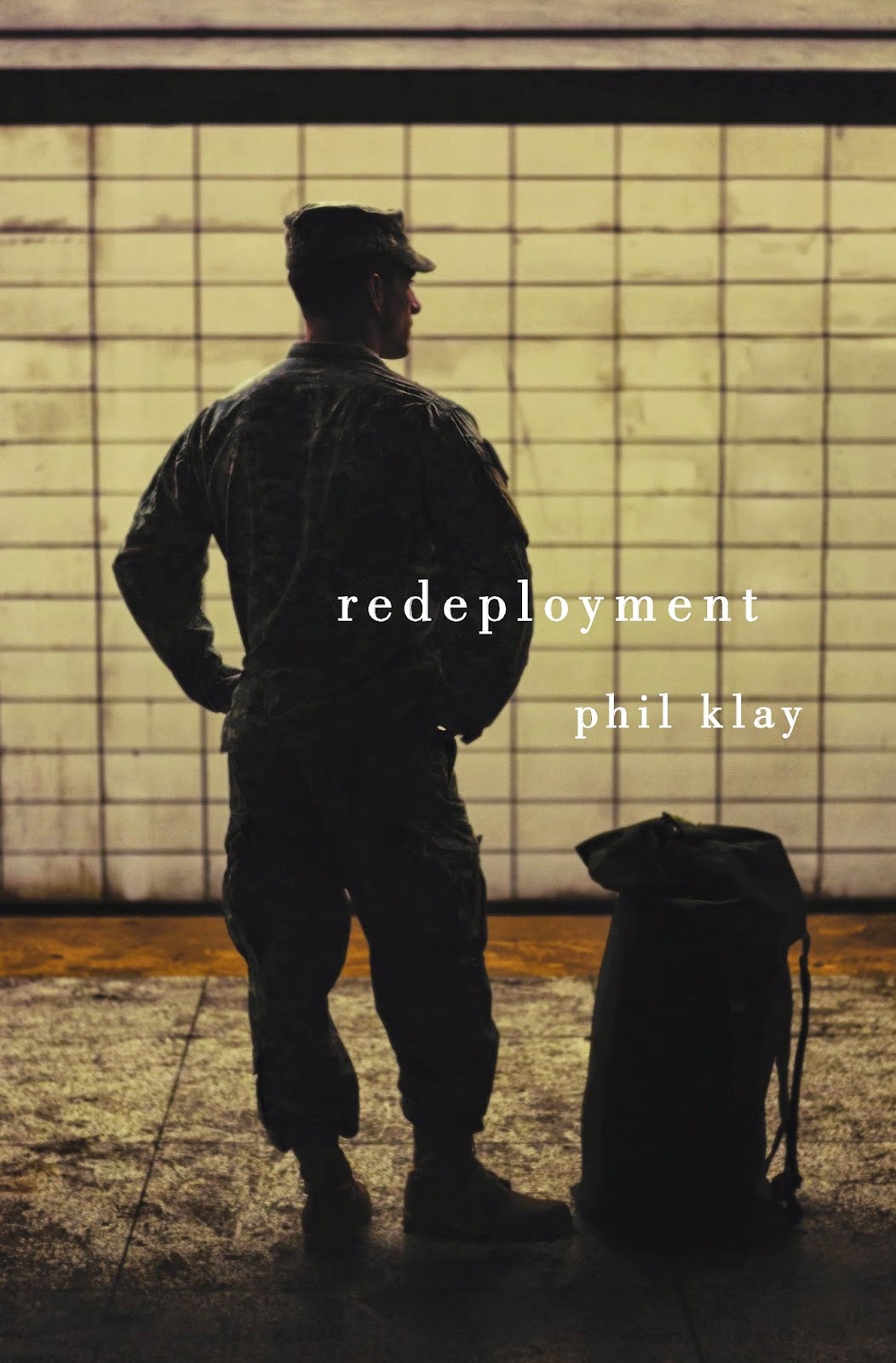
Redeployment by Phil Klay
According to
a recent article in the New York Times, less than 0.5 percent of the American population serves in the military. If the other 99.5 percent of you want to know what it’s like to deploy to Iraq/Afghanistan, live with the constant unease of roadside bombs, watch your best friends get killed by one of those same bombs, and deal with the jarring return to stateside life, then I highly recommend reading Phil Klay’s stories. As one of the 0.5 percent who did serve (20 years in my case), I can assure you that Klay gets it right on every page of this searing, haunting collection. The stories are in-your-face brutal and beautiful, profane and poetic, funny and horrifying—much like the war experience itself. Most importantly,
Redeployment will make readers question their own feelings about the recent wars and whether or not it’s really necessary to thrust out a hand to be shook and belch an automatic “Thank you for your service” every time they see a servicemember passing them in the airport.
Sample lines: “The trigger was there, aching to be pushed. There aren’t a lot of times in your life that come down to, Do I press this button?”
California Tales by Jane Ciabattari
The tagline for e-publisher SheBooks is “every woman has a story” and in this intimate trio of tales, Jane Ciabattari goes straight for the heart with finely-drawn characters. In the first story, “Arabella Leaves,” the titular character finds her fate at the end of a crystal meth habit and a new boyfriend who's more interested in tricking out his motorcycle than he is in showing affection. Arabella is already a survivor of a near-death car accident which put her into a coma when she was a teenager:
It was cozy enough for her, she was feeling no pain, just morphine and voices and a sense of almost being where she belonged. In a coma was fine with her. Coming out of it was a bitch.
In “Aftershocks,” a man, a woman, and a dog come together at The Viper Room along Sunset Strip, just months after actor River Phoenix OD'ed on the sidewalk outside. It's not drugs which cause the cataclysm in this story, however, it's the 1994 Northridge earthquake and its aftershocks. It features one of the best descriptions I've read of an earthquake in a long time:
Next I remember a series of violent upward jolts, as if some manic gnome with a jackhammer was working away from deep in the earth's core, shattering our surface with savage glee. I felt the rattling feedback from beneath the floor on my tailbone.
In “Payback Time,” the central character is named Jonah, but he could just as easily be Job. Living high in Silicon Valley during the dot-com boom, he very quickly finds himself stripped of nearly everything...except his parents' apricot orchard. It's a great portrait of an anxiety-riddled man who thinks he's on top of the world but eventually realizes he may only end up with a bunch of shriveled fruit clinging to thorny branches.
SheBooks, a relatively new publisher, has plenty of other short-fiction selections to choose from, including
The Wrong Sister by Caroline Leavitt,
Mating Calls by Jessica Anya Blau and
Stolen Moments by Suzanne Antonetta Paola.
Praying Drunk by Kyle Minor
Praying Drunk begins with a gunshot as the uncle of the story’s narrator blows his brains out, and it ends with a funeral in the rain. Sandwiched between are stories that provoke readers to think about life, death, and similar Big Topics. With titles like “You Shall Go Out With Joy and Be Led Forth With Peace,” “There is Nothing But Sadness in Nashville,” and “The Truth and All Its Ugly,” you just know there’s not going to be anything tame about this book.
Sample lines: “The year my boy Danny turned six, my wife Penny and me took him down to Lexington and got him good and scanned because that’s what everybody was doing back then, and, like they say, better safe than sorry.”
Mr. Bones by Paul Theroux
In these twenty stories (eight of which have never before been published), Paul Theroux seems to be up to his old poke-the-sleeping-dog bag o’ tricks. In the title story, a family watches in horror as the patriarch starts going around in blackface and shaking a tambourine, thinking he’s a player in a minstrel show; an art collector publicly destroys his most valuable pieces; and a father wages war on raccoons. What’s not to love and hate in equal measure on these pages?
Sample lines: “My father, apparently a simple cheery soul, seemed impossible to know. His smiles made him impenetrable.”
Natural Histories by Guadalupe Nettel
Granta once included Guadalupe Nettel in its
“Best Untranslated Writers” series; but now, thanks to translator J. T. Lichtenstein and Seven Stories Press, we in the English-speaking world can get acquainted with the award-winning author from Mexico City. I haven’t had the chance to fully sample her work, but the publisher’s synopsis promises “Siamese fighting fish, cockroaches, cats, a snake, and a strange fungus” will serve as “mirrors that reflect the unconfessable aspects of human nature buried within us.” I confess I’m intrigued.
Sample lines:
I’ve been a biology professor at the Universidad de Valle de México for over ten years. I specialize in insects. Some people in my field of research have pointed out to me that when I’m in the laboratory or lecture hall I almost always keep to the corners of the room. It’s like when I’m walking along a street; I feel safer if I’m near a wall.
Chase Us by Sean Ennis
This debut collection opens with a father coming home one Christmas Eve, hanging a sheet across the entrance to the living room, then with much “crashing and cursing” behind it, proceeds to build a greenhouse as a gift for his wife, an agoraphobic. When finished, the small shelter looks like “a drained aquarium.” The mother goes inside and stays there, not even coming out when her daughter goes missing on New Year’s Eve. It’s a haunting, powerful start to a book of linked stories about growing up in Philadelphia.
Unravished by Hester Kaplan
In the concluding story of this collection by the author of the novel
The Tell, two women—wary and distrustful of each other—find themselves the sole residents on the campus of a private school where they work. Why are they alone? The world is coming to an end and everyone else has fled in terror, trying to figure out what to do with the remaining days of their suddenly shortened lives. The story is called “This Is Your Last Swim” and, as apocalyptic stories go, it's enough to make you want the world to go on long enough to read the rest of the book.
Sample lines:
The world was going to end. No question. There was no date, but in any case, very soon-ish. Anyone who was sane believed it and those who didn’t were the zealots and the crazies these days. The same people who’d predicted the end a few years ago now didn’t believe it was going to happen, so they’d begun long-term projects—baby-making, house-painting, dog breeding, reading Moby-Dick. Lucky them if they blithely dismissed the truth.
Bark by Lorrie Moore
Do I really need me to say anything more than “Lorrie Moore. New story collection. 2014.”? I think not. Maybe I’ll just offer up these random S
ample Lines as superfluous reasons you should go out and buy this collection (wise and knowing readers have already gone out and done so):
“Although Kit and Rafe had met in the peace movement, marching, organizing, making no nukes signs, now they wanted to kill each other. They had become, also, a little pro-nuke.”
“Ira had been divorced six months and still couldn’t get his wedding ring off.”
“’If dolphins tasted good,’ he said, ‘we wouldn’t even know about their language.’”
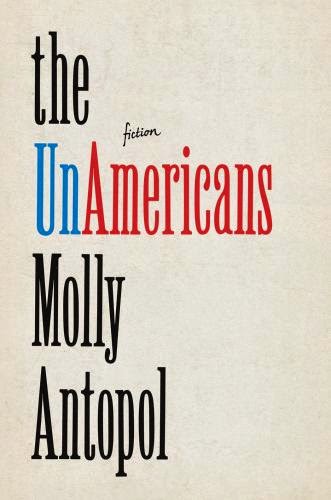
The UnAmericans by Molly Antopol
This debut collection by one of the National Book Foundation’s “5 under 35” honorees has been getting a lot of praise since its release earlier this year—justifiably so, judging by the brief sips I’ve taken from its eight stories that span history and continents while focusing on disillusionment and heritage.
Sample Lines:
The day outside is hazy and gray; the fan on the counter blows dust. Jell-O spins slowly in a glass case. The radio, always a notch too loud for my taste, is turned up even higher for news hour. British troops have left Egypt, the Army-McCarthy Hearings are in full swing and the man who invented the zipper has dropped dead.
What’s Important is Feeling by Adam Wilson
Adam Wilson follows up his debut novel
Flatscreen with this collection of a dozen stories about detoxing junkies, a doomed movie set, horny teenagers, and passionate arguments about Young Elvis vs. Vegas Elvis (which one to put on a postage stamp?). There’s a lot of angst and a fair amount of weed in here, but I’m totally cool with that.
Sample Lines: “She smelled like maple syrup and a scent I couldn’t place, cleaning products maybe, the faint whiff of chemical lemon.”
Noontide Toll by Romesh Gunesekera
Imagine, if you will, Travis Bickle driving around the island of Sri Lanka and narrating a series of stories as he picks up fares. However, instead of a mohawked assassin who keeps looking in the rear-view mirror and saying, “You talkin’ to me?” you have a much more peaceful soul named Vasantha who has retired early, bought himself a van with his savings, and started a second career as a driver for hire. He lives in a land rattled by civil war and many of Romesh Gunesekera’s stories involve Vasantha probing his riders with big questions of life, death, war, and love.
Sample Lines:
Mrs. Arunachalam, who was seven months pregnant and spread across the middle seat of my taxi van, wanted to make the eleven-hour journey to Jaffna in small stages, like an ant on a sugar trail. She ought not to have been travelling at all, the way she sighed and swooned, but her husband was very keen to show her a property in Jaffna that he intended to buy and develop as their new family home, and so she had come.
The Heaven of Animals by David James Poissant
In “Knockout,” a married couple decides to call it quits in a most unforgettable manner:
It did not end in one of the usual ways. It did not disintegrate or implode or go up in flames. Max and Allison Bloom’s marriage ended in a five-round fight in a ring on their front lawn.
In other stories, David James Poissant gives us babies that glow, men wrestling an alligator, and a wolf who pays a visit in the middle of the night (taking a seat at the narrator’s dining room table and lapping up a bowl of coffee). I’m prepared for a TKO from Poissant’s fiction.
Can’t and Won’t by Lydia Davis
Lydia Davis writes stories so short, you almost don’t feel the hypodermic stab through your skull, inject its medicine into your brain, then withdraw like reverse lightning. They’re that brief and quick. Sometimes, they’re only one page long. Occasionally, they’re just a sentence. You’ll find some of those micro-fictions in
Can’t and Won’t (including the two-sentence title story). These are short stories for people who say they don’t have time for short stories.
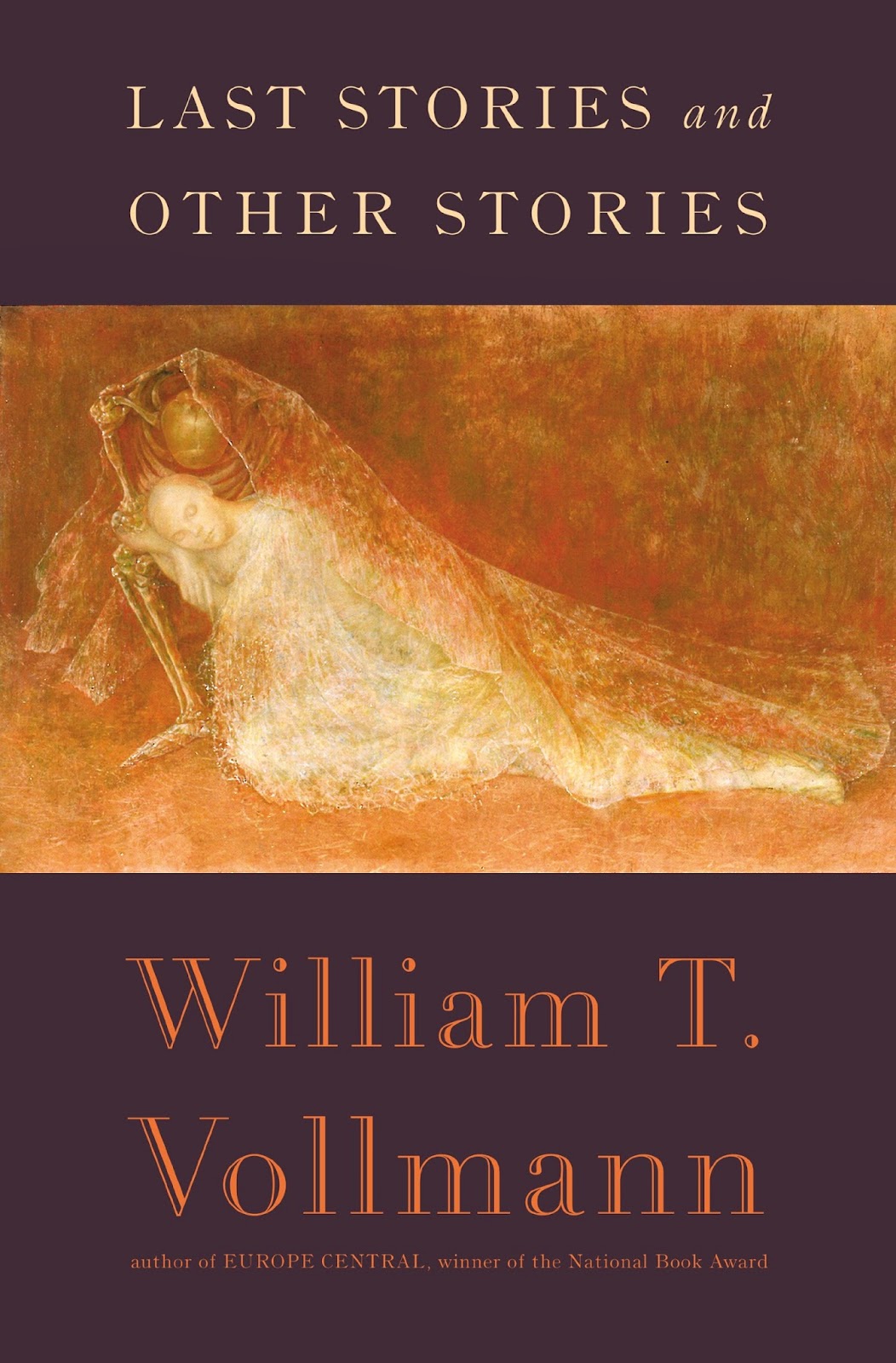
Last Stories and Other Stories by William T. Vollmann
Two months ago, I had the pleasure of sitting in a darkened theater listening to William Vollmann read a story about lovers shot by a sniper while picking their way through a rubble-littered street in war-torn Bosnia. I say “pleasure” because while the subject was a sad one, the telling of it was magnificent. I’m sure the others at Spokane’s Bing Crosby Theater (as part of the annual Get Lit! Festival) would agree that the story was literally and figuratively haunting. Ghosts whisper through all the pages of this new collection (Vollmann’s first book of fiction since the award-winning 2005 novel
Europe Central). Here’s the publisher’s description of the tales: “A Bohemian farmer’s dead wife returns to him, and their love endures, but at a gruesome price. A geisha prolongs her life by turning into a cherry tree. A journalist, haunted by the half-forgotten killing of a Bosnian couple, watches their story, and his own wartime tragedy, slip away from him. A dying American romances the ghost of his high school sweetheart while a homeless salaryman in Tokyo animates paper cutouts of ancient heroes.” Prepare to be spooked in July.
We Were Flying to Chicago by Kevin Clouther
Kevin Clouther's collection of short stories is further evidence that some of the most interesting literary fiction is coming out of small presses like Black Balloon Publishing. I've sampled paragraphs from several of the stories in this book--sort of like picking out pieces from a box of chocolates, taking one bite, then putting it back and moving on to the next caramel--and I can confidently report that this is writing that's unmistakably alive and feral. Here, for example are the opening lines to the title story:
For no good reason, we were flying to Chicago. Our connecting flight had already left, and there was no hope of another that night. The flight attendant was a cruel sentinel. Stubbornly unattractive, she skulked in the corner, preemptively dismissing the complaints we all were thinking.
I just love that phrase "stubbornly unattractive." Succinct and fresh, it paints a clear picture of this “cruel sentinel” in just two words. Or consider this opening paragraph to the story “I Know Who You Are”:
I was sitting at a desk in New York, an enormous desk with too many small things on it. The smallest thing was a paperclip. I mauled the paperclip. It was the only one. I turned it into an S and then a triangle. With my index finger, I launched the triangle into the door. The paperclip bounced cleanly onto the carpet.
Haven't we all mauled paperclips at one point in our lives? I'm attracted to Clouther's writing by its blunt, simple style--which I know can be a turn-off to some readers. But not me. I dig snub-nosed stories like this.
Scouting for the Reaper by Jacob M. Appel
Jacob M. Appel, winner of the Hudson Prize, had me hooked with the penguins in his short story, “Hazardous Cargoes,” whose opening lines go like this:
Know your load.
That’s rule numero uno in this business, which is why I make them count the penguins out in front of me one at a time. I’m not going to be the schmuck who shows up in Orlando two birds short of a dinner party. Or the screw-up who's got to explain to the highway patrol exactly how sixty kilos of coke ended up in his rig without his noticing. Short John Silver used to tell about one fellow who kept trying to turn his radio off, over and over again, but it just wouldn't shut off, and when he pulled into a rest stop for the night, he realized he'd got a ten-piece mariachi band camping out in his trailer. So I always insist on a comprehensive inventory. And the guys at the zoo grumble about it, giving me looks as icy as the day is hot, but they do it. So I know I’m pulling out of Houston with exactly forty-two Gentoo penguins, seventeen Jamaican land iguanas, four tuataras from New Zealand, and a pair of rare, civet-like mammals called linsangs. No more, no less.”
Most of the other first lines in this collection are no less hook-y:
“Miss Stanley was new to the ninth grade that autumn, and we could all sense that she wasn't cut out for it.”
“The woman who was not my mother was named Sheila Stanton and at the age of nineteen she was held captive for ninety-one days by the Red Ribbon Strangler.“
“Nothing sells tombstones like a Girl Scout in uniform.”
“Another family crisis: The rabbit goes blind.”
I don't know about you, but when I see authors wield this much control and authority over their fiction from the first sentence, I just know the rest of the book will have a satisfying pay-off.
Between Wrecks by George Singleton
I look forward to new George Singleton stories in the same way that certain thirty-year-old men with painted faces, beer-can-crumpling hands, and a predilection for Velveeta-and-salsa fondue look forward to the Super Bowl. If G. S. was a pro team, he’d have fingers full of championship rings. One of the things I like about his writing is how he doesn't tip-toe into his stories with a lot of wasted, rambling preamble. He gets right to the point with his first sentences, sort of like Muhammad Ali barreling forward like a locomotive, connecting glove to jaw before his opponent even has a chance to say the word “bumblebee.” For example, these two from the first story in
Between Wrecks:
Because I'd seen part of a documentary on gurus who slept on beds of nails, and because I'd tried to quit smoking before my wife came back home after leaving for nine months in order to birth our first child--though she would come back childless and say it was all a lie she made up in order to check into some kind of speech clinic up in Minnesota to lose her bilateral lisp--I had a dream of chairs and beds adorned entirely with ancient car cigarette lighters. This wasn’t the kind of dream a person could forget or disobey.
Between Wrecks also includes the story “I Would Be Remiss,” 60 pages of “thank yous” by the (fictional) author of (the equally-fictional)
No Cover Available: The Story of Columbus Choice, African-American Sushi Chef from Tennessee. This is followed directly by Singleton’s own (single-page) Acknowledgements in which, among others, he thanks his agent “for agreeing that I should not bow to the pressure of writing another novel.” Amen.
Incendiary Girls by Kodi Scheer
I know I’ve been throwing a lot of “first lines” at you here today, but I’m going to pitch a few more at you—brilliant sentences from Kodi Scheer’s debut collection:
“Ellen is convinced her daughter’s lesson horse is the reincarnation of her mother.”
“When Angela comes out of the anesthesia, she asks for a dirty martini with an onion instead of an olive. In truth, she just wants to be healthy again.”
“Two hours before the competition, we find a pink shoe box of scorched hair in the hotel lobby.”
“Gabe follows me around the house. He’s the cadaver we’re dissecting in Gross Anatomy.”
“Your lover hasn’t always been a camel.”
“Hannah found his left ear in the laundry hamper.”
Now, be honest, could you resist reading what follows after eye-popping beginnings like those?
Flings by Justin Taylor
The author of
Everything Here is the Best Thing Ever and
The Gospel of Anarchy returns with a new collection of stories which opens with these lines from the title story:
Percy took Intro to US Labor History for an elective in the spring of his sophomore year. The professor's name was Leon Pitzer, an embittered pinko genius with an august limp. In him Percy knew he had finally found the father surrogate he'd been searching for since arriving at Schmall, a semi-elite liberal arts college in a town of the same name in the heart of the heart of Ohio.
Good Lord, there's a lot to love just in those 70 words. Here's a tantalizing taste of what we can expect to find in the following pages:
A man writes his girlfriend a Dear John letter, gets in his car, and just drives. A widowed insomniac is roused from malaise when an alligator appears in her backyard. A group of college friends try to stay close after graduation, but are drawn away from--and back toward--each other by the choices they make. A boy's friendship with a pair of identical twins undergoes a strange and tragic evolution over the course of adolescence. A promising academic and her fiancee attempt to finish their dissertations, but struggle with writer's block, a nasty secret, and their own expert knowledge of Freud.
Stone Mattress by Margaret Atwood
Scanning the titles of the nine tales in Margaret Atwood's new collection gives us a hint of the darkness we might expect to find here: "The Freeze-Dried Groom," "I Dream of Zenia with the Bright Red Teeth," "The Dead Hand Loves You," "Torching the Dusties," and so on. Turning to the first page and reading the opening lines of "Alphinland" confirms that Atwood knows how to coat dread with beautiful imagery:
The freezing rain sifts down, handfuls of shining rice thrown by some unseen celebrant. Wherever it hits, it crystallizes into a granulated coating of ice. In the streetlights it looks so beautiful: like fairy silver, thinks Constance. But then, she would think that; she's far too prone to enchantment. The beauty is an illusion, and also a warning: there's a dark side to beauty, as with poisonous butterflies. She ought to be considering the dangers, the hazards, the grief this ice storm is going to bring to many; is already bringing, according to the television news.
This is the first collection of short fiction from Atwood since 2006's
Moral Disorder. The wait, by all appearances, has been well worth it.
See You in Paradise by J. Robert Lennon

"It's been a few years since we last used the magic portal in our back garden, and it has fallen into disrepair." It's been a few years (five, to be precise) since we had a collection of short fiction from J. Robert Lennon, but unlike the narrator in the opening story ("Portal"), he shows no signs of decrepitude as he leads us through his own magic portal into weird, slightly-aslant worlds brewed and steeped in the hot coils of his brain. As the publisher notes in its description of the book: "Sexual dysfunction, suicide, tragic accidents, and career stagnation all create surprising opportunities for unexpected grace in this full-hearted and mischievous depiction of those days (weeks, months, years) we all have when things just don’t go quite right." One of the stories, "The Accursed Items," could almost be categorized as a miniature collection of flash fiction in and of itself. It's a seemingly-random catalogue of, yes, "accursed items," each with a story of its own. The list ranges from "A BISCUIT crushed into the slush of a Kentucky Fried Chicken parking lot" to "THE CASSETTE TAPE that happened to be in the tape deck when it was stolen from a car and was still lodged there when you bought the stolen deck for thirty bucks from a collapsible buffet table set up on the sidewalk outside your office building, and which contained, as you learned the moment you installed the deck and turned it on, a desperate recorded plea for reconciliation from a weeping woman to the lover who spurned her, which fills you with both pity and delight to hear, pity because of her plaintive voice and the blurred, haunted quality of the recording, delight because the offending lover's tape deck has been stolen." As Jess Walter says, "J. Robert Lennon can do anything on the page." Indeed, indeed.
Inappropriate Behavior by Murray Farish
After reading Murray Farish's debut collection, frequent Quivering Pen contributor Derek Harmening had this to say:
The book does a number on you before you've even opened it—that cover. It's a great cover: a square of light from a window falls on a dark lawn, the oblong silhouette of a figure standing inside stretches out along the grass. There's a duality at work here: the watcher is in a lit room, peering out into darkness, while the reader lurks outside, crouched behind a bit of shrubbery, looking in, clandestine.
And this feeling doesn't go away. From its first pages, Inappropriate Behavior feels like an exercise in voyeurism; we are shown things these characters surely would not want us to see, or we watch them see what they shouldn't see. They are men and women, desperate one and all, pushed to their limits and compelled to transform lest they implode entirely.
Click here to read the rest of Derek's review. The book's characters range from assassins (Lee Harvey Oswald in "The Passage" and John Hinckley Jr. in "Lubbock is Not a Place of the Spirit") to voyeurs (a married couple finds their sex life taking a deviant turn as they spy on their fifteen-year-old neighbor--definitely inappropriate behavior). These might be squirm-worthy stories (they stay with you "like an open-palm slap to the face," Harmening writes), but I think it's good to have discomfort in our fiction every now and then--just to keep us grounded in reality.
The Stories of Jane Gardam
If you only know Jane Gardam as the novelist behind the
Old Filth trilogy, then you're in for a treat with this collection which brings together short work from throughout her long career. Her previous short story collections include
The Pangs of Love,
Going Into a Dark House and
Missing the Midnight. Weighing in at nearly 500 pages,
The Stories of Jane Gardam gathers 28 of her best stories published between 1977 and 2007 in one volume. "Old Filth" is here, too--a story published in 1996, eight years before the novel appeared on our shelves. It begins with a wickedly delicious paragraph echoed in the novel:
Old Filth had been a delightful man. The occasional kink, but a delightful man. A self-mocking man. The name had been his own invention, a joke against himself: a well-worn joke now but he had been the one to think of it first. "Failed In London Try Hong Kong." Good old legal joke.
In her introduction to this collection, Gardam cites James Joyce's
Dubliners as a primary influence on her writing: "[He] showed me how...short stories can have the power to burn up the chaff, harden the steel without comment or embellishment or explanation." That's Gardam in a nutshell: simple, direct, furnace-hot.
A Different Bed Every Time by Jac Jemc
Most of the stories in Jac Jemc's collection are really short--as in, flash-fiction short--but that makes them no less powerful than those which run into 10- and 20-page lengths. In fact, the flash length focuses their intensity. I picture Jemc in her basement at a foot-powered grinding wheel pressing the tip of her pen to the stone, sparks flying off like tiny fireworks, until it's sharp as an icepick. In what I've read so far in
A Different Bed Every Time, the blade is well-honed. All traces of bloat have been carved away. To give you some idea of their length, there are 42 stories in 148 pages--you do the math. To illustrate Jemc's style, I'm going to randomly cherry-pick a few of my favorite lines from different stories:
I want to be banished. I want to return. I want to fascinate someone's ignorance. I want to shake coins from myself. I want to fill my bathing suit with corkscrews. ("Alcyone")
The outside world and I were like cracked magnets. We had been one and the same, but we'd broken apart and could now do nothing but resist. ("Somebody Else's")
Despite your best efforts, remember that ridiculous night in Grasse when you drank too much good French wine in the cafe, and how strong the summer breeze was on the short walk back to the hotel, and how she had that loose dress on that the wind nearly knocked off, and how her ankle turned gently on the cobblestones and how instead of leaning to help her up, you stretched yourself out on the ground beside her and twined yourself into her spilled limbs, and how you lay there breathing in the moist Provence air, clean and fragrant, and how she imagined aloud the wind undressing the flowers in the fields that surrounded the town, and how when you kissed her bare shoulder, you swore you could taste the jasmine on her skin. ("Recipe For Her Absence")
Another man looked at me like I might gnaw off his face before dragging him into a bush. He calmed down and we shared a holy week of drinking. ("A Violence")
At fourteen they diagnosed me with scoliosis, which basically meant my spine kept trying to sneak west. ("Bent Back")
Family Furnishings: Selected Stories 1995-2014 by Alice Munro
Alice! Munro! New Release! For fans of short fiction little else needs to be said of this 600-page book which picks up where
Selected Stories (1968-1994) left off. Maybe I'll just quote from the speech given by Peter Englund, Secretary of the Nobel Committee for Literature during the presentation of Munro's 2013 Nobel Prize:
The minimalist style we encounter is clean, transparent, subtle and stunningly precise. It is a challenge to find an unessential word or a superfluous phrase. Reading one of her texts is like watching a cat walk across a laid dinner table. A brief short story can often cover decades, summarising a life, as she moves deftly between different periods. No wonder Alice Munro is often able to say more in 30 pages than an ordinary novelist is capable of in 300.
Ardent Munro-ers probably have all these stories already, but for those who've only lightly sampled her--or (perish the thought!) have yet to encounter her works--this would be a good place to start. Prepare to furnish your bookshelves with this collection in November.
The Assassination of Margaret Thatcher & Other Stories by Hilary Mantel
Given the provocative cover with a headless figure sitting at a table, you'd be forgiven if you thought Hilary Mantel's first collection of short stories since 2003 carries on the setting of her Tudor novels
Wolf Hall and
Bring Up the Bodies. But no, these are contemporary short stories. I'm not sure if there's a beheading--or even an assassination--in the book, but whatever is on these pages is bound to be interesting. A statement from Mantel's British publisher reads in part, "Where her last two novels explore how modern England was forged,
The Assassination of Margaret Thatcher shows us the country we have become." Apparently the late prime minister shows up in 10 of the stories which, according to the publisher, "range from a ghost story to a vampire story to near-memoir to mini-sagas of family and social fracture." Look for the Iron Lady stories to hit bookstores in September.
The Emerald Light in the Air by Donald Antrim
Because I've enjoyed so many of Donald Antrim's stories over the years--primarily in
The New Yorker--I'm surprised to discover this is his first collection of short fiction after publishing three novels (
The Hundred Brothers,
Elect Mr. Robinson for a Better World,
The Verificationist) and a memoir about his mother (
The Afterlife).
The Emerald Light in the Air collects his
New Yorker stories, which his publisher calls "heartbreaking and hilarious." Here's more about those laughter-through-the-tears stories from the jacket copy:
Nothing is simple for the men and women in Donald Antrim’s stories. As they do the things we all do—bum a cigarette at a party, stroll with a girlfriend down Madison Avenue, take a kid to the zoo—they’re confronted with their own uncooperative selves. These artists, writers, lawyers, teachers, and actors make fools of themselves, spiral out of control, have delusions of grandeur, despair, and find it hard to imagine a future. They talk, they listen, they hope, they dream. They look for communion in a city, both beautiful and menacing, which can promise so much and yield so little. But they are hungry for life. They want to love and be loved.
Snow in May by Kseniya Melnik
In
this interview at Ron Hogan's
Beatrice, Kseniya Melnik describes how her initial drafts tend to go much longer than the average, "acceptable" length for short stories: "I’ve made peace with the fact that most of them lean toward being a
povest’, a form that has a stronger tradition in Russia than in North America.
Povest’ is defined as a narrative with a word count somewhere between a short story and a novel. The classic
povest’ concentrates on one character’s struggle with several obstacles during a limited passage of time and contains very few secondary characters and subplots." Her debut,
Snow in May, is a series of linked tales set in the port town of Magadan in Russia's Far East, a former gateway for prisoners assigned to Stalin’s forced-labor camps. Some of my favorite collections are linked stories--
Olive Kitteridge,
Later, at the Bar and
Winesburg, Ohio in particular--so I'm really looking forward to reading how Melnik creates a new world on the page. Here's how her publisher describes
Snow in May:
Comprised of a surprising mix of newly minted professionals, ex-prisoners, intellectuals, musicians, and faithful Party workers, the community is vibrant and resilient and life in Magadan thrives even under the cover of near-perpetual snow. By blending history and fable, each of Melnik's stories transports us somewhere completely new: a married Magadan woman considers a proposition from an Italian footballer in '70s Moscow; an ailing young girl visits a witch doctor’s house where nothing is as it seems; a middle-aged dance teacher is entranced by a new student’s raw talent; a former Soviet boss tells his granddaughter the story of a thorny friendship; and a woman in 1958 jumps into a marriage with an army officer far too soon.
Weaving in and out of the last half of the twentieth century, Snow in May is an inventive, gorgeously rendered, and touching portrait of lives lived on the periphery where, despite their isolation—and perhaps because of it—the most seemingly insignificant moments can be beautiful, haunting, and effervescent.
Karate Chop by Dorthe Nors
Publishers Weekly has this to say about Danish author Dorthe Nors' debut in English: "Nowhere here is a word out of place. Imagine Grace Paley with more than a little of Mary Gaitskill's keen eye for the despair and violence of sex, mixed with an otherness that's unsettlingly odd and vivid." After reading the publisher's synopsis, I'd say that's a pretty accurate assessment of the contents: "While his wife sleeps, a husband prowls the Internet, obsessed with female serial killers; a bureaucrat tries to reinvent himself, exposing goodness as artifice when he converts to Buddhism in search of power; a woman sits on the edge of the bed where her lover lies, attempting to locate a motive for his violence within her own self-doubt."
Karate Chop comes to us from the good folks at Graywolf Press, who know a thing or two about quality imported fiction (See:
Per Pettersen, among many others). For Nors' book, Graywolf teamed up with
A Public Space in the first of what looks like happy collaborations.
Hai Karate!
The Book of Duels by Michael Garriga
If you like ending arguments with "Fine then! Pistols at dawn, good sirrah!"....or if you swoon over the duels in
Barry Lyndon,
The Three Musketeers and
The Princess Bride....or even if you're a fan of arm-wrestling....then I think you'll like Michael Garriga's debut collection which depicts duels, both real and imagined. Here are some
Sample Lines from the duel between Alexander Hamilton and Aaron Burr, as told from H's perspective:
Now I've accepted Jesus Christ into my heart, though He comes and goes--so much on His mind, I suppose one cannot blame Him--how to concentrate on any one single thing--still, He's filled my heart and I will waste my first shot but thereafter I am Christ-bound to defend myself--standing twenty-five feet from this filthy Catiline, I burrow my feet in the pebbles and I slip and the hair trigger goes off and I'm not afforded the dignity of delope--has the Lord forsaken me, too?--Burr fires his ball and a full lifetime ticks by before it burrs into my body, and in that eternity, I realize that we are a two-sided coin flipped by Fate and here I land facedown and forlorn and I forgive him everything.
Here's the publisher's synopsis:
In this compact collection, "settling the score" provides a fascinating apparatus for exploring foundational civilizing ideas. Notions of courage, cowardice, and revenge course through Michael Garriga's flash fiction pieces, each one of which captures a duel's decisive moment from three distinct perspectives: opposing accounts from the individual duelists, followed by the third account of a witness. In razor-honed language, the voices of the duelists take center stage, training a spotlight on the litany of misguided beliefs and perceptions that lead individuals into such conflicts.
From Cain and Abel to Andrew Jackson and Charles Dickenson; from John Henry and the steam drill to an alcoholic fighting the bottle: the cumulative effect of these powerful pieces is a probing and disconcerting look at humankind's long-held notions of pride, honor, vengeance, and satisfaction.
Bonus: the stories are accompanied with illustrations by Tynan Kerr.
You Will Never See Any God by Ervin D. Krause
This one was brought to my attention by
Owen King after I put out a call for suggestions on Twitter (thanks, Owen!). His praise of the book really resonates with me, the lover of dark, dank and dirty fiction: “Although there is not a single ghoul or specter to be found in the fiction of Ervin Krause, these sad, troubling stories will haunt you. He anatomized every part of us: our wicked wishes, our shameful fears, and our tragic desires.” In his introduction to this collection published by The University of Nebraska Press, Timothy Schaffert gives the nine stories their own label,
Krausian: "Fiction characterized by the stark, haunting poetry of his language, the treachery of his landscapes, the moral and fatal failings of his unblessed characters." Sadly, Krause never lived to see the publication of this book--it comes to us forty-four years after his death at age 39 from Hodgkin's disease. Krause may not have had a book published while he was still alive, but his stories were widely acclaimed, appearing in anthologies and several issues of
Prairie Schooner. In 1963, he was runner-up for the O. Henry Award; Flannery O’Connor placed first. That same year, a story he wrote ("The Anniversary") so offended a University of Nebraska dean that he called it "obscene" and censored it from the pages of
Prairie Schooner, which was just about to go to press with it. This created something of a Midwestern scandal, eventually leading to the resignation of Karl Shapiro,
Prairie Schooner editor and Krause's biggest champion. Despite Krause's success, he couldn't find a publisher to take on a collection of his work--"too dark," he was told repeatedly. After his death in 1970, Krause's widow, Loretta, continued to search for a book publisher willing to take on the admittedly-bleak stories, but her efforts failed as well. It wasn't until Schaffert, who teaches at University of Nebraska-Lincoln, was digging around the
Prairie Schooner archives that he stumbled upon these short fiction gems. “I’d long been aware that a short story had caused some ruckus back in the 1960s, and that it had ultimately been removed from the journal by university administrators,” Schaffert told the
Omaha World-Herald. “I became curious about the author, and discovered that his work was right beneath my nose; he’d published several stories in
Prairie Schooner.” Schaffert helped give Krause the happy ending he deserved. It's a backstory that reminds me of the bittersweet histories of Breece D'J Pancake and John Kennedy Toole, both writers who only found wide acclaim after their deaths.
Sample Lines (from "The Metal Sky"):
He brought his fingers up and then very carefully and quickly snapped the fingers shut on the arched yellow wings. The butterfly struggled, but its wings were caught and its fragile black body vibrated in its writhings. The yellow dust on the wings rubbed off and filtered down, lightly.
It will know I am not dead, the man thought. It alone, if nothing else, will know.
Man v. Nature by Diane Cook
Diane Cook's debut announces its primal urgency right from the start with a title that pits humans against the natural world. I imagine if
Bear Grylls decided to ditch the wild and settle down into literary fiction, it might go something like this.
Told with perfect rhythm and unyielding brutality, these stories expose unsuspecting men and women to the realities of nature, the primal instincts of man, and the dark humor and heartbreak of our struggle to not only thrive, but survive. In "Girl on Girl," a high school freshman goes to disturbing lengths to help an old friend. An insatiable temptress pursues the one man she can't have in "Meteorologist Dave Santana." And in the title story, a long fraught friendship comes undone when three buddies get impossibly lost on a lake it is impossible to get lost on. In Diane Cook's perilous worlds, the quotidian surface conceals an unexpected surreality that illuminates different facets of our curious, troubling, and bewildering behavior. Other stories explore situations pulled directly from the wild, imposing on human lives the danger, tension, and precariousness of the natural world: a pack of not-needed boys take refuge in a murky forest and compete against each other for their next meal; an alpha male is pursued through city streets by murderous rivals and desirous women; helpless newborns are snatched by a man who stalks them from their suburban yards. Through these characters Cook asks: What is at the root of our most heartless, selfish impulses? Why are people drawn together in such messy, complicated, needful ways? When the unexpected intrudes upon the routine, what do we discover about ourselves?
Sample lines (from “Moving On”): “They let me tend to my husband's burial and settle his affairs. Which means I can stay in my house, pretend he is away on business while I stand in the closet and smell his clothes. I cook dinners for two and throw the rest away, or overeat, depending on my mood. I make a time capsule of pictures I won't be allow to keep. I bury it in the yard for a new family to discover.”
American Innovations by Rivka Galchen
I'll admit I'm a sucker for that terrific cover image of a cat going to Rube Goldbergian lengths to get an apple. But it's the contents behind the cover which have me really tempted. For instance, check out the way Galchen lures the reader with these opening lines from "The Lost Order":
I was at home, not making spaghetti. I was trying to eat a little less often, it’s true. A yogurt in the morning, a yogurt at lunchtime, ginger candies in between, and a normal dinner. I don’t think of myself as someone with a “weight issue,” but I had somehow put on a number of pounds just four months into my unemployment, and when I realized that this had happened—I never weigh myself; my brother just said to me, on a visit, “I don’t recognize your legs”—I wasn’t happy about it. Although maybe I was happy about it. Because at least I had something that I knew it wouldn’t be a mistake to really dedicate myself to. I could be like those people who by trying to quit smoking or drinking manage to fit an accomplishment, or at least an attempt at an accomplishment, into every day. Just by aiming to not do something. This particular morning, there was no yogurt left for my breakfast. I could go get some? I could treat myself to maple. Although the maple yogurt was always full cream. But maybe full cream was fine, because it was just a tiny—
My phone was ringing.
The caller I.D. read “Unavailable.”
I tend not to answer calls identified as Unavailable. But sometimes Unavailable shows up because someone is calling from, say, the hospital.
“One garlic chicken,” a man’s voice is saying. “One side of salad, with the ginger-miso dressing. Also one white rice. White, not brown. This isn’t for pickup,” he says. “It’s for delivery.”
He probably has the wrong number, I figure. I mean, of course he has the wrong—
“Not the lemon chicken,” he is going on. “I don’t want the lemon. What I want—”
“O.K. I knew—”
“Last time, you delivered the wrong thing—”
“Lemon chicken—”
“Garlic chicken—”
“O.K.—”
“I know you,” he says.
“What?”
“Don’t just say ‘O.K.’ and then bring me the wrong order. O.K., O.K., O.K. Don’t just say ‘O.K.’ ” He starts dictating his address. I have no pencil in hand.
“O.K.,” I say. “I mean: all right.” I’ve lost track of whether it was the lemon chicken or the garlic he wanted. Wanting and not wanting. Which tap is hot and which is cold. I still have trouble with left and right.
These lines remind me of a terrific Raymond Carver story, "Whoever Was Using This Bed," which also has a caller dialing a wrong number as its premise. It's all so unsettling, risky, and as dangerous as a cat balancing on a broom.
Misadventure by Nicholas Grider
After last year's
Three Scenarios in Which Hana Sasaki Grows a Tail by Kelly Luce, the new independent publisher from Austin, Texas
A Strange Object is back with this debut collection of short stories "that maps what happens when desire and control between men goes awry. In
Misadventure, men search for themselves, for each other, for the sources of sanity and sickness, power and grief. Grider challenges the conventional gay narrative and asks the reader to re-imagine the kind of work short fiction should do." Matt Bell, author of
In the House upon the Dirt between the Lake and the Woods, had this to say about
Misadventure: "Each of these compelling stories is ruled not by certainty but by maybe, by sometimes, by ‘this is not necessarily a proclamation of anything’—and so we finally sense behind their pages the nervous heart of the modern man, stubbornly clinging to a fading authority, now more desperately than ever before.”
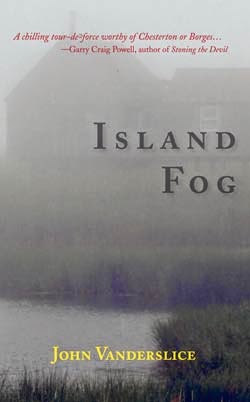
Island Fog by John Vanderslice
In this collection, published by small press Lavender Ink from New Orleans, John Vanderslice plants his literary flag on Nantucket Island, Massachusetts. The eleven stories (some are novella-length) range across a timeline starting with the late 18th century in the opening story, "Guilty Look," to the 21st century later in the book. As his subjects, Vanderslice takes on a 1795 bank robbery, an encounter between a twelve-year-old white boy and a mixed-race Native American in 1820, and a "whaling widow" awakening to her lesbianism in 1837. Here are some
Sample Lines to whet your appetite:
The sea was rough. It had rained in the afternoon, turning the waves metal gray and triangular. No one was out on deck. Instead, they were collected in this room with him, bits of continental refuse, going to the island in an out of sync time. Doug gave into himself and spent three dollars of his little hoard for a Sam Adams. If the beer didn't satisfy him, he decided, he would buy another. If he was going to be poor, he might as well be poor and buzzed. If he ran out of food money he'd live on Ramen noodles and tap water until payday. The beer was more important. It calmed him.
Here are some words of praise about John Vanderslice's
Island Fog from short-story writer David Jauss (
Glossolalia):
"This island feels like some mad doctor’s lab experiment”—so says one of the fictional residents of Nantucket Island, the setting of John Vanderslice’s extraordinary story collection Island Fog. But Vanderslice is by no means a mad doctor, though he is definitely one insanely talented writer. In the eleven literary experiments that comprise his book, he brilliantly parses the soul of America from 1795 to 2005 through the microcosm of Nantucket Island. To borrow the words of yet another of his characters, he conveys “the awful weight of history pressing down upon the island” and conveys it so viscerally that we feel that “time has stopped or has circled around on itself” and we are “back inside that living spiraling body, that awful protean force” that was, and is, not just the island but America. This is a book that anyone interested in the grand, failed experiment that is America should read. It will open your eyes, and your heart.
Island Fog is set to envelop you starting in October.
Further Joy by John Brandon
I'm a fan of John Brandon's debut,
Arkansas, a neo-noir novel which is cynical and hip--always a delicious combination. I haven't had a chance to read his subsequent novels,
A Million Heavens and
Citrus County, but news that McSweeney's is about to trot out Brandon's first story collection has me feeling like a pistol that's just about to go off. Brandon's writing style is in the vein of Elmore Leonard and Charles Portis and I expect
Further Joy will go
rat-a-tat-tat like a loaded gun between readers' hands. Here's McSweeney's with more about what's in store for us in these stories: "In eleven expertly crafted stories, John Brandon gives us a stunning assortment of men and women at the edge of possibility—gamblers and psychics, wanderers and priests, all of them on the verge of finding out what they can get away with, and what they can't. Ranging from haunted deserts to alligator-filled swamps, these are stories of foul luck and strange visitations, delivered with deadpan humor by an unforgettable voice."
The Other Language by Francesca Marciano
Writing in the
New York Times, Michiko Kakutani had some words of high praise for Francesca Marciano's book: “Magical, fleet-footed stories [that] leap around the globe, written with authority and storytelling virtuosity...What makes these tales stand out is Marciano’s sympathetic but wryly unsentimental ability—not unlike Alice Munro’s—to capture the entire arc of a character’s life in a handful of pages, and her precise yet fluent prose that immerses us, ineluctably, in the predicaments of her men and women... Captivating.” Here's how the publisher describes this globe-trotting collection:
Taking us to Venice during film festival season, where a woman buys a Chanel dress she can barely afford; to a sun-drenched Greek village at the height of the summer holidays, where a teenager encounters the shocks of first love; and to a classical dance community in southern India, where a couple gives in to the urge to wander, these remarkable tales bring to life characters stepping outside their boundaries into new passions and destinies.
Paper Lantern and Ecstatic Cahoots by Stuart Dybek
Earlier this month, acclaimed Chicago fictioneer Stuart Dybek released not one but
two short story collections on the same day:
Paper Lantern (nine stories in 208 pages) and
Ecstatic Cahoots (fifty stories in 196 pages). Nice work if you can get it. I'm trusting Dybek's publisher made a calculated artistic decision by packaging the 59 stories in separate volumes (though the cynic in me says, "$$."). Either way, this is something of an event since Dybek releases a new book, on average, once a decade. He may not be a household name, but he's held in high esteem by other writers and critics. I liked David Ulin's smart, beautiful review of these two books in the
L.A. Times so much, I'm going to quote from the opening paragraphs here:
Stuart Dybek's stories occupy a territory somewhere between Vladimir Nabokov and Nelson Algren—beguiled by the play of language but also gritty and specific, fundamentally urban at their core. This makes sense, I suppose: Born in 1942, a graduate of the Iowa Writers' Workshop and a native of Chicago, Dybek is a product of the classroom and the streets. Although he's received a Guggenheim and a MacArthur "genius" grant, he doesn't publish often; his last book of fiction, I Sailed With Magellan, came out in 2003.
And yet, to read him is to be reminded of the resonance of small moments, the connections that arise and dissipate with the passing power of a thought. "[T]he story might at first be no more than a scent," Dybek observes in "Fiction": "a measure of the time spent folded in a cedar drawer that's detectable on a silk camisole." What he's getting at is the power of inference, the longing implied, and inspired, by a gesture or a phrase.
"Fiction" comes late in Ecstatic Cahoots: Fifty Short Stories. The book takes its title from a line in The Great Gatsby: "First he nodded politely, and then his face broke into that radiant and understanding smile, as if we'd been in ecstatic cahoots on that fact all the time." It's a superlative collection, and its appearance would be notable even if it weren't accompanied by a companion volume, Paper Lantern: Love Stories, which has been published simultaneously.
The acuity of such a move resides in the relationship of the books to each other; each can be read on its own terms, but it is in the juxtaposition that they deepen as we notice echoes, interactions, reprises.

To read the rest of the review (and you really should),
click here. Here's a bit more about
Ecstatic Cahoots from the publisher's synopsis:
There are crazed nuns hijacking streetcars, eerie adventures across frozen ponds, and a boy who is visited by a miniature bride and groom every night in his uncle’s doomsday compound. Whether they are about a simple transaction, a brave inquiry, a difficult negotiation, or shared bliss, the stories in Ecstatic Cahoots target the friction between our need for ecstatic self-transcendence and our passionate longing for trust between lovers, friends, family, and even strangers.
And here's what you'll find in
Paper Lantern: Love Stories:
An execution triggers the recollection of a theatrical romance; then a social worker falls for his own client; and lovers part as giddily, perhaps as hopelessly, as a kid trying to hang on to a boisterous kite. A flaming laboratory evokes a steamy midnight drive across terrain both familiar and strange, and an eerily ringing phone becomes the telltale signature of a dark betrayal. Each story is marked with contagious desire, spontaneous revelation, and, ultimately, resigned courage. As one woman whispers when she sets a notebook filled with her sketches drifting out to sea, “Someone will find you.”
History of Cold Seasons by Joshua Harmon
Weather, wet and biting and sharp and cold, blows through the cracks between sentences in many of the stories in Joshua Harmon's aptly-titled
History of Cold Seasons. Take, for instance, these randomly-selected
Sample Lines:
Those dawns I rose from the boat of our bed, one bare foot on the frosty floor and then the other, my wife would roll in her sleep; toss, tangled in the snarl of blankets, as her near-closed eyes sought me out in the tin-blue of morning. "Don't go," she would say. "Listen to that wind today. Can't you hear those breakers?"
I can practically taste the salt of those shore-crashed waves with fine writing like that. The New England weather in these pages might be forbidding, but Harmon's prose invites us inside to sit for a spell beside a crackling fire. Did I mention
History of Cold Seasons will be released in November? A little something for your winter reading pleasure.
So Much a Part of You by Polly Dugan
Like the previously-mentioned
Chase Us and
Snow in May,
So Much a Part of You is a collection of linked stories which follow many of the same characters across the pages, ranging from the Great Depression to post-9/11 America.
In this terrific interview at Laura Stanfill's blog, author Polly Dugan explains how the linked stories started off as individual pieces. At that time, forming them into a novel was the farthest thing from her mind. The format of linked stories, she said, allowed her to "explore points of view without feeling like I had to be confined by a certain consistency; each story is part of a greater whole, but a part that stands alone, so I was able to write from more than one close third point of view: children (both male and female), a teenage girl, and men at different ages and stages in their lives, as well as the stories that are close third female POVs." The publisher's synopsis describes the collection like this:
Anna Riley and Anne Cavanaugh have had a lover in common, but it's not until a pivotal moment in one of their lives that their paths unforgettably converge. Peter Herring was the center of Anne's universe in college, and now, a few years later, he's become the center of Anna's, and merely a minor player in his ex-girlfriend's world. That is, until Peter and Anna are invited into Anne's parents' home to visit with her dying mother, and he finds himself drawn back into her orbit. Years later, when her own mother is dying, Anna will find herself yearning to reach out to Anne, with whom she had shared such a brief but intimate bond, and find solace in that moment from long ago. Perspective evolves with time, and so with time, what Peter means to each woman-as lover, as friend, as connection to the past-also evolves. Through exploring Anne's and Anna's ties to Peter and unfolding the narratives of the people who weave meaningfully in and out of their lives, Polly Dugan reveals the power of family secrets, the ripple effects of her characters' emotional choices, and how poignantly their intertwined relationships shape who they are and how they love.
Here's a bit of praise from Alan Heathcock, himself the author of an exceptional collection of short stories,
Volt: "Polly Dugan makes the greatest deal the best of literature can offer--she will be honest, completely bare, and deliver a reader wholly into the secret world of her character's empathy. What a powerful and glorious thing it was to become these characters, to have my worldview touched by their lives. It's a rare skill to write pain with such love, such care, such warmth, and like Alice Munro and Elizabeth Strout, Polly Dugan has achieved a small miracle in breaking my heart and still having me ask for more.
So Much a Part of You announces a potent and fresh new voice to the landscape of short fiction."
Leaving the Sea by Ben Marcus
Apparently, whenever I want to read some hilarious cruise-ship stories, I should just turn to
Harper's Magazine. I'll always remember the day in 1996 I discovered David Foster Wallace (an unknown name to me at the time) when I opened
Harper's and read "A Supposedly Fun Thing I'll Never Do Again" (then titled "Shipping Out"). Several spit-takes and fallings-out-of-chair later, I realized I'd discovered a kindred spirit. Likewise, I got a substantial, mid-afternoon, post-heavy-lunch chuckle out of the opening paragraph of Ben Marcus' short story, "I Can Say Many Nice Things," about a washed-up writer leading a writing workshop on board a cruise ship (also published in
Harper's wouldinjaknow):
Fleming awoke in the dark and his room felt loose, sloshing so badly he gripped the bed. From his window there was nothing but a hallway, and if he craned his neck, a blown lightbulb swung into view. The room pitched up and down and for a moment he thought he might be sick. The word “hallway” must have a nautical name. Why didn’t they supply a glossary for this cruise? Probably they had, in the welcome packet he’d failed to read. A glossary. A history of the boat, which would be referred to as a ship. Sunny biographies of the captain and crew, who had always dreamed of this life. Lobotomized histories of the islands they’d visit. Who else had sailed this way. Famous suckwads from the past, slicing through this very water on wooden longships.
From reviews I've read, Marcus' experimental style is an acquired taste; but, hey, he had me at "All aboard!" with this one story at least. Here's more about the collection from the publisher:
In the dystopian “Rollingwood,” a divorced father struggles to take care of his ill infant, as his ex-wife and colleagues try to render him irrelevant. In “Watching Mysteries with My Mother,” a son meditates on his mother’s mortality, hoping to stave off her death for as long as he sits by her side. And in the title story, told in a single breathtaking sentence, we watch as the narrator’s marriage and his sanity unravel, drawing him to the brink of suicide.
Doll Palace by Sara Lippmann
My thanks to Erika Dreifus for reminding me about this one.
Doll Palace had been on my radar at one point, but then had sadly, unaccountably slipped off. But never fear--it's firmly back on now: a bright green blip underneath the sweeping arm of the radar. Here's a little more about these stories:
A girl ditches her innocence at a state fair. Strippers ponder love over a Brazilian wax. A father falls for a drug-addled babysitter. A mother ends a pregnancy. Doll Palace dwells in the harder-edged territories of human compassion, navigating the powerful, often unsettling ground rarely spoken of with candor, care, and grace. Written in spare yet vulnerable prose, Doll Palace is that rare collection that invites imitation but leaves a vast majority wondering how she did it.
Want to see what she did?
Click here to read the story "Whipping Post." It's raw and electric and unforgettable.
All the Rage by A. L. Kennedy
Scottish writer A. L. Kennedy remains one of those contemporary authors I've been meaning to read for many years, but just haven't managed to crack open one of her books. It's not Kennedy's fault, it's mine (the old familiar song of "too many books, too little time"). Her novel
Day in particular intrigues me. Writers Richard Ford and Claire Messud have raved about her and Ali Smith dubbed her "the laureate of good hurt." Hmmm. Maybe
All the Rage will be the one to finally tip me over the edge. I hear it's--well, you know. The publisher describes the collection as
a luscious feast of language that encompasses real estate and forlorn pets, adolescents and sixtysomethings, weekly liaisons and obsessive affairs, "certain types of threat and the odder edges of sweet things." The women and men in these dozen stories search for love, solace, and a clear glimpse of what their lives have become. Anything can set them off thinking--the sad homogeneity of hotel breakfasts, a sex shop operated under Canadian values (whatever those are), an army of joggers dressed as Santa. With her boundless empathy and gift for the perfect phrase, Kennedy makes us care about each of her characters. In "Takes You Home," a man's attempt to sell his flat becomes a journey to the interior, by turns comic and harrowing. And "Late in Life" deftly evokes an intergenerational love affair free of the usual cliches, the younger partner asking the older, "What should I wear at your funeral?"
Damn. She had me at "jogging Santas."