Wednesday, November 2, 2016

New Story: Jesus and Elvis Have a Little Conversation


What if the King of Rock ’n’ Roll and the King of Kings were seatmates on a cross-country flight?

That’s the premise of my latest short story which appears in the current issue of The New Guard. Here’s how Jesus and Elvis Have a Little Conversation begins:
     Even before he sat next to me on the Minneapolis-to-Seattle flight, I could tell he was the kind of guy who talked to strangers. His face was large and loose with a tiny, tropical-fish mouth. As he walked sideways down the aisle with his carry-on, those small thick lips were working up and down, then side-to-side, as if he was mumbling, “Me, me, me, me.” His eyes rolled in their sockets, keeping time with the mouth. I thought of those fish that live at the bottom of the ocean and get all jittery and bug-eyed when you bring them to the surface. Some of them even explode from the pressure, swim bladders pushing out through the mouth.
     This guy wore a shiny black windbreaker with gold embroidery over one breast, and though he hadn’t turned around, I knew there’d be a big logo on the back, a motorcycle club or maybe a Vietnam veterans group, stitched with dragons. This is all I had time to see before I realized he was about to sit next to me and I flicked my eyes away. Today, of all days, I was in no mood for small talk.
I received my copy of The New Guard yesterday, so I haven’t had time to dig deep into it, but skimming the stories and poems, I can already tell there's some great reading ahead of me. Based on the first sentences alone (my typical method of skimming), the authors know how to engage the reader with bold language. Here are some of my favorite opening lines in the issue:

First, there is Jimmy’s six-pack of O.V., warm and bereft.
     Last Call at the Dogwater Inn
     by Kristyn Dunnion

On the TV in the Hotel Playa Bar, a bunch of us watched and clapped and cheered while up on the moon Neil Armstrong and Buzz Aldrin floated around in their space suits, hit golf balls, and did scientific experiments. In front of God and everybody way up there on the moon they jumped around and danced a weightless and silly conga.
     Moon Walk in Mazatlan
     by Roger David Popper

We were all on the boat looking for bodies.
     The Red Dress
     by K. C. Sinclair

The trouble arrived in a white panel van in late August.
     The Picker
     by Carol Smith

The Monday after Thanksgiving, Gemma returns to work at Superior Advertising. The heat of their almost-affair had burned off during the break and she and Holland are confidently just-friends again.
     Oops
     by Amber Kusmenko

As for the poetry, these first lines caught my eye:

Thank you brain for your six-lane highway
           that plays half a dozen bars of Bartok
                      on repeat refrain all night
while sorting tax receipts
     Letter to My Brain at 3AM in a Plea for Sleep
     by Sarah Rice

You dissolve in your chair
and the anchorman’s voice takes you down,
down through the circles of hell.
     Ictus
     by Wulf Losee

The lab stinks of roasted meat.
     Science as the Letter S
     by William Doreski

The northern March lies deep
in snow, but winter’s black-and-white
begins its swell to sepia
     Contact Sheets
     by Anne Witty

Editor Shanna McNair has picked a great lineup of fiction and poetry and packaged it in an issue that features the delicious cover art Dinosaur Feeding Frenzy by Robert C. Jackson. I look forward to carving out a little time so I can sit down and dive deep into these pages.


Monday, October 31, 2016

My First Time: Lamar Herrin


My First Time is a regular feature in which writers talk about virgin experiences in their writing and publishing careers, ranging from their first rejection to the moment of holding their first published book in their hands. Today’s guest is Lamar Herrin, author of seven novels, including Father Figure, The Lies Boys Tell, House of the Deaf, and Fractures; a memoir, Romancing Spain; and numerous short stories, which have appeared in The New Yorker, Harper’s, The Paris ReviewEpoch, and elsewhere. He has won a NEA fellowship, an AWP Award for the Novel, and The Paris Review’s Aga Kahn award for fiction. He is a professor emeritus from Cornell University and with his wife, Amparo Ferri, divides his time between Ithaca, New York and Valencia, Spain.


My First Novel

My first novel, The Rio Loja Ringmaster, was published by Viking Press in 1977. Prior to its publication, the first and fourth chapters were published separately in The Paris Review as stories. (The first of those two won the Aga Kahn fiction prize in The Paris Review for 1975). In fact, George Plimpton took it on himself to recommend to Viking that it give me a contract on the book yet to be written, which Viking did. I mention this not to brag but to convey how auspicious a birth the novel had had and how easy the sailing (to confuse the metaphors) had come to seem. In fact, the very idea of the book had been a happy occurrence.

A friend of mine, Dallas Wiebe (now that I think of it another Paris Review author) and I were attending a baseball game in the old Crosley Field in Cincinnati, Ohio. We sat beside one of the bullpens and watched the nervous antics of the relief pitchers more than we did the game. Relief pitchers seemed a special breed, skating out on a fine line of sanity while awaiting their eleventh hour appearance in the game. My friend and I challenged each other to write a story about a relief pitcher.

To my knowledge, his never came to light, but, three years later, mine became The Rio Loja Ringmaster, and since in the interim I'd been in Mexico and filled my head with sights and sounds there (and played a bit of ball in a regional league), that was where I set it. Viking assigned me a good editor to work with, who chapter by chapter steered me through things (alerting me to one potential disaster, but, it also must be said, forcing me to fight for the ending I wanted). I’d been paid a modest advance when I’d signed the contract and promised an equal sum when the book as a whole was accepted. I wrote during the day and sold Britannica encyclopedias in the evening (and played a little poker). When the time came to submit the final manuscript I had to pay a typist (back in those pre-press-the-printer-button days) to give me a clean copy. If I remember correctly, the going rate back then was a dollar a page, which in my case came to over three hundred dollars, and you had to sell more than a few encyclopedias to earn that back. But I paid up and got a clean copy, and no sooner had I looked at it than I realized there was, on every page, a change I wanted to make. But couldn’t, of course, because I didn’t have another three hundred dollars to spend. I submitted the final manuscript and waited anxiously for the verdict from Viking. When the book was accepted and I received the second half of my advance, I think my wife, small son and I went out—still in Cincinnati—for the pizza of our lives. The old firehouse up there in Clifton. A massive sense of relief.

I include all the above only so that I can relate what follows. Sometime in mid-1976 (the novel was published in January 1977), I received a call from my editor to tell me that she had the Viking lawyer on an extension and, in what for them amounted to little more than a bureaucratic formality, wanted to go over a few details in the book. It seemed that Viking had been hit by a couple of niggling lawsuits the year before and they were taking their precautions. The lawyer ran through the characters in my book. Any prototypes?

Well, that depended what was meant by “prototypes.”

How about what’s her name, the one with red hair? What about her? Make the hair blonde. And that couple from Colorado on page 236—any resemblance to anybody there?

Well, “resemblance” depended to what degree we were talking about.

Put them in Wyoming.

There was a team of Mexican ballplayers, whose names I had indeed used because I knew they would get a kick out of it although at least half of them couldn’t read. Rename them all. And on and on.

What this lawyer didn’t seem to understand—and my editor didn’t take much to heart either—was that what you had to rename or re-describe, say, on page 236, you also had to do the same for on ten other pages, that with one seemingly insignificant detail a certain unraveling began. Any writer out there will know what a funk that will throw you into, and if my memory serves it took a number of days for me to get down to it, at which time it felt as if I was betraying my mission and the whole novel was coming apart. Which was nonsense, of course. But this was a first book, I had committed myself to every word, had, I thought, lived and died by them, and here I was, because some lawyers were fighting shy, having to settle for second best! A deep abiding funk did indeed set in, from which I emerged only when the author’s copy of the novel itself arrived in the mail and I opened it and failed to trip on anything, so thrilled was I by the book in my hands and by the sight and sound of my own words, even if some were those which a Viking lawyer had so routinely tossed off. Make her blonde. Put them in Wyoming. Pablo, Pedro, what difference does it make? Make believe is make believe, and now everybody’s money, including my advance, would stay where it belonged.


Sunday, October 30, 2016

Sunday Sentence: The Iliad


Simply put, the best sentence(s) I’ve read this past week, presented out of context and without commentary.


          Where could he find some breathing room in battle?
          Wherever he looked, pains heaped on pains.


The Iliad by Homer
translated by Robert Fagles


Friday, October 28, 2016

Friday Freebie: Father Figure by Lamar Herrin


Congratulations to Sam Hobbs and Terry Pearson, winners of last week’s Friday Freebie: Fill the Sky by Katherine Sherbrooke.

This week’s contest is for Father Figure by Lamar Herrin. Philip Gourevitch, author of We Wish to Inform You That Tomorrow We Will be Killed With Our Families, had this to say about the novel: “What a remarkable, evocative book. Lamar Herrin is a consummate story-teller, and Father Figure is a richly imagined American story of patrimony and baseball and war and the inheritance of history’s wounds told with great physical immediacy and a seemingly effortless emotional intensity.” Keep scrolling for more information about the book...

Imagine a baby boy born in the last year of World War II to parents who, pre-war, were the darlings of the town. The father, a four-letter man, the golden boy of the town and state’s athletic fields, and his spirited and beautiful bride, were both enormously engaging personalities. The son knows his father both through the legendary, pre-war stories he has heard about him and his bride and as a one-legged casualty of the Battle of the Bulge, a powerful and embittered man, who returns from the war. How to square those two versions of his parents, and of his father especially? That is the subject matter of Father Figure—that quest and lengths to which the son is willing to go to regain a father he never had and the efforts of a sister and a past lover to save him before he goes too far.

If you’d like a chance at winning Father Figure, simply email your name and mailing address to


Put FRIDAY FREEBIE in the e-mail subject line. Please include your mailing address in the body of the e-mail. One entry per person, please. This contest is limited to those with an address in the U.S. Despite its name, the Friday Freebie remains open to entries until midnight on Nov. 3, at which time I’ll draw the winning name. I’ll announce the lucky reader on Nov. 4. If you’d like to join the mailing list for the once-a-week newsletter, simply add the words “Sign me up for the newsletter” in the body of your email. Your email address and other personal information will never be sold or given to a third party (except in those instances where the publisher requires a mailing address for sending Friday Freebie winners copies of the book).

Want to double your odds of winning? Get an extra entry in the contest by posting a link to this webpage on your blog, your Facebook wall or by tweeting it on Twitter. Once you’ve done any of those things, send me an additional e-mail saying “I’ve shared” and I’ll put your name in the hat twice.


Wednesday, October 26, 2016

Overnight Success and Other Fables of the Writing Life


Overnight Success
and Other Fables of the Writing Life
by Caroline Leavitt

Way back when I was 28, I first got serious about writing, I had my career trajectory all planned out. I was going to publish a few books of short stories, then, when I made my reputation with them, I’d try my hand at a novel. I collected enough rejection letters to wallpaper my apartment. I kept going, sure it would happen. But when it did, everything was vastly different than what I expected.

My first published short story, Meeting Rozzy Halfway, won first prize in a Young Writers Contest. I was thrilled. And naïve. When it immediately sold to a publisher and the accolades came in, the attention, the book tour, the money, the reviews, I thought this was going to be the way it would be from now on—a book every year, money, fame, respect. I loved telling people I was a published writer. I loved being flown to New York (I lived in Pittsburgh then), and I loved having my next two books snapped up. I was on my way!

Except I wasn’t.

My first publisher went out of business shortly before my second novel Lifelines came out. I had a few brilliant reviews, which made me happy, and zip sales, which made me weep. Suddenly, all the bliss of first publication was gone.

My next publisher was a highly respected literary imprint called Arbor House. They loved my novel, they promised to publish it well…and then they went out of business, the whole sales force fleeing the week the novel came out. You can guess what happened, and I felt so ashamed, as if it were all my fault.

I kept writing. “You’re lucky to be published at all,” my agent at the time told me, and my spirits plummeted. I began to doubt myself. When people asked me, “What do you do?” I answered with a question. “I’m a novelist?” I didn’t know anymore who I was, but I kept hoping.

I cried. Of course I cried. But I kept writing and I begged my agent to find me a big publisher who wouldn’t go out of business. She got me a three-book deal from a big publisher who put my book on the cover of their catalogue. Success, I thought. Success is back again!

But in my first meeting with my publicist, all she had to show me for publicity was a single letter to reviewers. “No ads?” I asked. The publicist shrugged. I wouldn’t give up. I began to try to do the publicity myself, ignoring what everyone told me I should and shouldn’t be doing. I passionately begged book review editors to consider assigning my novel, and while most ignored my emails and calls, some took pity. I wrote essays for every publication I could think of. I contacted radio shows. “Don’t do this,” I was told by my publisher, “It really looks bad,” but I did it anyway, and as the reviews in major papers began to actually have a tally, I started to feel a little bit better. And I got a fabulous new agent who didn’t tell me I was lucky to be published.

I finished my ninth novel Pictures of You and my agent loved it. But my publisher said, “This just isn’t special enough. We don’t get it.”

I asked them, “Would you consider a rewrite? Or another book?”

There was a silence and then they said, “No. We don’t think those will be special, either.”

I knew enough about publishing now to know that if you don’t have sales, if people don’t at least know who you are, then I had about as much chance as getting a publishing deal as I did of becoming a world-class acrobat.

So I cried. And cried. I felt ashamed and miserable and frightened. I reached out to friends, sobbing, and they all commiserated. Then one friend said, “I love my editor at Algonquin. Maybe she’d take a look at your work.” I was so grateful, I wanted to hug her.

She sent a brief description of the novel to her editor. A few days later, she told me that not only did her editor like the description, but she wanted to see the whole novel. I was dumbfounded. I didn’t expect anything, but I sent it in, and two weeks later, I got a call from the editor. At first, I was just waiting for her to tell me why the novel didn’t work. But then, she began talking about what Algonquin could do for me, almost as if she were saying, “If you choose us.” When I hung up, my hands were shaking. They were asking me to choose them. I didn’t have to beg. How was this possible?

They bought the book a week later and invited me into their offices to meet everyone. The staff was smiling and friendly and as excited as I was, something I had never experienced since my first novel. “Are you sure you know who I am?” I kept asking them, and the whole office smiled. “We’re going to change things,” they said.

And they did. They took that “not special book” and got it into six printings before it was published. It got on the New York Times Bestseller List its first month out. And on more than a few Best Book of the Year lists. They bought my tenth novel and it got on the New York Times Bestseller List, too. I was the same person, but people treated me differently now. They took my calls. And because of Algonquin’s out-of-the-box genius publicity and marketing and an editor who knew me so well, we called ourselves “sisters on the page,” I didn’t have to beg people to review me. They actually wanted to.

Cruel Beautiful World is my eleventh novel. I’m stunned and grateful for the response the book is garnering. It feels as if I’ve been pushed up to the next level, and believe me, I know it is because I finally landed at my perfect publisher.

Because I never gave up. When I post my reviews and links to my NPR shows, I apologize for self promotion, but my friends chastise me and tell me I have to stop being so humble, I have to stop apologizing for my success, as if some terrible mistake has been made. “Honey, you have to own it,” one friend tells me.

I’m trying to. But I know that every book is a new entity, and my next book might not do so well. I know, too, that if you are looking at a career, there are ups and downs rather than the “straight to the top” trajectory. Yes, I got what I had yearned for all these years, a readership, reviews, respect, prizes, but it doesn’t mean what I thought it would mean to me. In a way, I’m glad it took me all those years to become, as one review said, “an overnight sensation.” I laugh at that until I’m giddy. I try to be Zen about all of it, to be in the moment and keep my eyes on the prize—which is being able to write my next novel. I try to help every writer I can, however I can, and I tell them the same things I told myself. Write the best book you can. Don’t ever ever give up. That’s where the magic is.


Caroline Leavitt is the New York Times and USA Today bestselling author of Is This Tomorrow, Pictures of You, Girls In Trouble, Coming Back To Me, Living Other Lives, Into Thin Air, Family, Jealousies, Lifelines, and Meeting Rozzy Halfway. Her newest novel, Cruel Beautiful World, is set in the early 1970s against the specter of the Manson girls, when the peace and love movement begins to turn ugly. Cruel Beautiful World is the story of a runaway teenager’s disappearance and her sister’s quest to discover the truth and her own complicityand about an 80-year-old woman falling in love for the first time. Caroline’s many essays, stories, book reviews and articles have appeared in Salon, Psychology Today, The New York Times Sunday Book Review, The New York Times Modern Love, Publisher’s Weekly, People, Real Simple, New York Magazine, The San Francisco Chronicle, The Washington Post, The Boston Globe and numerous anthologies. She lives in Hoboken, New Jersey, with her husband, the writer Jeff Tamarkin.


Tuesday, October 25, 2016

Announcing my next novel: Brave Deeds


I’m pleased to announce my next novel, Brave Deeds, will be published by Grove/Atlantic in August 2017.

Spanning eight hours, the novel follows six U.S. Army soldiers who have gone AWOL as they move across war-torn Baghdad on foot in order to attend the memorial service for their platoon sergeant. Here’s how it begins:
     We walk, we walk, we walk.
     We head into the fireball sun, packed in battle armor, baking from the inside out, throats coated with dust, hearts like parade drums, adrenaline spiking off the charts. We’re alone, cut off from the rest of the brigade back at Taji, and now thanks to a busted drive shaft weakened in last week’s IED blast along Route Irish, we are without a humvee. We’ll have to finish this on foot.
     We double-time across Baghdad on our twelve feet, a mutant dozen-legged beetle dashing from rock to rock, confident in its shell but always careful of the soft belly beneath. We are six men moving single-file along the alleys, the edge of roads, the maze of beige buildings. We keep moving: ducking and dodging and cursing and sprinting. We wonder how it could have gone so wrong so fast.

This book was inspired by a 2007 Washington Post article by David Finkel that told of a nail-biting march across Baghdad by 27 soldiers from Alpha Company, 2nd Battalion of the 16th Infantry Regiment, 4th Infantry Brigade Combat Team, 1st Infantry Division (the battalion later featured in his brilliant and devastating book The Good Soldiers). Like the men in Brave Deeds, their mission was to attend the memorial service for one of their fellow soldiers who’d been killed in an IED attack a week earlier. I was struck by the apparent simplicity of the mission (“get 27 soldiers from Point A to Point B, from their neighborhood combat outpost to an Army base four miles away,” Finkel wrote) counterbalanced by its deadly nature—venturing into an area “twitching with daily gunfire, mortars, rockets, grenades and, most of all, roadside bombs, all targeting U.S. soldiers.” I saved that article and scribbled a note to myself in the margin: “There is DEFINITELY a story—if not a novel—in this.” This seed of an idea germinated for several years, growing its roots slowly. Though this story bears little resemblance to that original mission by Alpha Company, I hope some of the unit’s can-do spirit and bravery remains in my men.

I am pleased to be once again working with Peter Blackstock, my editor at Grove/Atlantic, and I’m humbled by the kind words he wrote about this novel soon after accepting it for publication:
I’m really excited to have acquired David’s next book, Brave Deeds–one he’s been working on for many years. It’s a brilliant piece of writing–moving, thoughtful, funny, and smart, a literary exploration of the existential experience of being in a platoon of soldiers, a unit of society that has been in existence since ancient times. It’s a testament to the melting pot that is the modern American Army and written with the humor and pathos that made Fobbit such a remarkable piece of writing. I’m so happy to be working on this wonderful book and to have a second book from David to publish!

Thanks, Peter...and thanks to everyone else who has kept faith with me over the years as I worked on this book—especially my wife, Jean, who remains my greatest cheerleader after nearly 33 years.


Trailer Park Tuesday: The Deep Code by Charley Henley


Welcome to Trailer Park Tuesday, a showcase of new book trailers and, in a few cases, previews of book-related movies.


One of the things I like most about the trailer for Charley Henley’s short story collection, The Deep Code, is its arty, independent film qualities. Stark, spare, a little surreal, it unspools like something from a Hollywood lens of the 1970s. Robert Altman, Terrence Malick, and Hal Ashby spring to mind, maybe even David Lynch (the video is from “Lost Highway Films LLC”perhaps a nod to the director’s 1997 film?). The title story of the collection is also set in the era of long, slow pans and sun-haze cinematography:
First time I ever met Stanley, my mother and I had pulled off the Interstate at a truck stop west of Missoula. We’d been living at this commune over in the Okanogan Valley, in Washington State. But then my mother wore out her welcome with the hippies, and we were back on the road again. It was three days to Ohio, and she said she needed a cold can of Hamm’s and a Vick’s nasal inhaler. This was in 1979. In those days such inhalers came with a ragged amphetamine in them. She’d cut the top off of the plastic. Then shove the little cotton swab down into a beer. Said she could drive all night like that. But then coming out of the store, she spied this little trucker bar up the road. Said she needed to get her mind right for the drive. So, we went back inside, where she bought me a Savage Sword of Conan and a meat stick. Then she dropped me off at the Gremlin. “Lock the doors,” she said. “And don’t talk to strangers.”
Those opening lines of “The Deep Code” hint at Raymond Carver and Richard Ford: the grim nostalgia of the lower-middle class. That tone seeps through in the excerpt Henley narrates at the beginning of the trailer, the opening lines of the book’s final story “Cerrito Blanco,” a conversation between a father and daughter about her mother (who is serving time in jail after having shot her husband):
“You’re never going to see that woman,” he said.
“She apologized,” said Tessa.
“Your mother shot me,” he said.
“Grandmother said you deserved it.”
A good book deserves a good trailer, and Henley’s The Deep Code gets it with this haunting short film. I’m ready to grab a six-pack of Hamm’s and some meat sticks, then hit the road with these stories of “desperation and perseverance.”


Monday, October 24, 2016

My First Time: Lenore Gay


My First Time is a regular feature in which writers talk about virgin experiences in their writing and publishing careers, ranging from their first rejection to the moment of holding their first published book in their hands. Today’s guest is Lenore Gay, author of the new novel Shelter of Leaves. Lenore is a Licensed Professional Counselor with a Masters in Sociology, as well as in Rehabilitation Counseling. She has worked in several agencies, psychiatric hospitals and for ten years she maintained a private practice. The Virginia Center of the Creative Arts has awarded her two writing fellowships. Her poems and short stories have appeared in several journals. Her essay “Mistresses of Magic” was published in the anthology In Praise of Our Teachers. “The Hobo” won first place in Style Weekly’s annual fiction contest. Lenore is also a volunteer reader at Blackbird, An Online Journal for Literature & The Arts.


My First Mentor

My father, a jovial, patient man, made paintings, mostly watercolors and pen and ink drawings. He wrestled big logs into his studio and carved them into abstract pieces. The smell of wax drifted from his studio when he polished the wood, to “bring out the grain.” He told me that by high school he’d figured writing and painting were both harsh mistresses; if he wanted a family, he had to choose. He chose painting and earned an MFA in painting.

At age sixty he enrolled in a poetry class at the local university, Virginia Commonwealth University, and took poetry classes for twelve years. His legacy was 1,000 poems. He’d edit a poem, and keep five or six versions. I watched his mind at work by following the trail of edits.

Wide, tall bookcases stood on either side of our living room fireplace. An early reader, I pulled books off the shelves and attempted to read them. I stumbled through my parents’ books: Gulliver’s Travels, Arabian Nights, Kidnapped, David Copperfield, Treasure Island, Seven Pillars of Wisdom, and Rebecca.

Mother, a voracious reader, taught me to write my name when I turned four. We visited the downtown library, where I acquired my first library card. My joys were roller skating on city sidewalks, and reading. When I turned five, my father and I began visiting museums and art galleries. To my questions about why an artist painted a strange body or a sky with three suns he’d answer, “What do you think?” When I asked what to write about, he’d say, “Use your imagination.”

Later, fascinated with Japanese painting, my father wrote haiku, a seventeen-syllable Japanese form of poetry. He gave me books on haiku. He and I critiqued each other’s attempts. I wrote haiku through high school, along with mostly limp poems. In college I composed an epic poem for a final paper in Art History class. I figured it was an A or an F. The professor gave me an A.

Philosophy and psychology were my college majors; in graduate school I earned a master’s in sociology, later a master’s in rehabilitation counseling. Through the grad school years, counseling career and parenting, I had little time to write. But stories were always with me, floating through my mind, collecting.

When my daughter turned thirteen, I enrolled in a fiction writing class. From that time on, I’ve been writing. At first, I only had time to write essays, memoir pieces and short stories. One short story tugged at me. I wondered if it could become a novel. A writing teacher gave me a definite yes. I started working the following day. That first book, at 60,000 words, took me almost as long to write as a later book at 125, 000 words. I learned a novel wasn’t a long short story, rather a much different, more complex animal. Occasionally I’ll still write a poem or a short story.

I have completed four manuscripts. One of these, Shelter of Leaves, was published this past August. Some months ago, I started work on a fifth novel. For now, the novel’s the thing.


Sunday, October 23, 2016

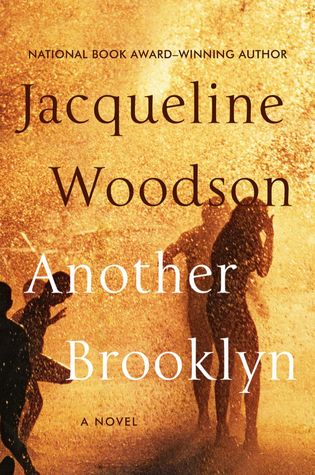
Sunday Sentence: Another Brooklyn by Jacqueline Woodson


Simply put, the best sentence(s) I’ve read this past week, presented out of context and without commentary.


We had the Top 40 music of the 1970s trying to tell our story. It never quite figured us out.

Another Brooklyn by Jacqueline Woodson


Saturday, October 22, 2016

Book Radar: Jessica Keener, Keir Graff, Elizabeth Strout, Elizabeth Crane, Tim Wirkus, Denis Johnson, Mike McCormack, Stephen King & Owen King


Book Radar rounds up some of the latest publishing deals which have caught my eye, gathered from reports at Publishers Marketplace, Galley Cat, office water-coolers and other places where hands are shaken and promises are made. As with anything in the fickle publishing industry, dates and titles are subject to change.

From Publishers Lunch, news of the following book deals...


Jessica Keener’s STRANGERS IN BUDAPEST, about a grieving father, convinced his son-in-law has murdered his daughter, who travels from Boston to Budapest to take matters into his own hands when an American couple and their newly adopted son—also in Budapest—become dangerously entangled in the father’s obsession for revenge, pitched as reminiscent of Celeste Ng’s Everything I Never Told You, to Algonquin for publication in 2017.


Booklist Online editor and author of The Other Felix and the upcoming The Matchstick Castle Keir Graff’s THE PHANTOM TOWER, where a pre-war apartment building in Chicago turns out to be a portal—for an hour a day—to its ghostly, never-built twin; when a couple of kids stumble upon the tower—whose residents may be alive, dead, or something...different—they’ve got to find their way back to reality, to Putnam Children’s.


Pulitzer Prize-winning author of Olive Kitteridge, Elizabeth Strout’s ANYTHING IS POSSIBLE, exploring the adult lives of the characters who grew up with Lucy Barton in Amgash, Illinois, to Random House for publication in June 2017.


Author of The History of Great Things and We Only Know So Much, Elizabeth Crane’s story collection TURF, featuring stories that explore and satirize our search for identity and belonging, tales of realism that blend into the fantastical, to Soft Skull for publication in Summer 2017.


Tim Wirkus’s THE INFINITE FUTURE, a genre-bending novel set in Brazil, Idaho, and outer space, which follows a librarian, a writer on the lam, and a disgraced historian, on an impossible quest for a fabled mystical book, whose pages we eventually find ourselves in, pitched as a mix of Bolano and Bradbury, to Penguin Press.


National Book Award and two-time Pulitzer Prize finalist Denis Johnson’s story collection (all original material except for two stories), for publication in January 2018, and a novel about a deposed Middle Eastern dictator retelling his life’s story as he is being interrogated, to Random House.


Irish author Mike McCormack’s SOLAR BONES, shortlisted for The Goldsmith Prize; on All Souls Day it is said in Ireland that the dead may turn up in their own home, and so we meet a middle-aged engineer who turns up between 12 noon and 1 p.m. at his kitchen table and reflects on the events that took him away and how minor decisions ripple into waves and test our integrity every day, to Soho Press.


Stephen King and son Owen King’s SLEEPING BEAUTIES, a novel set in the near future, to Scribner for publication in 2017.


Friday, October 21, 2016

Friday Freebie: Fill the Sky by Katherine Sherbrooke


Congratulations to Bart Zimmer, winner of last week’s Friday Freebie: The Age of Daredevils by Michael Clarkson.

This week’s contest is for Fill the Sky by Katherine Sherbrooke. I have two copies of the novel up for grabs. Keep scrolling for more information about the book...

When Ellie’s cancer exhausts the reaches of modern medicine, she travels to Ecuador with her lifelong friends, Tess and Joline, hoping that local shamans might offer a miracle. During a tumultuous week that includes strange, ancient ceremonies and a betrayal that strains their bond, each woman discovers her own deep need for healing, even the skeptic among them. Fill the Sky is about the complexity of friendship, the power of the spirit, and the quest to not simply fight death, but to shape an authentic life. Bestselling author Anita Shreve had this to say about Fill the Sky: “Three women, each with an important question to answer, travel together into a world richly imagined and beautifully rendered to find unconventional answers. This is a deeply moving novel about love, honesty, respect, the unlikely, and the truly possible.”

Be sure to check out Katherine’s story about her “first time” which appeared earlier here at the blog.

If you’d like a chance at winning Fill the Sky, simply email your name and mailing address to


Put FRIDAY FREEBIE in the e-mail subject line. Please include your mailing address in the body of the e-mail. One entry per person, please. This contest is limited to those with an address in the U.S. Despite its name, the Friday Freebie remains open to entries until midnight on Oct. 27, at which time I’ll draw the winning name. I’ll announce the lucky reader on Oct. 28. If you’d like to join the mailing list for the once-a-week newsletter, simply add the words “Sign me up for the newsletter” in the body of your email. Your email address and other personal information will never be sold or given to a third party (except in those instances where the publisher requires a mailing address for sending Friday Freebie winners copies of the book).

Want to double your odds of winning? Get an extra entry in the contest by posting a link to this webpage on your blog, your Facebook wall or by tweeting it on Twitter. Once you’ve done any of those things, send me an additional e-mail saying “I’ve shared” and I’ll put your name in the hat twice.