Showing posts with label Stewart O'Nan. Show all posts

Saturday, November 11, 2017

Chasing Spiders With a Pen: Gary Reilly’s War


by Mark Stevens

I know jackshit about war. In particular, Vietnam.

I had a low draft number but then the draft was cancelled, right when I was thinking about Canada. Or some other escape. Bone spurs? A high school friend had died in Vietnam. It scared the hell out of me.

I’ve seen the movies and I’ve read the books:

Platoon. Saving Private Ryan. Deer Hunter. Full Metal Jacket.

Matterhorn, Tree of Smoke, Dog Soldiers, Going After Cacciato.

But, still, I can only imagine.

I watched the Ken Burns documentary and tried not to throw anything at the television; all those lies.

Goodreads has a list of 280 novels about The Vietnam War. Would that do the trick?

I doubt it. Can art really capture the mental toll of war? I’m sure it comes close, in many cases.

It’s the same with coming home from war. I have no idea what it’s like to come home, to have seen so much death and killing and to have survived. I’m sure surviving is better, right?

The statistics suggest maybe, maybe not.

My friend Gary Reilly knew. He served in Vietnam. He was an MP at an airfield called Qui Nho’n. One year “in country,” not even in combat, and I believe he carried it around with him for the rest of his life.

Gary didn’t talk much about the war when he got home, in 1971. The war was winding down, but war is war. If you’re fighting, you’re fighting. By the end of 1971 “only” 151,000 U.S. soldiers would be in Vietnam; down from a half-million at the war’s peak.

I didn’t meet Gary until 2004, 33 years after he came back from Vietnam.

A couple weeks ago, I emailed Gary’s longtime partner, Sherry, to see if her recollection was the same as mine—that Gary didn’t talk about that year. Sherry agreed. She wrote: “Gary did not like to talk much about being in Vietnam. He would have nightmares sometimes that he associated with Vietnam, but he didn't talk about that much either. Sometimes he would wake up at night, yelling and trying to get the spiders off of him. He would say in his nightmare he was in Vietnam, being attacked by bugs. That was a recurring nightmare. He did talk sometimes about how he never took advantage of an ‘RnR’ that he may have been entitled to because he said once he left Vietnam, he would never be able to return.”

Gary didn’t talk much about those spiders, but he had an outlet: writing fiction. Shortly after returning from Vietnam, Gary took classes at the University of Colorado at Denver. The teachers were impressed with his style. Encouraged, Gary sent one story called “The Biography Man” off to the prestigious Iowa Review. It was published. And re-published the next year in the fourth volume of the Pushcart Prize Anthology. That particular story had nothing to do with Vietnam, but maybe it gave him a boost of confidence to keep writing.

On second thought, I doubt he needed it.

Gary was going to write.

And write.

“The Biography Man” was the first—and only story—that Gary published in his lifetime. (It’s a beauty; I’ve never read anything like it.)

One story—that was it.

When Gary passed away in 2011, however, he left behind 25 full-length novels.

Three of the 25 novels featured a character named Private Palmer, an MP who went to Vietnam and was part of the war. The first, The Enlisted Men’s Club, takes place at The Presidio as Palmer waits for the call up, unsure if it will come. The second book, The Detachment, takes place in Vietnam. And The Discharge finds Palmer at home in Denver trying to find a foothold back in civilization. The books form a seamless trilogy of one man’s journey to war—and back.

I’ve read all three—several times. I still know jackshit about what it’s like to go to war. I don’t have nightmares about spiders.

All three novels feature the war—getting ready, living with it, and dealing with the aftermath. Palmer is jaded. He finds ways to endure, to survive military stupidity and “shit jobs,” as he calls them. Palmer has his avoidance schemes, but in all three books he finds ways to connect with others, to assert or maintain his humanity.

As I write this, there are 1.3 million men and women in active duty in the U.S. armed forces. There are 10,000 stationed in Afghanistan, a war that has been going on since long before I met Gary Reilly for the first time. There are thousands in Bahrain and Kuwait and tens of thousands in South Korea and Japan, which could be a hot spot any moment, and of course now we know they’re in Niger and all over Africa, too.

We ask the soldiers to bear that weight but we really have no idea what toll that takes, thinking daily “what if?” Do they know what they’re getting into? Do they? They’re all okay with dying for the cause, for the country?

Some soldiers look down the barrels of their weapons. They are there to kill. Others are in what’s called “the rear.” During Vietnam, if you served in the rear, you were a REMF.

I didn’t know that acronym, or what it stood for, before a review of The Detachment was published by a book reviewer for the Vietnam Veterans of America: “Reilly gives the reader an immersion in this aspect of the Army throughout this fine novel of service in the rear. I add it to the short list of worthy novels of the REMF in Vietnam. Service in the rear was the majority experience, although it is seldom given respect or space in the Vietnam War canon.”

REMF: Rear-echelon motherfuckers. Support troops.

Gary Reilly didn’t see action. He was pure REMF.

Reilly didn’t see action and, of course, neither did his alter-ego, Palmer. (Even from his close-up vantage point for war, Reilly saw no need to take his fiction beyond what he had seen with his own two eyes; Palmer’s world was no more expansive than Reilly’s own.) Palmer didn’t see direct combat, but he saw the consequences of war all around him. The war came to him.

And took a toll.

We all know about that toll—the mental health, the injuries, the empty holes in families, the lost potential. I won’t go into detail here, only urge—if you’re curious—to read Gary Reilly’s view of Vietnam.

I’m not the only enthusiast of Gary’s work. As mentioned, the book reviewer for The Vietnam Veterans of America wrote a rave. Booklist praised Gary’s work as well. Here’s a note from a review of The Detachment: “Palmer’s mission is so banal most writers would not describe it, but Reilly describes it, and the result is that rarest thing in fiction, originality. His novel is a harsh and startling corrective to those foggy old vets who elevate their undistinguished service into something glorious.”

Ron Carlson raved (“Catch 23 or 24”) as did Stewart O’Nan (“classic.”) Both amazing writers if you don’t know them. O’Nan edited The Vietnam Reader.

Ernest Hemingway said to “write one true sentence” to get rolling. If you wrote one true sentence, you could take it from there. Hemingway was opposed to ornaments in writing.

Reilly left behind tens of thousands of true sentences. Here’s one paragraph from The Detachment:
The building shivers as a soft boom rolls across Qui Nhon, across the evac hospital, across the airfield, and the 109th, and beyond. Palmer sets the paperback down and sits absolutely motionless, waiting for another explosion. The VC must be tossing mortars again. He suddenly wants sky over his head, wants to be able to see everything around him, feels trapped inside this box of a room and wants to get out, to be able to see if there’s somebody he has to shoot at. He’s glad he’s good with the .45. Barely made sharpshooter with the M-14, but then he might be better with the M-16, a crazy spring in its butt to absorb the kick, probably thought up by the genius who designed the briefcase handle. Palmer scoots his chair back and stands up, casually turns and begins strolling down the aisle between the beds where men are sleeping. Nobody but himself seems to have noticed the boom. Maybe it takes more than the gentle shiver of a building to alarm infantrymen. Probably more attuned to real danger than Palmer ever will be.
That was Gary’s writing about war—chasing away the spiders with the work of his pen, one true sentence at a time.


Note: To date, in addition to Gary’s Vietnam novels, Running Meter Press has also published eight novels in The Asphalt Warrior series, comic adventures about a Denver cab driver named Murph. Three of the eight books were finalists for the Colorado Book Award and a reviewer for National Public Radio declared them “huge fun.” More about all of Gary’s work: www.theasphaltwarrior.com

Raised outside Boston, Mark Stevens is the son of two librarians. By law, he was required to grow up loving books. And writing. He was the 2016 Rocky Mountain Fiction Writers’ Writer of the Year. He writes the Allison Coil Mystery Series—Antler Dust, Buried by the Roan, Trapline and Lake of Fire. The last three books were all finalists for the Colorado Book Award. Trapline won (2015). Stevens is president of the Rocky Mountain chapter for Mystery Writers of America and serves on the national board. He also hosts a regular podcast for Rocky Mountain Fiction Writers. Kirkus Reviews called Lake of Fire “irresistible” and Craig Johnson, author of the Walt Longmire novels, said, “Mark Stevens writes like wildfire.”


Thursday, January 14, 2016

A Year of Reading: Best Books of 2015


Headlines-wise, 2015 was a disheartening year, one I’m glad is now in our rear-view mirror. I don’t have to list all the horrors here–you know them, you lived them–but I think we can all agree it was the kind of year that made you want to pull the covers over your head and stay in bed. Or go out and march in the street, trying to yell the political stupidity and incomprehensible violence back into silence. Whatever your method for dealing with the last twelve months, I think we can all agree that every now and then we needed the solace and escape provided by literature. In 2015, I vowed to read more novels than I did headlines. The very best books did more than just “take me away from reality,” they reminded me that words are stronger than bullets, sentences are sharper than knives, and books are almost always smarter than blow-dried politicians. Here are my very favorite books published in 2015, listed by the order in which I read them and prefaced by some choice cuts from their pages.


The Sasquatch Hunter’s Almanac
by Sharma Shields

It was a dreary Wednesday in early October when Eli informed Gladys that he planned to give up his flourishing podiatry practice and pursue, full-time, the region’s elusive Sasquatch.

I’m cheating a little with this one because I read an advance copy in late 2014, but since Sharma Shield’s debut novel came out in January 2015, I’m going to include it–if nothing else, because I don’t want it to get lost in the year-end rush of books released after Labor Day, and because I’ve been telling everyone I know they’ve got to read this utterly charming, magical, and weird novel about a man’s lifelong quest to find a man he believes is Bigfoot. The novel opens when the man, Eli, is a boy and watches his mother walk out the front door with the big, hairy “Mr. Krantz,” never to be seen again. The book gets even better from there as it explores the issues of abandonment, obsession and the need for revenge.


The Valley
by John Renehan

In the dream he climbed a narrow foot-trail alone in the sun, on a bare mountainside littered with metal corpses.

John Renehan’s debut novel is about an Army lieutenant who leaves the comfort of his forward operating base to travel deep into the heart of darkness in Afghanistan where he’s assigned to investigate a maverick platoon of soldiers who fired a warning shot into a crowd of villagers. The situation disintegrates into violence almost as soon as the aptly-named Lt. Black sets foot at the remote outpost. The Valley has all the best hallucinatory qualities of Apocalypse Now, combined with the taut moral suspense of a writer like Graham Greene. It’s been nearly a year since I read the novel, but I can still recall the fear it generated in me. It tasted like copper pennies.


Recipes for a Beautiful Life: A Memoir in Stories
by Rebecca Barry

According to my horoscope this past weekend was supposed to be a great one for romance. Well. Ha. Ha ha ha ha ha ha ha.

Meet Rebecca Barry: mother, writer, wife, self-distracting procrastinator who makes clay cats and mermaids instead of working on her novel. Meet Rebecca and Tommy, a charming, witty couple who love, fight, kiss-and-make-up, and then start yelling at their toddler sons to stop peeing on each other. Meet Rebecca Barry–she’ll make you laugh on one page and maybe get a little misty-eyed on the next with her “memoir in stories” which is full of hilarious dialogue, recipes for things like “Angry Mommy Tea,” and tips on how to fool your kids into picking up their toys (scare them with stories about a green-toothed fairy named Gladys who steals un-picked-up toys at night). I laughed, I cried, I twisted readers’ arms, insisting they drop everything and read these Recipes right goddamn NOW. This book holds many rewards, and they’re all delicious.


West of Sunset
by Stewart O’Nan

The moon was a thin white sickle, and he thought of that last summer in Antibes, before the Crash, when Zelda was still his and everything was possible.

Stewart O’Nan’s terrific biographical novel of F. Scott Fitzgerald led me down a rabbit trail to reading more of the Jazz Age genius’ short stories. Though I’ve always liked Fitzgerald for his novels, I felt like I rediscovered him in 2015 thanks to O’Nan. West of Sunset chronicles the last years of Fitzgerald’s life–his Hollywood years–as he struggles to develop screenplays for the big movie studios, while trying to write his own work (including, as we know now, that final unfinished novel, The Last Tycoon). I’ve always been a fan of O’Nan’s work, but he nearly outdoes himself in these pages which are permeated with sadness, soaked in whiskey, and full of near-perfect sentences–like this one of Fitzgerald’s final moments: “He lost his grip and felt himself falling, flailing blindly, and with his last helpless thought before the darkness swallowed him, protested: But I’m not done.”


The Dead Lands
by Benjamin Percy

They rode through forests that had burned down to blackened lances and others electric with the yellow-and-red music of fall. They rode across glinting fields of obsidian that looked as though the night froze and fell and shattered.

This past year’s reading was dominated by the apocalypse (I was going to say “plagued,” but refrained from that cheap pun; besides, the doomsday lit I read was, for the most part, pleasant, not plague-y). Of all the end-of-the-world novels I read in 2015, Benjamin Percy’s The Dead Lands was without a doubt the most inventive. For starters, it has a great set-up: the 1804 Lewis and Clark Expedition is recast as a post-SuperFlu/post-nuclear holocaust odyssey of a brave and desperate group, led by Lewis Meriwether and Mina Clark (see what he did there?). Like Emily St. John Mandel’s Station Eleven, the America-to-come is a frightening and devastated wasteland with the survivors’ belief there’s still some untainted green world out there. Percy writes with gusto and has a keen knack of timing, so the pages flew through my fingers. But most importantly, he made me care about his characters so that when sudden and unexpected death strikes the bunch (which it does frequently), I was genuinely moved and mourned for the loss of these made-up people.


Bad Sex
by Clancy Martin

      I went to the bar and asked the bartender to pour me a club soda. Then I said, “You know what, add a couple of fingers of vodka to that. Just float it on top. There, yes, a little more, thanks.”
      I drank it standing there and got a second. “Easy on the soda,” I told him.

Sure, there’s sex in this short novel–some of it is even bad (as in, harmful to the participants’ emotional well-being)–but what you’ll find more frequently is good writing. And heaps of it. Told in terse chapters, as if the story is being extracted from the narrator’s mouth by a dentist using minimal amounts of novocaine, Bad Sex chronicles the downward spiral of an alcoholic writer struggling to maintain her slippery grip on respectability. The novel opens with our anti-heroine Brett in Central America, away from her husband, and we watch (shaking our heads in judgment) as she begins a love affair with her husband’s friend Eduard. Her actions may lead to no good for all characters involved, but they also make for a great book.


American Copper
by Shann Ray

A single butterfly moved toward her as if climbing poorly made stairs.

If I compared a book to a twilit mountain range washed in purples and oranges and reds, the sight of it causing you, the reader who has trudged through a dull landscape of ordinary novels, to stumble in your sojourn and fall to one knee in reverence for the toothy horizon; and if I said reading this particular novel was as bracing and invigorating as drinking from a cold, clear alpine stream; and if I said it was gorgeous as a coffee-table book and deeply meditative as the Book of Psalms; and if I said just one book can, however briefly, change the way you look at both the natural world and human nature–if I said all that, you’d want to read this book, wouldn’t you? Good, glad to hear it, because American Copper by Shann Ray is all this, and more. And if you think I’m overstating the qualities of this novel set in Montana, well then my dear friend, it’s obvious you haven’t read it. Ray's debut novel has a huge, panoramic timesweep, from the Sand Creek Massacre of 1864 to the years just before World War II, but it is, at heart, an intimate novel. You may have overlooked American Copper in the year-end crush of new literary fiction hitting bookstores; don’t commit that same crime in 2016. Put this beautifully-written, spiritually-grounded novel at the top of your must-read list.


City on Fire
by Garth Risk Hallberg

Then they crested the ridge of Weehawken, and there it was, New York City, thrust from the dull miles of water like a clutch of steely lilies.

Garth Risk Hallberg’s big, bold debut novel invites comparison to blockbuster novelists like Charles Dickens and Tom Wolfe–and it certainly deserves to be mentioned in the same breath as those literary giants–but it more than holds its own as a fresh, inventive narrative that paints on a big canvas and never loses sight of its characters in all that vast page-length. The shooting of a girl in Central Park is at the heart of City on Fire, but around her swirl a cast of characters which include a fireworks manufacturer, a reporter (who may care too much for his own good), anarchists, estranged heirs to a family fortune, a pimply-faced teenager, and a self-doubting novelist named Mercer Goodman who writes what I can only guess is a Hallbergian self-reflection on page 867 (of 944):
In his head, the book kept growing and growing in length and complexity, almost as if it had taken on the burden of supplanting real life, rather than evoking it. But how was it possible for a book to be as big as life? Such a book would have to allocate 30-odd pages for each hour spent living (because this was how much Mercer could read in an hour, before the marijuana)—which was like 800 pages a day. Times 365 equaled roughly 280,000 pages each year: call it 3 million per decade, or 24 million in an average human lifespan. A 24-million page book, when it had taken Mercer four months to draft his 40 pages—wildly imperfect ones! At this rate, it would take him 2.4 million months to finish. 2,500 lifetimes, all consumed by writing. Or the lifetimes of 2,500 writers. That was probably—2,500—as many good writers as had ever existed, from Homer on. And clearly, he was no Homer. Was not even an Erica Jong.
No, but he is Garth Risk Hallberg and that’s good enough for me.


Nothing But the Dead and Dying
by Ryan W. Bradley

Frank leaned his head against the window. The glass was still plenty cold. If he were to cry, Frank thought, his face might actually freeze to the window.

Raymond Carver once wrote a story called “What’s in Alaska?” In the course of the story about two couples who get together, smoke some marijuana, and dance around the question of adultery, one of the characters answers the titular question: “There’s nothing in Alaska.” With all due respect to Mr. Carver, there is something in Alaska and it’s hot enough to finally and fully melt all the state’s glaciers. That something is a someone: a writer named Ryan W. Bradley and he writes some of the best bare-knuckled, roll-up-the-sleeves fiction I’ve come across in years. I bring up Raymond Carver because his ghost lingers in Bradley’s sentences, running his cold, bleak fingers across the words. This is not the Alaska of majestic mountains or Last Frontier homesteaders who have to trap their own food and pee into a bucket; it’s not even the wacky Palinesque side of the state. This is a grimmer, more realistic portrait of Alaska, one where collars are blue, the meth is sweet as candy, and life is taken one day at a time. As someone who lived in Fairbanks and Anchorage for nearly a decade, I can tell you this is about as spot-on true as I’ve seen Alaskan fiction get. I was lucky enough to read an advance copy of the short story collection and gave it a blurb, which I’ll just repeat here by way of a review:
Just like the State of Alaska itself, in which they’re set, the stories in Ryan Bradley’s Nothing But the Dead and Dying are beautiful, dangerous, hardcore, and strong enough to break your ice-brittled bones. Here are the losers and the strivers, the broken and the just-fixed, the down-but-not-out and the ones crawling back for forgiveness on hands and knees. These are the people of Alaska, yes, but they are also all the citizens of the world. They are you and me in our best and worst hours. Ryan W. Bradley goes full throttle down an icy road with these stories. GodDAMN, can he ever drive a story!


Fates and Furies
by Lauren Groff

Great swaths of her life were white space to her husband. What she did not tell him balanced neatly with what she did. Still, there are untruths made of words and untruths made of silences, and Mathilde had only ever lied to Lotto in what she never said.

Lauren Groff’s justly-acclaimed novel is a masterclass in writing sentences that are cut like jewels and fitted together like a cogs in a clockwork. Tick-tock gems, one and all. I won’t say too much about the structure of Fates and Furies, for fear of spoiling the first-time reader, except to say that the narrative division which lops the book into two pieces is vital and intrinsic and comes at just the right time. By mid-book, I was completely tangled in the decades-spanning marriage of Lotto (Lancelot) and Mathilde; it made me think about my own marriage and how many times all of us–married or not–say things without ever saying them.


People Like You
by Margaret Malone

Gladys smokes like it was just invented, brand new and full of possibility.

Margaret Malone’s debut collection of stories marches straight to the top of the hill and plants a flag: Here is an important writer to watch. This book embodies everything I love about short fiction: it dances on boxer’s feet, moves in quick, punches hard, and then leaves my head ringing. Malone writes about people who are sometimes distraught, sometimes depressed, often anxious, and occasionally misguided; but one thing they are—always, always, always—is real. Take the titular story, for instance, where average American married couple Cheryl and Bert attend a surprise birthday party for a “friend” they don’t particularly like. They get lost en route, drink too much once there, and leave with some stolen balloons. On the surface, it’s an ordinary evening; but what sets this story apart, what gives it an electric buzz that tastes like you just licked a lamp socket, is what doesn’t happen. With remarkable restraint, Malone takes us on a tour of the tip of the iceberg without feeling the need to state the obvious: there’s a massive, continent-sized chunk of ice right below our feet. A current of tension between Cheryl and Bert hums throughout the story. Their marriage is in free fall when we begin our 13-page eavesdrop and they’re both (or at least Cheryl is) frantically scrabbling their hands across their bodies, trying to find the ripcord that will open the marriage-saving parachute. It may or may not happen. That’s not the point. The point is the ride: the wry, jolting, cynical, sweet, hilarious ride Malone takes us on with her sentences. Sentences like: “We drive in silence for minutes, the inside-car hush of our motion, all the best-times feelings dissolving, the thick familiar air starts up between us. Me, driving. Him, sitting there.” Bottom line, readers like you need to read People Like You.


Ongoingness: The End of a Diary
by Sarah Manguso

I wrote so I could say I was truly paying attention. Experience in itself wasn’t enough. The diary was my defense against waking up at the end of my life and realizing I’d missed it.

At one time or another, many of us have kept a diary. I started mine in 1984, but it’s sporadic: I water its garden erratically. I’ve given it the wholly-pretentious title “My Life (and How I Lived It)” and it currently stands at 350,000 words. That’s nothing compared to the diary Sarah Manguso kept for twenty-five years: it eventually ballooned to 800,000 words. She felt compelled to write down, in detail, every single thing that happened to her every single day. “Imagining life without the diary, even one week without it, spurred a panic that I might as well be dead,“ she writes in Ongoingness. “The trouble was that I failed to record so much...From the beginning, I knew the diary wasn’t working, but I couldn’t stop writing. I couldn’t think of any other way to avoid getting lost in time.” Time–the tick-tock of pendulums, the silent flicker of numerals on a digital clock, the rustle of calendar pages–time is the main character in Ongoingness. Time, you ugly, teasing, despicable beast! I hate you, but I must come to terms with you. And that’s what Manguso tries to do in this stunning meditation (compressed into 104 pages) on how to live for the present moment. Of all the books I read in 2015, Ongoingness is the one that halted me in my tracks, made me stop what I was doing (suspended in time!) and read slowly, and repetitively, its words of wisdom. I’ll leave you with just a few sentences–pearls in a long string of them:
I tried to record each moment, but time isn’t made of moments, it contains moments. There is more to it than moments.

Lives stop, but life keeps going.

Left alone in time, memories harden into summaries. The originals become almost irretrievable.

Perhaps all anxiety might derive from a fixation on moments–an inability to accept life as ongoing.

Look at me, dancing my little dance for a few moments against the background of eternity.

Related posts:
A Year of Reading: Best Novellas of 2015
A Year of Reading: Best Books From Other Years
A Year of Reading: Best Poetry of 2015
A Year of Reading: Best Gift Book of 2015 for Bookworms
A Year of Reading: Best Short Stories of 2015
A Year of Reading: Best Book Cover Designs of 2015
A Year of Reading: Best First Lines of 2015


Wednesday, December 30, 2015

A Year of Reading: Best Books From Other Years


While most of the books I read in 2015 were released this year, I have to give a hearty nod of appreciation to those volumes published in years gone by—from the near-past to the farther-distant classics. The piles of books scattered in varying heights throughout my house are populated by authors and their works that I’ve been longing to read for years. Regrettably, most of them are rudely elbowed to the back of the line by louder, shinier, more-impatient releases of the here and now. Every so often, though, I’ll turn to those older, slightly-dusty books and say, “Okay, you’ve waited long enough; your time has come.”

In the near future, I’ll announce my favorite books published in 2015; but for now, here is the best of the backlist I read this year. They are ranked by the order in which I read them.


The Fever
by Megan Abbott
This was my first foray into Megan Abbott’s work. It won’t be my last. Not only does her writing smell like Teen Spirit, this novel about a mysterious illness infecting girls at a high school moves along at a blood pulse. From start to finish, The Fever had me in its grip.


An Exact Replica of a Figment of My Imagination
by Elizabeth McCracken
“This is the happiest story in the world with the saddest ending,” Elizabeth McCracken writes in this memoir about losing her baby in the ninth month of pregnancy. While there’s nothing inherently uplifting about miscarriage, McCracken tunnels into her grief and re-emerges with a gem of a book that left me profoundly stricken with both sorrow and, yes, joy—the kind of joy that comes from reading a sad story bravely and beautifully told.


Hondo
by Louis L’Amour
I’ve made it an annual tradition to begin the new year by reading one of the nearly 100 Louis L’Amour paperbacks on my shelf—after closing out the old year by reading one of the Agatha Christie mysteries I’ve collected over the years (maybe—but probably not—I’ll work my way through their entire canon before I die). I typically regard L’Amour westerns as palate-cleansers: entertaining diversions that never really reach literary heights. Hondo was different. Without hesitation, I gave it five stars at my Library Thing account. This tense and tender story of a lonely pioneer woman, a rugged gunman, and an Apache warrior on the warpath is flat-out great. The John Wayne movie is terrific, too.


11/22/63
by Stephen King
This year’s reading was dominated by the inimitable King of Horror. Not only did I finally get around to reading this doorstopper-whopper of a novel about a time-traveling schoolteacher who goes back to try and stop Lee Harvey Oswald’s assassination of John F. Kennedy, but I also read It (which splashes over into 11/22/63’s plot) and re-read The Stand for the first time in more than three decades. I’d always touted The Stand as my favorite of Stephen King’s books; unfortunately, it didn’t hold up as well for me this go-round. With a jaunty nudge of its elbow, 11/22/63 knocked The Stand right off its pedestal. The newer novel is King at his best. It’s complex, full of heart, and wound tight with nail-chewing tension.


Station Eleven
by Emily St. John Mandel
If the apocalypse turns out to be as beautiful as Emily St. John Mandel describes in this novel, then I can’t wait for the end of the world. Sure, there’s plenty of misery, starvation and deprivation in this tale about how the world puts itself back together after a pandemic, but the ultimate outlook of Station Eleven is one of hope. This is a book I plan to re-read just for the sheer pleasure of going back over Mandel’s pitch-perfect sentences.


Fourth of July Creek
by Smith Henderson
This was a big novel—as big as the Big Sky state of Montana in which it’s set—but it never felt loose or flabby. Quite the opposite, in fact. I connected with social worker Pete Snow from the very first chapter and never let go for the next 450 pages as he struggled to hold his life together while trying to mend other broken families. It’s still hard for me to believe this was Smith Henderson’s debut novel. It has the depth and heft of a writer at the polished height of his career.


The Mysteries Of Pittsburgh
by Michael Chabon
As a long-time fanboy of Chabon’s work, I can’t believe it took me nearly two decades to get around to reading The Mysteries of Pittsburgh. But when I did, I took a slow swim through the lush language of his debut. Chabon’s narrator, Art Bechstein, has a voice as memorable as that of The Catcher in the Rye’s Holden Caulfield. And that opening line? “At the beginning of the summer I had lunch with my father, the gangster, who was in town for the weekend to transact some of his vague business.” I was snagged hook, line and sinker.


Astoria
by Peter Stark
Peter Stark’s excellent book has the unwieldy subtitle “John Jacob Astor and Thomas Jefferson's Lost Pacific Empire: A Story of Wealth, Ambition, and Survival,” but it really could be boiled down to a simple “Hardship and Endurance.” I started reading Astoria just before my wife and I took a road trip to the titular Astoria, Oregon during Memorial Day weekend. Whenever possible, I like to have the full-immersion, Sensurround experience while reading books. Of course, the route the members of the 1810 Astor Expedition took on their three-year journey to forge an American empire on the Pacific Coast is radically different now. Those poor, bedraggled explorers probably could have used a warm croissant and a steaming cappuccino from Starbucks right around the time they were eating the soles of their boots in the Idaho wilderness. Stark put me there on the cross-country trip, every step of the way, and made me feel the misery.


The Short Stories of F. Scott Fitzgerald
Stewart O’Nan drove me to drink…and to read F. Scott Fitzgerald. Midway through West of Sunset, O’Nan’s brilliant novel about the last days of Fitzgerald, I made it a habit at the end of each workday to pour a few fingers of whiskey, neat, and sit at the bar in my basement with a copy of the three-inch-thick collection of Fitzgerald’s short stories, edited by Matthew J. Bruccoli. Sure, I’ve read and re-read many of Fitzgerald’s classic novels and have been a long-time fan of his work, but for the most part his short fiction had remained an undiscovered country. What a pleasure to explore these expertly-crafted stories and to roll them around on my tongue like the sweet smoke of bourbon! (Oh, and West of Sunset is pretty damn fine, too.)


The Lay of the Land
by Richard Ford
Though I normally put Richard Ford to the top of the To-Be-Read heap as soon as he releases a new book, it’s taken me nine years to get around to The Lay of the Land. Truth be told, I’ve never been the biggest fan of Ford’s Frank Bascombe novels. While I thought The Sportswriter and Independence Day were well-written, I’ve always had a more emotional connection with Ford’s fiction set in the American West (Rock Springs, Wildlife and Canada). Bascombe always left me feeling a little meh. The Lay of the Land was different. Maybe it’s because Bascombe and I are close in age (he’s 55, I’m a few years behind that), or maybe the time was right for me to read about a white male in 2000 riddled with anxiety over the unresolved presidential election results, his wayward children, his ex-wife, his real estate business, and—most of all—a recent diagnosis of prostate cancer, or maybe because there’s some damn fine writing on these pages—whatever the cause, I connected with this Bascombe in a deeply spiritual way.


Related posts:
A Year of Reading: Best Poetry of 2015
A Year of Reading: Best Gift Book of 2015 for Bookworms
A Year of Reading: Best Short Stories of 2015
A Year of Reading: Best Book Cover Designs of 2015
A Year of Reading: Best First Lines of 2015


Wednesday, August 5, 2015

My Favorite Books of 2015 (So Far)


The best books stick—sure as spaghetti thrown at a wall or oatmeal to the ribs—and these past eight months have been filled with books which have attached themselves to me and show no signs of ever letting go.

I’ve made good headway on my five-year reading plan of “the Essentials;” and I’ve even snuck in a quartet of re-reads (To Kill a Mockingbird by Harper Lee, Welcome to Hard Times by E. L. Doctorow, Peace by Richard Bausch, and The Stand by Stephen King)—something I hardly ever do. In all that time, I managed to read a surprising number of books: 60 in 217 days. And I’m currently burrowed into another five (yes, I read with octopus hands). The majority of those 60 books were published before 2015, so the list of my favorite books published this year is relatively short.

You’ll see it’s heavily-peppered with war literature, partly due to my ongoing interest in literary fiction set in battle zones, but also because I’ve been asked to blurb some new releases (something I’m always happy to do). A few other 2015 titles which I hope to get to before the year is out: War of the Encyclopaedists by Gavin Kovite and Christopher Robinson, Green on Blue by Elliot Ackerman, and The Knife by Ross Ritchell.

I’ve winnowed the list of books I’ve enjoyed down to nine and they run the gamut from a Bigfoot hunter to a fictionalized F. Scott Fitzgerald. Will all of these titles end up on my year-end “best of” list?  Maybe, maybe not.  But they’re all strong contenders.

Looking ahead at 2015 titles near the top of my To-Be-Read list, I see some other good candidates: A Slant of Light by Jeffrey Lent, American Copper by Shann Ray, All This Life by Joshua Mohr, This Is Your Life, Harriet Chance! by Jonathan Evison, City on Fire by Garth Risk Hallberg, and Slade House by David Mitchell. Will all those novels survive the constant crush of the crowded TBR queue and actually be read before December 31? That remains to be seen, too. Fingers are crossed that my eyes don’t get crossed.

Without further ado, here are my favorites (so far) of 2015 in roughly the order in which I read them, along with sentences plucked from their pages....

The Sasquatch Hunter’s Almanac
by Sharma Shields

It was a dreary Wednesday in early October when Eli informed Gladys that he planned to give up his flourishing podiatry practice and pursue, full-time, the region’s elusive Sasquatch.


Station Zed: Poems
by Tom Sleigh

There was a Bay, there was a Pig, there was a Missile.


The Valley
by John Renehan

In the dream he climbed a narrow foot-trail alone in the sun, on a bare mountainside littered with metal corpses.


A God in Ruins
by Kate Atkinson

A handful of heartbeats. That was what life was. A heartbeat followed by a heartbeat. A breath followed by a breath. One moment followed by another moment and then there was a last moment.


I’d Walk with My Friends If I Could Find Them
by Jesse Goolsby

His war is his rifle in his hands, gunpowder in his nose, a girl in the road. How could he tell that story? Why would he want to?


Recipes for a Beautiful Life: A Memoir in Stories
by Rebecca Barry

Meanwhile last night I dreamt that I lived in a house that had been literally built on a lawn, meaning the floors were all green grass, and I was standing in the middle of my living room, looking around thinking, Great, now someone is going to have to mow these damn floors.


West of Sunset
by Stewart O’Nan

For three hours he wrote badly, rushing things, frustratingly aware of the ugly clock above the sink, sometimes stalking out to his car in a rage because he’d had to leave in the middle of a scene, and yet every morning he managed to produce a couple of pages. They might be rickety, but he had the eye and the patience of a professional used to fixing worse.


I’m going to cheat a little with these last two novels.  They’re both scheduled to be published in January 2016, but I was privileged to read early copies and so I’m including them since they’re so close to being 2015 releases. This will also serve as your official nudge to pre-order these puppies.


A Hard And Heavy Thing
by Matthew J. Hefti

There were no real stories and there were no real answers, so we made them all up.


The Longest Night
by Andria Williams

It was improper to be lonely; it was improper to be bored; it was improper, most of all, to be filled with anything like longing.


Sunday, May 17, 2015

Sunday Sentence: West of Sunset by Stewart O'Nan


Simply put, the best sentence(s) I’ve read this past week, presented out of context and without commentary.


Across the hall lived an obese woman who sold her screams to the movies and treated them to free samples, rehearsing at all hours.

West of Sunset by Stewart O'Nan


Tuesday, December 30, 2014

Most-Anticipated Fiction of 2015


Get ready...get set...get reading.  The next twelve months are about to roll over you with an avalanche of gotta-get-it fiction and it's going to take all of your stamina to keep up.

Not that I'd expect anyone to "keep up."  Hell, I'm still working on my 2012 must-read list (make that "the lists from 2006-2012") and don't even get me started on last year's most-anticipated books list.  I've only read four out of those 20 titles.  And now they'll have to scoot over and make room on the shelf for the books listed below.

I'm learning to relax about all this, though, and come to terms with the fact that I may not get around to reading The Goldfinch until 2017.  I'm cool with that.  Besides, I have to accommodate my Five-Year Reading Plan of the "Essentials" which I will begin sometime in the next few days with Megan Abbot's The Fever and John Kennedy Toole's A Confederacy of Dunces.

In the meantime, nothing's stopping you from stocking your larder with what looks like some of the year's finest fiction.  Of course, the following titles represent only the smallest snowflake on the tip of the 2015 publishing iceberg.  There's another half-a-jillion books which will be published this year and they're waiting for you to discover them.  I'm not including non-fiction, poetry, graphic novels or children's literature on this list because that would just hurt my head.  These are the novels and short story collections which have captured my attention and earned their way onto my ever-growing To-Be-Read pile (aka Mount NeveRest).  Note: cover art and the opening lines I've quoted here are subject to change prior to publication.


Almost Famous Women
by Megan Mayhew Bergman

In her author's note, Bergman (author of Birds of a Lesser Paradise) says these short stories were "born of fascination with real women whose remarkable lives were reduced to footnotes."  And so we get a baker's dozen of tales about speedboat racers, conjoined twins, reclusive painters and members of the first all-female, integrated swing band. We also see the titular almost-famous: Lord Byron’s illegitimate daughter, Allegra; Oscar Wilde’s troubled niece, Dolly; West With the Night author Beryl Markham; and Edna St. Vincent Millay’s sister, Norma.


The Dead Lands
by Benjamin Percy

After dazzling us with novels about marauding bears (The Wilding) and werewolves (Red Moon), what's next for Percy?  A "post-apocalyptic reimagining of the Lewis and Clark saga" when "a super flu and nuclear fallout have made a husk of the world we know."  This immediately reminds me of "Meltdown," a terrific short story in Percy's short story collection Refresh Refresh which also imagines a nuclear-winter future.  Cheery?  Maybe not.  Outstanding writing?  Almost certainly!  First line: She knows there is something wrong with the baby.


I Am Radar
by Reif Larson

After The Selected Works of T. S. Spivet, Larson's 2010 creatively designed novel about a twelve-year-old genius mapmaker, it's felt like a long wait for this new book.  At its center is the titular Radar, a child savant like T. S. Spivet, who's struggling to understand the mysterious circumstances of his birth and the strange medical condition which he's lived with ever since.  I Am Radar spans history and the globe (Norway, Cambodia, Yugoslavia, the Congo) and involves a large cast of characters, all of them linked in some way to Radar.  First line: It was just after midnight in birthing room 4C and Dr. Sherman, the mustached obstetrician presiding over the delivery, was sweating lightly into his cotton underwear, holding out his hand like a beggar, ready to receive the imminent cranium.


Saint Mazie
by Jami Attenberg

Inspired by the life of a woman who was profiled in Joseph Mitchell's classic Up in the Old Hotel, Attenberg's new novel introduces us to Mazie Phillips, the "big-hearted and bawdy proprietress of The Venice, the famed New York City movie theater."  Attenberg doesn't shy away from larger-than-life characters (See Also: The Middlesteins), and this new novel is especially appealing to me for a variety of reasons: part of it takes place during the Jazz Age, it's narrated oral-biography-style by a chorus of voices (including excerpts from Mazie's diary), and old movie palaces like The Venice really tickle my fancy--they're the bee's knees!  I can't wait to take a seat and enjoy Attenberg's show.

2015 will also see a bumper crop of fiction about the wars in Iraq and Afghanistan.  Here are just some of the novels which have come to my attention:

Green on Blue
by Elliot Ackerman

Two of the chief complaints about literature coming out of our two wars in Iraq and Afghanistan are that the former war has almost completely eclipsed the latter and that the narrative voices and characters are almost exclusively American--where are the stories told from the perspective of Iraqis or Afghans?  This debut novel coming from a Marine who served a total of five tours in both conflicts will neatly check both of those blocks.  Set in Afghanistan, Green on Blue is about two brothers, Aziz and Ali, who are forced to live a life on the streets after their village is attacked by armed men.  Aziz eventually joins the Special Lashkar, a U.S.-funded militia, and as he rises through the ranks, he "becomes mired in the dark underpinnings of his country's war, witnessing clashes between rival Afghan groups--what U.S. soldiers call green on green attacks--and those on U.S. forces by Afghan soldiers, violence known as green on blue."  My Twitter feed has been repeatedly hit by recommendations for Ackerman's novel, so I'm moving this one to near the summit of Mount NeveRest.


I'd Walk With My Friends If I Could Find Them
by Jesse Goolsby

This novel--also a debut from a veteran and set in Afghanistan--opens with a chapter titled "Be Polite but Have a Plan to Kill Everyone You Meet."  I'm immediately interested and sit up a little straighter in my chair, then lean forward into the book.  The publisher's plot synopsis says I'd Walk With My Friends If I Could Find Them is about "three American soldiers haunted by their actions in Afghanistan (who) search for absolution and human connection in family and civilian life."  Looks like 2015 is shaping up to be the Year of the Forgotten War.  I'm putting Goolsby's novel right up there near Green on Blue at the top of the pile.  One other note: I'd Walk With My Friends If I Could Find Them gets my vote for Most Interesting Character Name: Wintric Ellis.


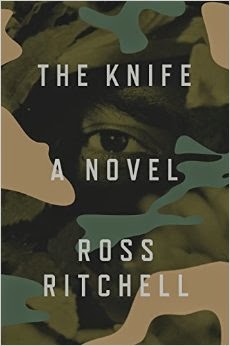
The Knife
by Ross Ritchell

This novel (yes, another debut by a combat vet) about a U.S. Special Forces unit is set in "Afghanipakiraqistan—the preferred name for the ambiguous stretch of the world where the U.S. Special Forces operate with little outside attention."  I haven't had a chance to examine an advance copy of The Knife, but from the description and the words of praise from writers like Stuart Dybek and Michael Koryta, it looks like it combines an action-heavy plot with some good character introspection.  Which is the way it is in the military: brief, sporadic bursts of activity which punctuate long periods of "hurry up and wait."


The War of the Encyclopaedists
by Gavin Kovite and Chris Robinson

I'm really intrigued by this novel about two arts-loving friends, nicknamed "The Encyclopaedists," who'd planned to attend graduate school together until one of them learns he's going to Iraq with his National Guard unit.  In the year that follows, the two keep in touch with one another by editing a Wikipedia article about themselves, which the publisher's synopsis describes as "smart and funny updates that morph and deepen throughout the year, culminating in a document that is both devastatingly tragic and profoundly poetic."  This appears to be a novel as much about the tangle of human relationships (two girlfriends are also involved) as it does about war.


The Valley
by John Renehan

I first heard about Renehan's novel from bookseller Barbara Theroux.  Whenever I visit Fact and Fiction Books in Missoula, Montana, I make a point of asking Barbara if she's read anything good lately.  A few months ago, her eyes lit up as she said, "The Valley.  I just finished reading an advance copy.  It's by a Army veteran--I forget his name right now--but it's set in Afghanistan during the war and it is so, so good."  As soon as I got to the nearest computer, I made a point of looking up the novel and the author's name and mentally bookmarking it as a Must-Read for 2015.  Because when a bookseller says you have to read something, you'd better obey.  First line:  In the dream he climbed a narrow foot-trail alone in the sun, on a bare mountainside littered with metal corpses.  (Other Recommended Reading by John Renehan: Of This World in The American Spectator.)

And now back to non-combat novels....

The Dig
by Cynan Jones

When was the last time you read a riveting novel about badger baiting?  Or a book that treats the hard work of farming with all the respect it deserves?  Okay, maybe there are some good agricultural novels out there, but badger-baiting fiction?  I'd be hard-pressed to come up with some titles.  Jones' novel is threaded with two narratives--one about an unnamed man who illegally catches and kills badgers in rural Wales and one about a recently-widowed farmer struggling through lambing season.  The publisher describes The Dig as "Marilynne Robinson meets Cormac McCarthy.  Or like Ian McEwan writing a western."  While it may be those things, I've read the first few pages and I can tell you it's also filled with sentences which feel lyrically expansive and, at the same time, purified down to their essence.  Jones gets good mileage from his imagery--like this early description of the badger hunter: "He was a gruff and big man and when he got from the van it lifted and relaxed like a child relieved of the momentary fear of being hit."


Funny Girl
by Nick Hornby

I know what some of you are thinking: "Ooo, a new Nick Hornby!  I can't wait to read it!"  Me, I'm sitting here mentally grumbling, "Oh, great.  Another Hornby.  Let's see, that'll put me about four novels behind in my reading of his books."  Actually, that's just one voice inside me; the other is also rejoicing with you about the arrival of Funny Girl.  I'll get to it posthaste--just as soon as I tick off some other books of his, like About a Boy, which is on my Five-Year Reading Plan of the Essentials.  For those of you Hornby fans who can't wait to pick up this new one: Funny Girl is set in Swinging 60s London and features a new literary heroine, Sophie Straw, who rises from ingenue to TV starlet.  That's about all I know, but it's probably all you need.


Crow Fair
by Thomas McGuane

I'm all like, "Ooo, a new Tom McGuane!"  And this time, I will dig in with fork and knife right away since I've read the majority of the iconic Montana writer's other books (not that this is always a prerequisite, but my reading habits usually send me to earlier, better-known works by an author before reading his or her new releases).  This collection of short stories (his first since Gallatin Canyon nine years ago) comes with these neat plot summaries: a devoted son is horrified to discover his mother’s antics before she slipped into dementia; a father’s outdoor skills are no match for an ominous change in the weather; lifelong friends on a fishing trip finally confront their deep dislike; and a cattle inseminator succumbs to the lure of a stranger's offer of easy money.  You know, the usual McGuanian cast of scalawags and charmers.  First line:  I picked up my father on a sultry morning with heavy, rumbling clouds on the horizon.


The Fifth Heart
by Dan Simmons

Simmons must own a T-Shirt that reads "I Like Big Books and I Cannot Lie."  He wouldn't know the underside of a 200-page novel if it came up and gave him a papercut.  His Drood and The Terror take up a lot of real estate on my bookshelf.  But hey, there's nothing wrong with this.  I cannot lie: I like big books, too.  And now along comes The Fifth Heart, clocking in at 624 pages and with a story just as big: In 1893, Sherlock Holmes and Henry James come to America together to solve the mystery of the 1885 death of Clover Adams, wife of the esteemed historian Henry Adams.  If I don't already have your attention, you may as well just move along.  Further intriguing me is this snippet from the publisher's synopsis: "Holmes is currently on his Great Hiatus--his three-year absence after Reichenbach Falls during which time the people of London believe him to be deceased.  Holmes has faked his own death because, through his powers of ratiocination, the great detective has come to the conclusion that he is a fictional character.  This leads to serious complications for James--for if his esteemed fellow investigator is merely a work of fiction, what does that make him?"  The First Line, though wordy, is still pretty hook-y:  In the rainy March of 1893, for reasons that no one understands (primarily because no one besides us is aware of this story), the London-based American author Henry James decided to spend his April 15 birthday in Paris and there, on or before his birthday, commit suicide by throwing himself into the Seine at night.


At the Water's Edge
by Sarah Gruen

When I was growing up, I had a thing for the Loch Ness Monster.  Forty years later, that "thing" hasn't really abated.  I was never more jealous of my wife when, two years ago, she went on a trip to Scotland without me and stood on the shores of the misty loch.  I was only slightly appeased by the fact that she didn't see anything in the shape of a log or a periscope sticking up out of the water.  Sara Gruen has now thrown gasoline on my fire with her new novel set during World War Two in which Madeline Hyde, a young socialite from Philadelphia, "reluctantly follows her husband and their best friend to the tiny village of Drumnadrochit in search of a mythical monster" (i.e. "Nessie").  Though I was only a half-hearted fan of Water for Elephants, I'm looking forward to reading this new novel from Gruen.  At least, the 11-year-old kid in me is interested in it.


The Jesus Cow
by Michael Perry

After a successful writing career of memoirs and non-fiction accounts of small-town America (Visiting Tom, Population: 485, et al), Perry is coming out with a novel which opens with this Prologue:
      On Christmas Eve itself, the bachelor Harley Jackson stepped into his barn and beheld there illuminated in the straw a smallish newborn bull calf upon whose flank was borne the very image of Our Lord and Savior Jesus Christ.
      "Well," said Harley, "that's trouble."
Paging Garrison Keillor, you're needed on Aisle 8 for a clean-up--someone spilled a box of chuckles. Poor Harley is besieged not just by holy cows, he's got a whole peck and bushelful of other situations to handle.  Here's the publisher's synopsis to explain: "A woman in a big red pickup has stolen his bachelor's heart, and a Hummer-driving predatory developer is threatening to pave the last vestiges of his family farm....His best friend, Billy, a giant of a man who shares his trailer house with a herd of cats and tries to pass off country music lyrics as philosophy, urges him to avoid the woman, fight the developer, and get rich off the calf.  But Harley takes the opposite tack, hoping to avoid what his devout, dearly departed mother would have called 'a scene.'  Then the secret gets out--right through the barn door, and Harley's 'miracle' goes viral.  Within hours pilgrims, grifters, and the media have descended on his quiet patch of Swivel, Wisconsin, looking for a glimpse (and a percentage) of the calf.  Does Harley hide the famous, possibly holy calf and risk a riot, or give the people what they want--and raise enough money to keep his land--and, just possibly, win the woman and her big red pickup truck?"


American Meteor
by Norman Lock

After re-imagining the tale of Huck Finn in The Boy in His Winter, Lock turns his pen towards the American West, lighting out for fabulous (and possibly fabulist) territory.  American Meteor is the story of Stephen Moran ("a scrappy Brooklyn orphan turned vengeful assassin") who crosses the country on the Union Pacific, which has just United the States with its tracks.  Along the way, he bumps into General George Custer (pre-Battle of the Little Big Horn, of course), befriends Walt Whitman, becomes a bugler on President Lincoln's funeral train, apprentices with frontier photographer William Henry Jackson, and comes face-to-face with Crazy Horse.  It's a lot to pack into 200 pages, but from what I've heard, Lock sure knows how to spin a yarn.


West of Sunset
by Stewart O'Nan

I know I've been using the phrase "I can't wait!" a lot on this list, but when it comes to O'Nan, I really can't wait.  Of all the authors who appear in this roll call, he's my favorite (followed closely by Mr. McGuane) and he's the one guy for whom I'd walk barefoot on broken glass scattered across a tarry parking lot on a hot summer day just to shake his hand and tell him thanks for all the great books.  This new novel about F. Scott Fitzgerald’s last years in Hollywood looks just as rich and promising as all of the others on my O'Nan shelf.  Fitzgeraldines are already familiar with the story, but for those of you who aren't, here's how the publisher orients you for the events in West of Sunset: "In 1937, F. Scott Fitzgerald was a troubled, uncertain man whose literary success was long over.  In poor health, with his wife consigned to a mental asylum and his finances in ruins, he struggled to make a new start as a screenwriter in Hollywood.  By December 1940, he would be dead of a heart attack."  No, it's not the happiest of endings, but it's one which fascinates me as a writer and as a lover of Hollywood's so-called Golden Age (See Also: Dubble, my long-in-gestation novel set in 1940s Tinseltown).  Here are the First Lines of West of Sunset:  That spring he holed up in the Smokies, in a tired resort hotel by the asylum so he could be closer to her.  A bout of pneumonia over Christmas had provoked a flare-up of his TB, and he was still recovering.  The mountain air was supposed to help.  Days he wrote in his bathrobe, drinking Coca-Cola to keep himself going, holding off on the gin till nightfall--a small point of pride--sipping on the dark verandah as couples strolled among the fireflies rising from the golf course.


The Surfacing
by Cormac James

I'll admit I'm a sucker for novels about 19th-century ships trapped in Arctic ice with new Baby Daddies just finding out they're Baby Daddies while the rest of the crew looks like they're either going to mutiny or start eating each other.  But maybe that's just me.  Nonetheless, James' The Surfacing has a pretty good plot hook to draw in  even those readers who aren't addicted to 19th-century ships trapped, etc.  Take a gander: "The Surfacing is set largely on board a ship in the 1850s, searching for Franklin's lost expedition.  It's a challenging and dangerous endeavor in a very male world--that is until Morgan, the second-in-command of the Impetus, realises there is a pregnant stowaway on board and that he is the father.  It is too late to turn back, the ice is closing in, and the child will have to be born into the vast and icy wilderness of the Arctic.  The men, especially the ship's doctor, DeHaven, and the second in command, Lieutenant Morgan, have doubts about the judgement of their captain, and soon their own vessel becomes trapped in the remote Arctic.  It's a novel of isolation and impasse, resilience and resistance, exploring the battle between man and an unforgiving environment, and the struggle between the sexes."  I can't tell if this is a cautionary tale about Baby Daddies or a warning about ignoring weather forecasts and icepack movements, but I can tell you I'm going to be drinking plenty of warm fluids while reading this novel.


The Given World
by Marian Palaia

Palaia's debut is a coming-of-age novel about the way the Vietnam War ripples into lives left back here on the homefront.  Centered around Riley, a thirteen-year-old in 1968, whose brother Mick goes missing in Vietnam, The Given World spans two dozen years and, according to the plot synopsis, has a grand, fascinating cast of characters: "Primo, a half-blind vet with a secret he can't keep; Lu, a cab-driving addict with an artist's eye; Phuong, a Saigon barmaid, Riley's conscience and confidante; and Grace, a banjo-playing girl on a train, carrying her grandmother's ashes in a tin box."  Riley travels from the Montana plains in the 70s to San Francisco in the 80s and onward to the expat bars and back streets of Saigon in the search for her brother.  I'd had The Given World on my radar, but it really jumped to the peak of my To-Be-Read pile after Palaia recently contributed this awesome essay to The Quivering Pen's "My First Time" series.


The Water Museum
by Luis Alberto Urrea

I'm hoping 2015 is also the year I'm finally able to start exploring the novels and short stories of Luis Alberto Urrea, who has long been a resident of the To-Be-Read Shelf; it's about time he changed his address to the Read Shelf.  This new story collection The Water Museum looks ripe for the plucking.  To wit: "two boys steal a canoe and head out on a voyage from which one will not return; a dead soldier bequeaths his dog and a mystery to his comrade; a graffiti artist leaves behind an unfathomable message."  Here's how the first story ("Mountains Without Number") begins:
In a beat-down house at the foot of a western butte, a woman sips her coffee and stares at her high school yearbook. Most everybody's gone. The pictures seem to be a day old to her. She still laughs at the drama club portrait, still remembers the shouting when the football team won the regional. And there she is on page thirty. She was one of the pretty ones, for sure. One of the slender ones who had a mouth that suggested to every boy that she knew a secret and was slightly amused by it. She had famous lips.
Yep, I'm pretty sure 2015 will be the Year of Urrea.


Epitaph
by Mary Doria Russell

Though Mary Doria Russell's 2011 novel Doc isn't on my official "Essentials Reading List," it's certainly earned a place in my To-Be-Read pile after hearing Washington Post critic Ron Charles rave about the fictional treatment of Doc Holliday's life back when it was published.  And now Epitaph, Russell's follow-up novel about the shoot-out at the O.K. Corral, straps on its holster, finger-twirls a pair of pistols, and saunters down my Main Street (and whatever other Western movie cliches I dare to come up with).  As the publisher's synopsis notes, the gunfight only lasted thirty seconds, but the lies and legends have taken on a life of their own in the 130-plus years since.  First lines:  To understand the gunfight in Tombstone, stop--now--and watch a clock for thirty seconds.  Listen to it tick while you try to imagine one half of a single minute so terrible it will pursue you all your life and far beyond the grave.


Descent
by Tim Johnston

Johnston's novel about a family vacation in the Rocky Mountains gone terribly wrong has been getting a lot of positive buzz lately.  From what I've read, it's one of those stand-out books which combines heart-racing suspense with smart, satisfying writing.  In this book, the Courtlands are just trying to have one last happy family bonding experience before their daughter heads off to college.  Once they reach high altitude, things don't go well for any of them.  The jacket copy description: "For eighteen-year-old Caitlin, the mountains loom as the ultimate test of her runner's heart, while her parents hope that so much beauty, so much grandeur, will somehow repair a damaged marriage.  But when Caitlin and her younger brother, Sean, go out for an early morning run and only Sean returns, the mountains become as terrifying as they are majestic, as suddenly this family find themselves living the kind of nightmare they've only read about in headlines or seen on TV.  As their world comes undone, the Courtlands are drawn into a vortex of dread and recrimination."  My knuckles are already white.


Lost Canyon
by Nina Revoyr

If you haven't had enough wilderness-peril literature with Descent, you might try this new novel by the author of Wingshooters and Southland.  I'll just let the publisher's plot synopsis do the work for me here: "Four people on a backpacking trip in the Sierra Nevada find more adventure than they ever imagined.  Each of them is drawn to the mountains for reasons as diverse as their own lives.  Gwen Foster, a counselor for at-risk youth, is struggling with burnout from the demands of her job.  Real estate agent Oscar Barajas is adjusting to the fall of the housing market and being a single parent.  Todd Harris, an attorney, is stuck in a lucrative but unfulfilling career--and in a failing marriage.  They are all brought together by their trainer, Tracy Cole, a former athlete with a taste for risky pursuits.  When the hikers start up a pristine mountain trail that hasn't been traveled in years, all they have to guide them is a hand-drawn map of a remote, mysterious place called Lost Canyon.  At first, the route past high alpine lakes and under towering, snowcapped peaks offers all the freedom and exhilaration they'd hoped for.  But when they stumble onto someone who doesn't want to be found, the group finds itself faced with a series of dangerous conflicts, moral dilemmas, confrontations with nature, and an all-out struggle for survival."  I'm getting a good Deliverance vibe from Lost Canyon, but without all those banjos.


The Girl on the Train
by Paula Hawkins

The label "Hitchcockian" is tossed around a lot (sometimes erroneously) anytime you see a really good suspense novel (or any novel involving a shower or marauding birds, I suppose), but in the case of Hawkins' debut novel, I think the label will stick.  The titular girl on the train is Rachel.  She rides the same commuter train to and from London every morning (the 8:04 from Ashbury to Euston) and she likes to stare out the window, fantasizing about the lives of people living in all those houses flashing by.  She's even made up a name for one couple--"Jess" and "Jason"--whose two-story Victorian house she practically has memorized right down to the missing roof tiles:
They are a perfect, golden couple. He is dark-haired and well built, strong, protective, kind. He has a great laugh. She is one of those tiny bird-women, a beauty, pale-skinned with blond hair cropped short. She has the bone structure to carry that kind of thing off, sharp cheekbones dappled with a sprinkling of freckles, a fine jaw.
But then one day, Rachel sees something unexpected, something shocking, and she goes to the police to report it.  That's when the real trouble begins.  So yes, shades of Strangers on a Train, The Wrong Man and North by Northwest abound in this book which promises to be scary-good.


Confidence
by Russell Smith

Apart from that striking cover design, I'm drawn to Smith's story collection by the jacket copy summary: "In the stories of Confidence, there are ecstasy-taking PhD students, financial traders desperate for husbands, owners of failing sex stores, violent and unremovable tenants, aggressive raccoons, seedy massage parlors, experimental filmmakers who record every second of their day, and wives who blog insults directed at their husbands. There are cheating husbands. There are private clubs, crowded restaurants, psychiatric wards. There is one magic cinema and everyone has a secret of some kind."  Hey, you had me at "aggressive raccoons."  Smith, who lives in Toronto, is a well-known journalist and cultural commentator, radio host and Globe & Mail columnist.  Though he's been publishing novels since the early 1990s, Confidence marks his U.S. debut.


Life #6
by Diana Wagman

I'm a fan of Wagman's previous novel The Care and Feeding of Exotic Pets, so I was excited to read in a recent publisher's catalog that she'll have a new book coming out in 2015.  Here's the jacket copy for Life #6: "Fiona's marriage is crumbling, and she has recently been diagnosed with breast cancer.  Caught up in a wave of memories as she faces her own mortality, Fiona recalls the five previous times in her life that she nearly died, including a fateful boat trip thirty years ago with her former boyfriend, Luc.  She flees her life, struggling marriage, and cancer treatment to rendezvous with Luc, in the process reliving the harrowing boat trip the two of them shared three decades earlier, which permanently altered their lives.  Now that Fiona desperately needs Luc to save her, will he be the man she remembers?  Or will she discover heartbreak again?  An adventurous, emotionally complex tale inspired by Diana Wagman's own experience at sea, Life #6 explores the folly of youth, what happens to us when we're pushed to the brink, the regrets of love lost, and what it really means to love, as well as the many ways we die and are renewed throughout our lives."  That plot description may sound a little too Nicholas Sparks-ian for what I normally read, but based on what she did in The Care and Feeding of Exotic Pets, I'm confident Wagman will hone the story with a cutting edge of humor.  (But even if the novel turns out to be sober-serious, I'm sure it will be fantastic!)


The Last Flight of Poxl West
by Daniel Torday

Here's another new book by an author I deeply admire.  Torday's 2012 novella The Sensualist, which won the 2012 National Jewish Book Award for debut fiction, was one of my favorite reads of that year and I've spent the last twenty-four months waiting for news of a new release from this terrific author.  The day is here!  Or almost here; The Last Flight of Poxl West will hit bookstores in March.  I'm lucky to have gotten my hands on an advance copy, which comes loaded with glowing praise from the likes of Phil Klay, George Saunders, Edan Lepucki, Karen Russell and Gary Shteyngart, whose blurb is typically Shteyngartian: "OMFG!  What a book!  Eli Goldstein has the retrospective candor of Roth's Zuckerman and the sensitivity of a Harold Brodkey narrator, and Poxl West is an unforgettable creation.  Plus, things happen in this book, big things like the world wars.  A delight!"  The novel opens with 15-year-old Elijah Goldstein's "Acknowledgement: Prologue" to what will be the bulk of the book's narrative: Poxl West's memoir of his time as a heroic RAF bomber pilot during World War Two.  Torday's wit is rapier-sharp even in the title of the book Poxl West has written: Skylock: The Memoir of a Jewish RAF Bomber.  I was entranced by the First Lines of the "Prologue" and, now that I have a taste, I'm looking forward to devouring the whole book:  Before halftime on Super Bowl Sunday, January 1986, my uncle Poxl came over.  He was just months from reaching the height of his fame, and unaware that the game was being played.  He wasn't technically my uncle, either.  He was an old friend of the family.  For years he had taught at a prep school in Cambridge, where my grandfather had served as dean.  After a massive heart attack a year after I was born left my grandfather as much a memory to me as thin morning fog, Uncle Poxl came to fill the void.  That Sunday he sat down in the living room and, speaking over the game's play-by-play, started a story he could barely clap his gloves free of snow fast enough to tell.


God Help the Child
by Toni Morrison

If, like me, you've been waiting for a Toni Morrison novel to deliver the kind of unsparing, uncompromising narrative drive found in her earlier Beloved, I think God Help the Child will scratch that itch.  This new novel, due in April, takes on child abuse and racial discrimination, telling a complex story through several characters' viewpoints.  The prose has all the spark of a box of matches and wastes no time in getting to the point with these First Lines from the opening section narrated by a character named Sweetness:
It’s not my fault, so you can’t blame me. I didn’t do it and have no idea how it happened. It didn't take more than an hour after they pulled her out from between my legs to realize something was wrong. Really wrong. She was so black she scared me. Midnight black, Sudanese black. I'm light-skinned, with good hair, what we call high yellow, and so is Lula Ann's father. Ain't nobody in my family anywhere near that color.
That baby eventually grows up to be one of the central characters of the story, a woman who calls herself Bride and whose loves and losses we follow throughout the 192 pages of a book that looks like it could be our next literary classic.


Hurry Please I Want to Know
by Paul Griner

The capsule descriptions of the short stories in Griner's new collection are just odd enough to make me pause and give the book a double-take: "A low-ranking soldier is forced to milk a cow within enemy range.  A cartoonist's daughter waits each morning to see how her father's mood dictates how he will draw her face.  Grieving siblings wait to inherit one of their father's physical features after his death."  In this short fiction, we also meet prison telemarketers, famous cartoonists, bone procurers, missing persons and the resurrected dead.  Yes, please--I do want to know more!


Delicious Foods
by James Hannaham

And now for Something Completely Different...In Delicious Foods, a drug-addicted mother leaves her eleven-year-old son to go work on a mysterious farm run by a shady company called Delicious Foods.  There, on the remote farm, the mother (Darlene) is held captive, performing hard labor in the fields to pay off the supposed debt for her food, lodging, and the constant stream of drugs the farm provides to her and the other unfortunates imprisoned there.  Meanwhile, her panic-stricken son Eddie desperately tries to find her so they can finally live the good life they deserve.  Delicious Foods has been getting heaps of praise from readers who say it's equally terrifying, heartbreaking and satisfying.  Based on the opening pages alone, my impression is that Hannaham writes like a semi-truck barreling down the interstate at 90 miles per hour.  I had a hard time lifting my eyes from the page after reading the Prologue which opens with a seventeen-year-old Eddie careening along the road in a Subaru:
After escaping from the farm, Eddie drove through the night.  Sometimes he thought he could feel his phantom fingers brushing against his thighs, but above the wrists he now had nothing.  No hands.  Dark stains covered the terry cloth wrapped around the ends of his wrists; his mother had stanched the bleeding with rubber cables.  For the first hour or so, the rocky, divot-riddled road jostled the car, increasing the young man's agony, and he clenched his teeth through the sickening pain.  Steering the vehicle with his forearms stuck in two of the wheel's holes, Eddie couldn't keep the Subaru from wobbling and swerving, and he feared the police would notice, pull him over to find that he had no license, and arrest him for stealing the car.
Wow.  Note to self: want to fully engage the reader?  Cut off a boy's hands in the opening paragraph.


Haints Stay
by Colin Winnette

I'll begin with a couple of blurbs:
"Funny, brutal and haunting, Haints Stay takes the traditional Western, turns it inside out, eviscerates it, skins it, and then wears it as a duster. This is the kind of book that would make Zane Grey not only roll over in his grave but rise undead from the ground with both barrels blazing."
     --Brian Evenson

"I loved it. Loved it. Haints Stay had me from the very first line--the visceral ante upped and crescendoing nearly every page. Humor, gore, that wonderful unsettling feel you get when you're reading a book that excites you and kind of scares you as well? Yes, please."
     --Lindsay Hunter
Okay, now I'm really interested.  Tell me more, Mr. Jacket Copy:
Brooke and Sugar are killers. Bird is the boy who mysteriously woke beside them while between towns. For miles, there is only desert and wilderness, and along the fringes, people. The story follows the middling bounty hunters after they've been chased from town, and Bird, each in pursuit of their own sense of belonging and justice. It features gunfights, cannibalism, barroom piano, a transgender birth, a wagon train, a stampede, and the tenuous rise of the West's first one-armed gunslinger.
Sold!


Purity by Jonathan Franzen
J-Franz lovers, mark your calendar for September.  That's when you'll want to call in sick so you can spend some time with this new novel from the author of The Corrections and Freedom.  What's it about, you ask?  Here's how Jonathan Galassi, president and publisher of Farrar, Straus & Giroux, described the novel to the New York Times: "a multigenerational American epic that spans decades and continents.  The story centers on a young woman named Purity Tyler, or Pip, who doesn’t know who her father is and sets out to uncover his identity.  The narrative stretches from contemporary America to South America to East Germany before the collapse of the Berlin Wall, and hinges on the mystery of Pip’s family history and her relationship with a charismatic hacker and whistleblower."  Hmm, sounds deliberately Dickensian to me.  Not that there's anything wrong with that.  I can already feel a sudden "cold and flu" coming on in September.  Sorry, boss.

And finally, I'll leave you with two books I'm not anticipating....because I've already read them!  But I do hope you'll add these to your most-anticipated fiction of 2015 list.

The Sympathizer
by Viet Thahn Nguyen

Who would have thought the 1975 fall of Saigon could be so hilarious?  In his debut, Nguyen does exactly that with a non-stop stream of dark humor narrated by a Viet Cong captain who is working undercover for a South Vietnamese general and reporting all that he sees and hears back to his Communist bosses--even after the general and his compatriots flee the country and set up a new life in Los Angeles.  The Sympathizer is like a neon-pink whoopee cushion snuck into a high-level State Department briefing.  Go ahead, laugh.  Nguyen has given us permission to see both the light and dark sides of a regretful chapter in the histories of both the United States and Vietnam in a tale told by a court jester.  The Sympathizer is one of the smartest, darkest, funniest books you'll read in 2015.  First lines:  I am a spy, a sleeper, a spook, a man of two faces.  Perhaps not surprisingly, I am also a man of two minds.


The Sasquatch Hunter's Almanac
by Sharma Shields

Shields writes weird, dark, funny tales sprinkled with magical-realism dust (see also: Favorite Monsters, her earlier short story collection).  In her debut novel, she turns her imagination loose in the forests of the Pacific Northwest and the result is one of the most unforgettable books of the year.  I was surprised at nearly every turn in The Sasquatch Hunter's Almanac.  I think I was expecting something of a quirky monster story with porous barriers between reality and fairy tales.  There's certainly some of that at play here; but what Shields has taken on is something larger and even more emotionally expansive: she's delivered a multi-generational family saga (which goes from 1943 to 2006) that's full of love, pain, mystery, revelation, hubris and humility.  At the novel's vivid, beating heart stands Eli Roebuck who, when he's a nine-year-old boy, watches his mother walk off into the woods with a huge, hairy "man" named Mr. Krantz who may or may not be Sasquatch.  Eli is convinced he is, and he spends the rest of the novel trying to track him down and, by extension, find his mother.  To Shields' credit, she keeps even the reader wondering about the true nature of Mr. Krantz, thus making us think about the very basic elements of fiction itself:  Who am I?  Who are you?  And who's that guy standing over there with the "deep hooded brow, small blank eyes, thin-lipped mouth like a long pink gash" and whose "wide, shoeless feet" are "two hairy sleds that move noiselessly over the wooden floorboards as though through a soft snow"?  The Sasquatch Hunter's Almanac is riveting, endearing and edged with a sly wit (Eli, the Bigfoot hunter, is a podiatrist by profession).  Bottom line: you may come for the monsters, but you'll stay for the humans--who can be just as strange and scary (and hairy).  As one character says near the end of the book, "I want to say thank you for allowing me to believe in magic."  Bravo, Sharma Shields, bravo!