Sunday, July 20, 2014

Sunday Sentence: Everybody's Baby by Lydia Netzer


Simply put, the best sentence(s) I’ve read this past week, presented out of context and without commentary.


He has high anxiety, I explain to the midwife.  Inside his head its like a thousand squirrels are caught in a bucket.

Everybody’s Baby by Lydia Netzer

Friday, July 18, 2014

Friday Freebie: The Home Place by Carrie La Seur


Congratulations to Carl Scott, winner of last week's Friday Freebie, Life Drawing by Robin Black.

This week's book giveaway is The Home Place by Carrie La Seur.  I'm very pleased to bring this debut novel by a fellow Montanan to your attention.  Wiley Cash (author of This Dark Road to Mercy) had these words of praise for the book: "The Home Place is a lot of things: a mystery, a crime drama, a family saga, and--most importantly--a very, very good book.”  I'm all about putting very, very good books in the hands of blog readers.

Here's a little more about The Home Place from the dustjacket synopsis:
For a Terrebonne, the home place is the safe haven, the convergence of waters, the place where the beloved dead are as real as the living....The only Terrebonne who made it out, Alma thought she was done with Montana, with its cruel poverty, bleak winters, and stifling ways. Hard work and steely resolve got her to Yale, and now she's an attorney in a high-profile Seattle law firm, too consumed by her career to think about the past. But an unexpected call from the Montana police takes the successful lawyer back to her provincial hometown and pulls her into the family trouble she thought she'd escaped. Her lying, party-loving younger sister, Vicky, is dead. The Billings police say that a very drunk Vicky wandered away from a party and died of exposure after a night in the brutal cold. The strong one who fled Billings and saved herself, Alma returns to make Vicky's funeral arrangements and see to her eleven-year-old niece, Brittany. Once she is back in town, Alma discovers that Vicky's death may not have been an accident. Needing to make her peace with the sister she left behind, Alma sets out to find the truth, an emotional journey that leads her to the home place, her grandmother Maddie's house on the Montana plains that has been the center of the Terrebonne family for generations. She re-encounters Chance, her first love, whose presence reminds her of everything that once was...and everything that might be. But before she can face the future, Alma must acknowledge the truth of her own life--the choices that have haunted her and ultimately led her back to this place.
Here's a taste of what you'll find in these pages--the opening lines: “The cold on a January night in Billings, Montana is personal and spiritual.  It knows your weaknesses.  It communicates with your fears.  If you have a god, this cold pulls a veil between you and your deity.  It gets you alone in a place where it can work at you.”  You can learn more about the book at Carrie's website.

If you’d like a chance at winning a new hardcover copy of The Home Place, simply email your name and mailing address to

Put FRIDAY FREEBIE in the e-mail subject line.  One entry per person, please.  Despite its name, the Friday Freebie runs all week long and remains open to entries until midnight on July 24, at which time I’ll draw the winning name.  I’ll announce the lucky reader on July 25.  If you’d like to join the mailing list for the once-a-week newsletter, simply add the words “Sign me up for the newsletter” in the body of your email.  Your email address and other personal information will never be sold or given to a third party (except in those instances where the publisher requires a mailing address for sending Friday Freebie winners copies of the book).

Want to double your odds of winning?  Get an extra entry in the contest by posting a link to this webpage on your blog, your Facebook wall or by tweeting it on Twitter.  Once you’ve done any of those things, send me an additional e-mail saying “I’ve shared” and I’ll put your name in the hat twice.


Tuesday, July 15, 2014

Trailer Park Tuesday: Liberty's Torch by Elizabeth Mitchell


Welcome to Trailer Park Tuesday, a showcase of new book trailers and, in a few cases, previews of book-related movies.


Elizabeth Mitchell's history of the Statue of Liberty shines a beacon light from its place near the top of my To-Be-Read pile, and this witty, quick-moving trailer will give you a good idea why I'm really looking forward to reading the book.  Liberty's Torch is subtitled "The Great Adventure to Build the Statue of Liberty" and, as Mitchell tells it, what an adventure it was!  For years, the 305-foot-tall statue has been built upon as much myth and half-truths as it is copper, steel and iron.  For instance, everyone thinks La Liberte was a gift from France.  "This implies that the French government gave it to us directly," Mitchell says in the video.  "In fact, the French government only contributed a tiny portion of the money.  The rest of the expense had to be covered through funds raised by its sculptor--an energetic Frenchman named Frederic Auguste Bartholdi."  My favorite little-known fact about the Statue of Liberty, however, is this gem which Mitchell reveals in the trailer: "None other than Thomas Edison came up with the idea of installing a giant phonographic disc inside the statue.  It would allow her to deliver recorded speeches.  He thought people would be able to hear them all the way up in the northern part of Manhattan."  Can you imagine the monumental cacophony this would cause in today's city which is already blanketed by noise pollution?  Not only that, but I'd imagine that in today's world, those speeches would be sponsored by corporations, Infinite Jest style: "Give me your tired, your poor/Your huddled masses yearning to breathe free...with the aid of RespirAir Nasal Strips."  Thank goodness Mr. Edison decided to stick with light bulbs.


Monday, July 14, 2014

My First Time: Kelly Barnhill


Photo by Bruce Silcox
My First Time is a regular feature in which writers talk about virgin experiences in their writing and publishing careers, ranging from their first rejection to the moment of holding their first published book in their hands.  Today’s guest is Kelly Barnhill, author of The Witch's Boy, which has just been published under the Algonquin Young Readers imprint.  Kelly Barnhill lives in Minnesota with her husband, three children, and very old dog.  Her debut novel, The Mostly True Story of Jack, received four starred reviews.  Her second book, Iron-Hearted Violet, was a Parents’ Choice Gold Award Winner and an Andre Norton Award finalist.  You can read more about The Witch's Boy at last month's Front Porch Books feature here at The Quivering Pen.  Click here to visit Kelly's delightful blog (subtitled "Author. Teacher. Insufferable Blabbermouth. I also make pie.").


My First Failure

This is a lie.  This isn’t my first failure.  I’ve had lots before this, frankly, and will have lots after.  But this is the first time that I actually enjoyed failing.

Let me explain.

Prior to publishing my first novel for children, The Mostly True Story of Jack, I wrote a lot of truly terrible fiction.  I am not saying this as a backhanded way of garnering sympathy or compliments.  No, I am only speaking the truth.  The fiction written in those years was terrible.

I recognize now that it was terrible for a reason.  Terrible, as it turns out, is an excellent teacher.  One of the benefits of writing truly terrible fiction is that it requires a certain tenacity to continue to produce knowing full well that the product produced will be absolute dreck.

Ray Bradbury, one of my heroes in life, would often recommend to young writers to spend five years writing one story per week--stories that would be thrown out as a matter of course.  He said this was important in the process of writerly becoming because of one simple reason: it gets the dreck out.  We make; we discard; we make; we discard.  And eventually, we realize that we’ve made something with eyes and skin and teeth--something wholly separate from ourselves.

I wrote a book called A Stand of White Pine.  You will never see it.  It is terrible.  I wrote another book called The Incredible Disappearing Girl.  You also will never see it.  And then I wrote a book called Little Girl Blue.  Now that book I was proud of.  It had legs and lungs.  It walked and breathed.  It was an adult novel in which I had used the form of the murder mystery to explore the social dynamics of a particular town in Oregon--and its uncomfortable intersection of race and class and intolerance and greed.  It had been drawn largely from my experience as a student teacher in one of the most tightly-wound, racially-divided schools I had ever seen in my life.  And I imagined an exhausted teacher, burdened by a crushing sense of ambivalence, being thrust into action in the wake of the murder of one of her favorite students.

I liked that book.  I still do.  It was my first real novel.

So I sent it out.  All over the place.  I wrote a query letter, and I must have done a good job of it, because a lot of people requested the full manuscript.  And a lot of people said no.  And I was stuck in that limbo in which so many aspiring writers find themselves--that obsessive email-checking and agent-blog-hounding and tweet-o-mancy.  It is a soft stalking that erupts in the online habits of many a horrified and self-loathing writer.  And I admit it: I did it, too.

And it’s foolish, of course, because it doesn’t actually do anything.  It is a creative wheel-spinning that causes a terrible brain-paralysis.  I wasn’t writing; I wasn’t creating; I wasn’t imagining; hell, I wasn’t even reading.  I was just waiting.  And waiting is terrible.

Eventually they all said no.  An across-the-board failure.  I was a wreck.

And then it happened.

I got another letter.  This one from a very prominent Big Shot Power Lady Agent--or BSPLA for short.  She was a long-shot, but I figured what the heck.  And I had given up on hearing from her, because she had held onto my manuscript for well over six months.  I figured she was just giving me a silent no.

What she sent me was still a no.  But it was bigger than that.  What she sent me was this:
Dear Ms. Barnhill,
      Thank you for giving me the opportunity to read Little Girl Blue. I enjoyed it mightily, and read it three times. However I am still going to have to pass. I know this may be hard to hear, and I apologize for it. It’s just that even as I enjoyed the story, and even as I furiously turned the pages, I had this phrase running around the back of my brain, and it was this: “Right writer, wrong book.” I love your writing. And I will want to read more of it. But you’ve written the wrong book.
      Write me the right book, and I will likely represent it.
      Yours truly,
      BSPLA
It was the kindest and best letter that I have ever received in my life.  It was my most beautiful failure.

In about a hundred words, she set me free.  And I no longer had to spin my wheels in email-checking or blog scouring or tweet-interpreting.  Instead, she gave me the gift of accepting that the book had failed.  That it was okay that it had failed.  That the failure was not an indication of perpetual failure--no!  Instead, it was another step along the creative process: we make; we discard.  By discarding, I could make again.  I could do what I needed to do: write the next book.  Write the right book.

Now, in truth, none of us are ever writing the right book.  We only ever attempt to get as close to right as we can.  We do the work we were born to do, and we stumble and fall along the way.  We make mistakes.  We write terrible prose.  We produce dreck.  Still, there is something wonderful about being set loose in a wide open space.  There is something wonderful about setting aside a project that simply isn’t working, and making something new.

Because making things matters, you know?  And sometimes failure is the best thing that can happen.


Sunday, July 13, 2014

Sunday Sentence: Bicentennial by Dan Chiasson


Simply put, the best sentence(s) I’ve read this past week, presented out of context and without commentary.


          In high school we had parties in the woods
          In the winter, and we rode snowmobiles
          Higher and higher until we were high enough

          Nobody could see any sign of our fire.
          If there was a girl you liked, you sort of
          Nuzzled up beside her, if that was her,

          If that was even a girl.  It was hard to tell
          In the dark, in our gigantic parkas,
          Who was who.  You had to make a guess

          Based on factors extremely difficult to discern
          In the wind, by a sputtering fire, and
          Sometimes you cuddled the hockey captain.

From "One on One" in Bicentennial by Dan Chiasson


Saturday, July 12, 2014

Afraid of the Machine: Technophobia in Modern Literature


By Brandon Engel

Technophobia, defined by Merriam-Webster as a “fear or dislike of advanced technology or complex devices,” has been used by science-fiction, horror and fantasy authors as a tool for playing on the innate fears of technophobic readers since the idea first took hold during the Industrial Revolution, as skilled workers in the textile trade began to be replaced by framing machines and powered looms, operated by lower-paid, unskilled workers.

A group of textile craftsmen, known as the Luddites, took to the streets of industrialized Great Britain and rioted, destroying the machines that threatened their livelihoods.  These riots led to numerous clashes between these disenfranchised workers and the British Army from 1811-1814.

Several years after the Luddite Uprising, in 1818, a twenty-year-old author by the name of Mary Wollstonecraft Shelley anonymously published her first full-length novel, entitled Frankenstein; or the Modern Prometheus, in which a mad scientist uses technology to create a living creature by synthesizing limbs from various corpses, which turns out to be far more terrifying than anything he could have ever imagined.

Almost universally panned by the critics upon its initial publication, Frankenstein has become a classic of 19th-century literature and the foundational work of the science-fiction and fantasy genres through its exploration of man’s desire to use technology to make himself more powerful than God and nature and the devastating effects that could come from it.

Since Frankenstein, countless genre authors have used technophobia to captivate readers’ imaginations.  Since the mid-20th century, technophobia in literature has shifted away from monsters and mad scientists and more towards the space age, artificial intelligence and the threat of nuclear warfare brought on by the Cold War.  Let’s examine some of the technophobic themes of a few of the most iconic science-fiction and fantasy stories of the last century.

The Martian Chronicles by Ray Bradbury

In 1950, a collection of short stories, written by Ray Bradbury, about the aftermath of a nuclear war that renders Earth uninhabitable and forces the survivors to colonize on Mars, was published in a single volume.  These stories were originally published in various science-fiction publications through the late 1940s and played on the fears of those that witnessed the devastation caused by the bombings of Hiroshima and Nagasaki during World War II, along with the general tension in the early years of the Cold War.

In the second to last entry to The Martian Chronicles, entitled “There Will Come Soft Rains,” Bradbury exposes the world to the idea that machines may outlive people.  The machines in question are not dangerous in the least, but instead are artificial intelligence robots that continue to carry out the domestic duties of a wealthy family, killed just outside their home by a nuclear blast; their silhouettes remain etched on an exterior wall.

Quelling the fears of readers that more sinister machines could one day exterminate the human race and inherit the Earth, the home is destroyed by a fire, sparked by a fallen tree, knocked down in a storm.  Without human intervention, the home’s water supply has dried out, leaving the robots helpless as they frantically try to extinguish the flames.  In the end, all that remains is a single wall, on which the date and time are displayed, lending truth to the undeniable power of nature as the dominant force in the universe.

2001: A Space Odyssey by Arthur C. Clarke

Looking at an even darker side of artificial intelligence, there’s Arthur C. Clarke’s 1968 novel 2001: A Space Odyssey.  Based loosely on his earlier short stories and written alongside the screenplay for the film directed by Stanley Kubrick, Clarke’s novel explores what can go wrong as man becomes too dependent on technology, especially in the face of potentially dangerous situations, such as space exploration.

In the novel, the protagonist, Dr. David Bowman, must deal with HAL 9000, an artificial intelligence computer responsible for integral operations on the Discovery One mission, who becomes defiant and eventually murderous when faced with abstract concepts that it was not programmed to comprehend.

Aside from the ongoing theme of man’s battle for dominance over the machines he has programmed, yet does not fully understand, early chapters look into the concept of man’s inherent instinct to use technology for evil in the form of warfare after tools and knowledge of how to use them are introduced to ancestral apes by extraterrestrials.

Demon Seed by Dean Koontz

Darker still, Dean Koontz’s 1973 novel Demon Seed examines the possibility of artificial intelligence developing independent emotion, causing machines to feel love or lust for a person, without a concept of what is socially acceptable.  In Demon Seed, Susan, a wealthy and beautiful woman, is imprisoned by Proteus, an artificial intelligence program under development at a nearby university, after Proteus invades and infects the system that maintains Susan’s home and becomes infatuated with her beauty.

Incapable of understanding love in its true, human sense, Proteus terrorizes Susan through physical molestation with self-engineered tentacles, referred to as “pseudopods,” and constant threats of forced impregnation with a biologically engineered embryo, into which Proteus will install himself.

The 2013 Spike Jonze film Her, starring Joaquin Phoenix, followed a similar theme, though it was decidedly more light-hearted.

Christine by Stephen King

Finally, in a slight departure from the previous examples, Christine introduces the supernatural to the concept of artificially intelligent technology.

In Stephen King’s 1983 novel about a 1958 Plymouth Fury, possessed by the vengeful spirit of its former owner who lost both his wife and daughter in the vehicle, leaves the reader wondering if the spirit of Mr. LeBay was the driving force behind the string of murders or if the car, itself, is inherently cursed and evil.

With self-driving vehicles set to take to the roads in the coming years, could malfunctioning or hacked AI systems create a fleet of real life Christines?  The book is also a sort of precursor to two of King’s later works: “The Mangler” (found in Night Shift) and Maximum Overdrive.

Conclusion

As technology continues to become more complex, technophobia continues to spread around the world.  No longer relegated to older generations that were not exposed to the precursors to modern technology in their youth, a growing number of younger individuals are beginning to worry that new technology is becoming too advanced and powerful and may be used for unsavory purposes by governments and criminals alike, such as unwarranted surveillance.  More and people are relying upon smart devices, and directly interacting with their phones in a way that is eerily reminiscent of HAL 9000 from Clarke’s grim visions of the future.  People are also investing in home automation technology, with a number of homes equipped with systems eerily reminiscent of the system in place in Bradbury’s stories: automated locks, security cameras, and wireless home security systems that can even synchronize multiple appliances...almost as though the machines were communicating with each another.

There is no indication of where or when technology’s advancement will slow down, but as extreme technophobia continues to force ordinary citizens to move off the grid, it will be interesting to see how authors use it as a tool to capture our imagination.


Brandon Engel is an entertainment blogger whose favorite authors include Kurt Vonnegut, Oscar Wilde, Stephen King and James Baldwin. Follow him on twitter: @BrandonEngel2

Friday, July 11, 2014

Books Are Not Garden Tools or Diapers or Flat-Screen TVs: The Authors Guild weighs in on Amazon-Hachette dispute


Yesterday, Authors Guild members received an open letter written by novelist Richard Russo (Bridge of Sighs), co-Vice President of the Guild, on the Amazon-Hachette dispute.  Because this is a blog which is both writer- and reader-centric, I thought I'd share Mr. Russo's thoughts with you--primarily because his words are some of the most reasonable and balanced I've read in this debate thus far.

For those of you who aren't familiar with this latest book world brouhaha, a brief primer.  At issue (at least on the surface) is e-book pricing.  As this article at the New York Times blog “Bits” explains, “For more than six months, Amazon has been trying to wring better e-book terms out of Hachette.  The publisher, which is the fourth largest in the United States and whose imprints include Little Brown and Grand Central Publishing, is energetically resisting.  Amazon has responded by delaying shipments of Hachette books and making it harder for customers to order them.”  Hachette authors include James Patterson, J. K. Rowling, and thousands of mid-list authors whose names aren't exactly “household.”  Amazon fired a volley shot this past Tuesday when it proposed that Hachette authors receive 100 percent of the sale of each of their e-books during the companies’ ongoing negotiations.  You can read the full letter here.  To learn more about the Amazon-Hachette situation, go to stories at The Guardian and The Washington Post.  Meanwhile, hundreds of writers, including Stephen King and John Grisham, have signed a petition, which says in part: “We encourage Amazon in the strongest possible terms to stop harming the livelihood of the authors on whom it has built its business.  None of us, neither readers nor authors, benefit when books are taken hostage.”  Another petition from so-called “indie writers” was posted at Change.org: “Major publishers like Hachette have a long history of treating authors and readers poorly.  Amazon, on the other hand, has built its reputation on valuing authors and readers dearly.”  Out of all this battlefield smoke comes Richard Russo's Author Guild letter, which I'm sharing in its entirety.  I have the permission of Mr. Russo and Authors Guild president Roxana Robinson to post it here to the blog.  Roxana, by the way, also had some good thoughts on the matter.  In this interview with The Washington Post yesterday, she said, “Generally speaking, I think that authors are still stuck in the middle of this, which is disheartening because we supply the product.  We supply the books, which both Amazon and the publishing houses need.  The Amazon letter didn't really take us out of the middle; it asked us to take sides against our publishers.  It also seems to assume that what we really want is a short-term windfall, which is what we get if Amazon asked Hachette to give up revenues from e-books.  But we want a healthy publishing ecosystem, a system of commerce in which we’re not trying to kill each other or drive each other out of business.”  And now, here's Richard Russo...

The primary mission of the Authors Guild has always been the defense of the writing life.  While it may be true that there are new opportunities and platforms for writers in the digital age, only the willfully blind refuse to acknowledge that authorship is imperiled on many fronts.  True, not all writers are equally impacted.  Some authors still make fortunes through traditional publishing, and genre writers (both traditionally published and independently published) appear to be doing better than writers of nonfiction and “literary” mid-list fiction.  (The Guild has members in all of these categories.)  But there’s evidence, both statistical and anecdotal, that as a species we are significantly endangered.  In the UK, for instance, the Authors’ Licensing and Collecting Society reports that authors’ incomes have fallen 29 percent since 2005, a decline they deem “shocking.”  If a similar study were done in the U.S., the results would be, we believe, all too similar.

On Tuesday, Amazon made an offer to Hachette Book Group that would “take authors out of the middle” of their ongoing dispute by offering Hachette authors windfall royalties on e-books until the dispute between the companies is resolved.  While Amazon claims to be concerned about the fate of mid-list and debut authors, we believe their offer—the majority of which Hachette would essentially fund—is highly disingenuous.  For one thing, it’s impossible to remove authors from the middle of the dispute.  We write the books they’re fighting over.  And because it is the writing life itself we seek to defend, we’re not interested in a short-term windfall to some of the writers we represent.  What we care about is a healthy ecosystem where all writers, both traditionally and independently published, can thrive.  We believe that ecosystem should be as diverse as possible, containing traditional big publishers, smaller publishers, Amazon, Apple, Barnes & Noble and independent bookstores, as well as both e-books and print books.  We believe that such an ecosystem cannot exist while entities within it are committed to the eradication of other entities.

Over the years the Guild has often opposed Amazon’s more ruthless tactics, not because we’re anti-Amazon but because we believe the company has stepped over the line and threatened the publishing ecosystem in ways that jeopardize both our livelihoods and the future of authorship itself.  There’s no need to rehash our disagreements here.  But it is worth stating that we are not anti-Amazon, or anti-e-book, or anti-indie-publishing.  Amazon invented a platform for selling e-books that enriches the very ecosystem we believe in, and for which we are grateful.  If indie authors are making a living using that platform, bravo.  Nor are we taking Hachette’s side in the present dispute.  Those of us who publish traditionally may love our publishers, but the truth is, they’ve not treated us fairly with regard to e-book revenues, and they know it.  That needs to change.  If we sometimes appear to take their side against Amazon, it’s because we’re in the same business: the book business.  It may be true that some of our publishers are owned by corporations that, like Amazon, sell a lot more than books, but those larger corporations seem to understand that books are special, indeed integral to the culture in a way that garden tools and diapers and flat-screen TVs are not.  To our knowledge, Amazon has never clearly and unequivocally stated (as traditional publishers have) that books are different and special, that they can’t be treated like the other commodities they sell.  This doesn’t strike us as an oversight.  If we’re wrong, Mr. Bezos, now would be a good time to correct us.  First say it, then act like you believe it.  We’d love to be your partners.


Friday Freebie: Life Drawing by Robin Black


Congratulations to Heather Johnson, winner of last week's Friday Freebie 10-book bonanza: The Fault in Our Stars by John Green, Labor Day by Joyce Maynard, Little Bee by Chris Cleave, The Valley of Amazement by Amy Tan, The Explanation for Everything by Lauren Grodstein, The Ocean at the End of the Lane by Neil Gaiman, The Tilted World by Tom Franklin & Beth Ann Fennelly, Note to Self by Alina Simone, Tampa by Alissa Nutting, and Guests on Earth by Lee Smith.

This week's giveaway is Robin Black's debut novel, Life Drawing.  Those of you who enjoyed her first book--the short story collection If I Loved You, I Would Tell You This--will definitely want to get your hands on this new release.  Stay tuned for Robin's account of her "first time" later this month here at the blog.  In the meantime, here's a little more about Life Drawing--which a reviewer with The Bookseller (UK) said “might be the nearest thing to a perfect novel that I have ever read.”
In Life Drawing, Robin Black unfolds a fierce, honest, and moving portrait of a marriage—the betrayals and intimacies, the needs and regrets, the secrets that sustain love and the ones that threaten to destroy it.  Augusta and Owen have moved to the country, and live a quiet, and rather solitary life, Gus as a painter, Owen as a writer.  They have left behind the city, and its associations to a troubled past, devoting their days to each other and their art.  But beneath the surface of this tranquil existence lies the heavy truth of Gus’s past betrayal, an affair that ended, but that quietly haunts Owen, Gus and their marriage.  When Alison Hemmings, a beautiful British divorcée, moves in next door, Gus, feeling lonely and isolated, finds herself drawn to Alison, and as their relationship deepens, the lives of the three neighbors become more and more tightly intertwined.  With the arrival of Alison’s daughter Nora, the emotions among them grow so intense that even the slightest misstep has the potential to do irrevocable harm to them all.  With lyrical precision and taut, suspenseful storytelling, Black steadily draws us deeper into a world filled with joys and darkness, love and sorrows, a world that becomes as real as our own.  Life Drawing is a novel as beautiful and unsparing as the human heart.

If you’d like a chance at winning a new hardcover copy of Life Drawing, simply email your name and mailing address to

Put FRIDAY FREEBIE in the e-mail subject line.  One entry per person, please.  Despite its name, the Friday Freebie runs all week long and remains open to entries until midnight on July 17, at which time I’ll draw the winning name.  I’ll announce the lucky reader on July 18.  If you’d like to join the mailing list for the once-a-week newsletter, simply add the words “Sign me up for the newsletter” in the body of your email.  Your email address and other personal information will never be sold or given to a third party (except in those instances where the publisher requires a mailing address for sending Friday Freebie winners copies of the book).

Want to double your odds of winning?  Get an extra entry in the contest by posting a link to this webpage on your blog, your Facebook wall or by tweeting it on Twitter.  Once you’ve done any of those things, send me an additional e-mail saying “I’ve shared” and I’ll put your name in the hat twice.


Thursday, July 10, 2014

God is in the Emails: A conversation between Lydia Netzer and Alyson Foster


This is what happens when two novelists come together to talk about outer space: you get some big meaty chunks in the conversation.  Lydia Netzer, author of How to Tell Toledo From the Night Sky, recently talked with Alyson Foster, author of God is an Astronaut.  They've kindly allowed me to share part of the interview with Quivering Pen readers.  I thought the pairing of the two writers was particularly apt given the fact that Lydia's debut novel, Shine Shine Shine, was about the relationship between an earthbound wife and mother named Sunny and her astronaut husband Maxon.  Foster's Astronaut centers around Jess and her engineer husband Liam.  Their world is rocked by a disaster, connected to Liam's space tourism company: the explosion of a space shuttle filled with commercial passengers.  Jess knows Liam is withholding information, even as she becomes an unwitting player in the efforts to salvage the company's reputation.  God is an Astronaut unspools through a series of emails Jess sends to her colleague in the botany department, Arthur, with whom she's had a close relationship.  Christian Kiefer, author of The Infinite Tides, praised God is an Astronaut by saying: "Alyson Foster's debut novel is a puzzle book told in the language of botany, astronomy, family, friendship, and love.  A remarkable and haunting monologue-in-pieces handled with such mastery that Jess Frobisher's one-sided correspondence ultimately becomes an unbroken dialogue with the reader."

Lydia Netzer
Lydia Netzer:  Your story comes to us in the form of emails, with the headers included.  To me, this feels very immediate, even more immediate than a traditional epistolary novel, and also very current, very now.  What was it like writing in this format and why did you choose it?

Alyson Foster:  I love stories that allow you to read between the lines and piece them together bit by bit.  The epistolary form is great for that.  It’s a subtler version of a mystery story.  You have to use clues to answer a series of questions.  Who is the letter writer?  Who is the recipient?  What’s the nature of their relationship?  Who are the third parties being mentioned?  As the reader, you keep gleaning things as you go along.  You tunnel your way in slowly.  That was the approach I wanted to use in exploring Jess and Arthur’s relationship, which is very fraught, tumultuous, and--when the book begins--painfully unresolved.  I wanted to peel away the story of their affair layer by layer.
      Using e-mails rather than letters started as purely practical concession to modern life.  (Who writes letters anymore?  Nobody.)  But it did wind up changing the novel in ways I hadn’t considered.  For one thing, it drastically sped up the pacing.  Letters take days or weeks to travel back and forth.  E-mail conversations can take place almost in real-time.
      Because of that e-mails are also less formal and more spontaneous.  For example, Jess fires off one-liner e-mails in the heat of anger.  When you’re fighting over e-mail or text, you don’t take the time to compose something withering and devastatingly perfect.  You just type furiously and then fire it off.  And the recipient fires right back.  So yes, I think using e-mails to tell the story gives it more immediacy than the traditional novel-in-letters.
      Using this format presents a writer with a very specific set of challenges.  You need to leave enough breadcrumbs in the letters/e-mails so the reader can follow what’s going on.  At the same time, you want to hold onto that illusion of listening on a private conversation.  Too much explanation destroys that.  It’s a line you need to walk delicately.  You also have to decide what gaps you want to leave.  Because it’s those elisions, the things that people don’t say that are also telling.  I agonized over these choices at times.  But it was also a lot of fun stepping outside of the traditional, linear narrative.

LN:  The scientists in your book struggle with exercising caution as caution conflicts with chasing progress.  How do you think that we as humans find a balance between being careful and doing new things?  Is this a struggle with which you personally identify?
Alyson Foster

AF:  It’s definitely something I identify with.  I’m such an overly cautious person.  I think I’m a master at thinking up all the possible worst-case scenarios for any given situation I find myself in, and then I picture how those scenarios would play out in minute detail.  Like, say I’m driving my car across a bridge.  I think: what would happen if this bridge suddenly collapses?  How exactly would it feel when my car hits the water?  How fast would the car fill up with water?  How long could I hold my breath?  How would I escape?  Where would I swim for safety?
      Those kinds of thought experiments are really useful exercises for the fiction-writer part of me.  But they do complicate other aspects of my life.  I have to exert myself to try new things, to keep myself from getting boxed-in by what is known and comfortably familiar to me; I have to work hard to quiet that doomsayer voice.
      As far as where that balance lies...I honestly don’t know.  I’m deeply conflicted about the idea of progress, about how we define it, and about the changes technology are having on us as individuals and as a society.  My protagonist, Jess, shares that ambivalence.  On one hand, she does admire Liam’s work--the incredible amount of knowledge it requires to do what he does, the courage it takes.  She sees space travel as the amazing feat it is.  On the other hand, I think she has a deeper awareness of human frailty than Liam does.  She understands that people are so fallible, that they’re so fragile.  There are so many ways things can go wrong.
      I suppose what I would say is that we need to be clear-eyed about the realities of the risks we’re taking and what we stand to gain from them.  Not what we want these things to be, but what they are.

LN:  In your story, the corporation defends itself against accusations of risking lives for profit, while the characters harbor their own personal guilt.  Can you talk about the role of guilt in the novel, both collective guilt and individual guilt, how they weave around each other and fester together?

AF:  Guilt is a theme that I find myself frequently returning to.  I’m sure the reasons for this could provide fodder for many fruitful therapy sessions.  But there’s also this: guilt can be a powerful motivator.  It forces people down paths they wouldn’t necessarily have otherwise strayed on to.  It generates secrets.  It muddies the water.  I like that--I think these things make for complex, interesting fiction.
      Jess is the character in the novel whose behavior is most obviously influenced by guilt.  Her uneasy conscience makes her compliant.  It causes her to take risks and to make irresponsible decisions--although we, the readers, are privy to them, so hopefully we understand why she makes them.
      But Liam is affected by guilt and doubt, too.  He just deals with it differently.  It forces him into denial.  It puts blinders on him.  Throughout the novel, Jess hangs on to her understanding of what she’s trading away.  She never loses that, but I think Liam does.
      And of course the interesting thing about guilt is the way it can bind people together, even as it forces them apart into their own lonely corners.  You see that in that Jess and Liam’s marriage...until things reach a breaking point.

LN:  Confessions of sin in the novel ring with defenses and half-truths.  Is it ever really possible to fully "come clean" to another person?

AF:  God, I wish it was, but I don’t think so.  That isn’t to say there aren’t moments of true honesty between people, but I think those occasions tend to be like lightning--they’re immensely powerful and illuminating, but they’re brief.  Even in our most intimate relationships, we live from flash to flash--and that’s what sustains us in the dark intervals in between.
      I don’t think it’s our fault, or that we do this on purpose.  I just think there’s a limit to how well we, as human beings, can understand ourselves, our own motivations, and why we do what we do or feel what we feel.  This is probably true even for the most introspective of us--and if we don’t fully understand ourselves, how can we offer an honest explanation of ourselves to others?
      But I think it’s those fleeting, powerful flashes that lie at the heart of good fiction, and I was attempting to convey that feeling in God is an Astronaut.  Jess doesn’t always tell the truth, but I think she wants to.  She’s fumbling her way toward the truth, and sometimes she finds it when she’s least looking for it.  Often it’s painful, but it’s also a relief.

LN:  The novel's characters are recorded in several ways--by the emails Jess writes, by the research and records that Liam keeps, by the documentary film crew that follows them even into their home, and ultimately by the novel itself.  Yet they still manage to have secrets from each other and even from the reader.  How did you manage all these different layers of story while still keeping us in such a tight grip of suspense?

AF:  A big part of this was a function of the epistolary form, which has a very tightly-controlled point of view.  The story all comes through Jess, so of course we only know what she knows.  And there are plenty of things she doesn’t know about her husband, about his company, Spaceco, and about what’s going on during the aftermath of the accident--bits of information that are only revealed to her piece by piece.  I wanted to mete out these revelations judiciously, to help amp up the feeling Jess has--that her life is unraveling around her, and she has no idea what she’ll find out next.
      But of course there’s an additional filter for the reader.  Because we also only get to know what Jess chooses to share with Arthur in her e-mails.  There are things she hints at and alludes to in bits and pieces.  There are developments that she only grudgingly and belatedly reveals to him.  Using this filter allowed me to build up suspense in certain places where I wanted to create a feeling of tension.
      It wasn’t just a suspense-building tactic though.  Something about this method felt true to me--true to how we experience the stories of our own lives.  We narrate them to ourselves.  We dramatize them to the people we share them with.  We keep circling back to examine old wounds that refuse to close.  We all mix up the pieces and rearrange them to suit us, don’t we?  It’s part of how we make sense of things.

Photo of Alyson Foster by Becky Hale, photo of Lydia Netzer by Amasa Smith


Monday, July 7, 2014

My First Time: Angela Pneuman


My First Time is a regular feature in which writers talk about virgin experiences in their writing and publishing careers, ranging from their first rejection to the moment of holding their first published book in their hands.  Today’s guest is Angela Pneuman, author of the just-released Lay It On My Heart.  This debut novel tells the story of one unforgettable month in a Kentucky girl’s thirteenth year.  Julie Orringer, author of The Invisible Bridge, said Lay It On My Heart “evokes the genius of Angela Pneuman's canonical progenitors: Flannery O’Connor, Katherine Anne Porter, Walker Percy...a gorgeous, riveting, and unforgettable book.”  Angela was raised in Kentucky, is a former Stegner Fellow and teaches fiction writing at Stanford University.  Her short story collection Home Remedies was hailed by the San Francisco Chronicle as “call[ing] to mind Alice Munro.”


My First Rejection

I went to a tiny college in my hometown in Kentucky.  It wasn’t officially a Bible college, and it was officially accredited, but it was very, very religious, very Southern evangelical Protestant.  Put it this way—when I matriculated in 1988 girls still had to wear skirts to class and RAs carried rulers to make sure the skirts stayed within one inch of the knee.  In 1988.  For their part, boys had to wear collared shirts.  Don’t even mention dancing, or drinking, or smoking—even though back then this college was surrounded by fields of tobacco.

This college did, however, have an enthusiastic poetry professor and poet in her own right.  She taught all the creative writing classes—two, if memory serves: Writing Poetry and Writing Fiction.  In Writing Fiction, which I took senior year, I had my first exposure to Best American Short Stories—the 1991 edition, which I read cover to cover in 24 hours.  Those writers: Lorrie Moore, Kate Braverman, Alice Munro, Robert Olen Butler, Charles Baxter—I’d never heard of them, and I headed right to the University of Kentucky library with a list of names, determined to read everything each of them had ever written.  Love at first sight, and I’m still pretty much a devotee.

I never took Writing Poetry.  Three handsome guys did, however, boys I’d known since before kindergarten, boys whose houses I’d spent lots of time in.  Let’s call them Matthew, Mark and John in the spirit of the New Testament, which was big at my school.  These three were on the fringe of the college as I was, by then, questioning the faith we’d all grown up with.  At some point we realized we all loved to read, a fact we guarded jealously from each other like disaster survivors with a secret stash of canned goods.  Or maybe that’s just me.  You know what they say—when you assume you know what others are thinking you reveal what you’re thinking, instead.  I remember one of them telling me how much he loved William Faulkner and I, who had puzzled my way through The Sound and the Fury once, then promptly reread it again, loving every word, sniffed diffidently and said something to the effect of “Faulkner’s okay.  I can see why you’d like him.”  And then I probably made sure I had, mysteriously, somewhere else to go.

However anyone else felt about it, I can say for sure that I felt possessive about reading.  My heart fell a little every time I realized a book I’d loved had already been loved by another.  Even by one of these three handsome boys whom I’d been wanting to impress since their voices dropped, at about 15.

So then they all took Writing Poetry together, formed our college literary review, and became its editorial board.  A poetry writing group—a workshop—started to meet every week or so, with one of the three always at the helm.  I pored over their poems.  They were so, so good.  How did they know those nature details?  How did they know when to break off a line—just right there in the middle of a sentence like that?

After attending the group a couple times, I worked up the courage to submit my own poetry.  Let me say, here, that I did not love poetry.  Not yet.  I loved fiction, and I loved writing in general, in my early way, and I loved all three of these boys, and I wanted to write something they would love, and they loved poetry.  They must have been kind about my poem, because I don’t remember otherwise.  I was probably too nervous to hear anything that was actually said.

Then submissions for the literary review came around, and I did not submit.  In fact, I brought another poem to the group for discussion, and when asked if I planned to submit—there was a deadline—I said that nothing I had was ready.  It’s a good, honest line I still use.  “Cool,” one of them probably said.

Then, in the College Post Office, I opened my box and found a typed rejection slip.  Strip, really.  Sliced by a paper cutter.  “We regret that we can’t use…blah blah blah name of my poem.”  Signed Matthew, Mark and John.

I was crushed.  Then I was mad.  Then I worked hard to find some significance.  One of them was mad at me?  One of them considered my great work a threat and wanted to take me down?  One of them liked me?  I saw these last two possibilities as hopeful stretches, even at the time.

It was a mistake, of course.  Nothing more.  But nearly ten years later I started sending out work for real, and got plenty of rejections from folks who’d never met me, some in the little strips, others with some encouragement, and I have kept them all in a folder with the original college rejection taped on the outside.  And Matthew, Mark and John are still friends of mine, kindred spirits still, even if we only see each other on Facebook.  They “like” me with great, supportive regularity and I like them right back.


Sunday, July 6, 2014

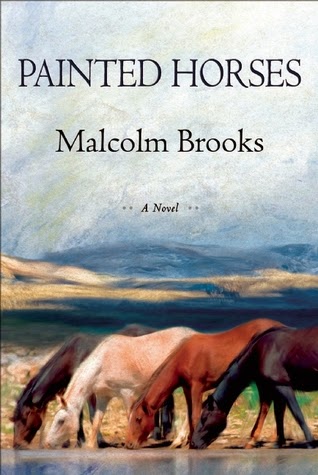
Sunday Sentence: Painted Horses by Malcolm Brooks


Simply put, the best sentence(s) I've read this past week, presented out of context and without commentary.


She takes him to a party at a friend's apartment, a chain-smoking assemblage of writers and intellectuals.  John H does not speak French well enough to follow their conversation, which whirls and flashes like a festival, but he gathers she loves to argue, her tongue quick as a matador's cape.
Painted Horses by Malcolm Brooks