Sunday, April 7, 2019

Sunday Sentence: “Children Are Magic” by Natalie Serber


Simply put, the best sentence(s) I’ve read this past week, presented out of context and without commentary.


Barrett held her wineglass against her lips, quietly closed her teeth, bit on its thin danger.

“Children Are Magic” by Natalie Serber

Friday, April 5, 2019

Friday Freebie: The Five by Hallie Rubenhold


Congratulations to Asalia Arauz, winner of last week’s Friday Freebie: three novels by Julia Alvarez: In the Time of the Butterflies, How the Garcia Girls Lost Their Accents, and ¡Yo!.

This week’s giveaway is for The Five: The Untold Lives of the Women Killed by Jack the Ripper by Hallie Rubenhold. Here is some early praise for the book: “Meticulously researched and beautifully executed, The Five is a powerful and timely retelling of a story you think you already know. Rubenhold strips away decades of myths and misconceptions so that the women who were ruthlessly murdered by Jack the Ripper are no longer one-dimensional characters in a Penny Dreadful, but real human beings with very real struggles, hopes, and fears. With this important book, Rubenhold proves she is a master of narrative nonfiction: a historian with a novelist’s soul.” (Lindsey Fitzharris, author of The Butchering Art)

Keep scrolling for more information on the novels and how to enter the contest...


Polly, Annie, Elizabeth, Catherine and Mary-Jane are famous for the same thing, though they never met. They came from Fleet Street, Knightsbridge, Wolverhampton, Sweden, and Wales. They wrote ballads, ran coffee houses, lived on country estates, they breathed ink-dust from printing presses and escaped people-traffickers. What they had in common was the year of their murders: 1888. The person responsible was never identified, but the character created by the press to fill that gap has become far more famous than any of these five women. For more than a century, newspapers have been keen to tell us that "the Ripper" preyed on prostitutes. Not only is this untrue, as historian Hallie Rubenhold has discovered, it has prevented the real stories of these fascinating women from being told. Now, in this devastating narrative of five lives, Rubenhold finally sets the record straight, revealing a world not just of Dickens and Queen Victoria, but of poverty, homelessness and rampant misogyny. They died because they were in the wrong place at the wrong time—but their greatest misfortune was to be born a woman.

If you’d like a chance at winning The Five, simply e-mail your name and mailing address to


Put FRIDAY FREEBIE in the e-mail subject line. Please include your mailing address in the body of the e-mail. One entry per person, please. Despite its name, the Friday Freebie remains open to entries until midnight on April 11, at which time I’ll draw the winning name. I’ll announce the lucky reader on April 12. If you’d like to join the mailing list for the once-a-week newsletter, simply add the words “Sign me up for the newsletter” in the body of your email. Your e-mail address and other personal information will never be sold or given to a third party (except in those instances where the publisher requires a mailing address for sending Friday Freebie winners copies of the book).

Want to double your odds of winning? Get an extra entry in the contest by posting a link to this webpage on your blog, your Facebook wall or by tweeting it on Twitter. Once you’ve done any of those things, send me an additional e-mail saying “I’ve shared” and I’ll put your name in the hat twice.


Sunday, March 31, 2019

Sunday Sentence: State of Wonder by Ann Patchett


Simply put, the best sentence(s) I’ve read this past week, presented out of context and without commentary.


The news of Anders Eckman’s death came by way of Aerogram, a piece of bright blue airmail paper that served as both the stationery and, when folded over and sealed along the edges, the envelope. Who even knew they still made such things? This single sheet had traveled from Brazil to Minnesota to mark the passing of a man, a breath of tissue so insubstantial that only the stamp seemed to anchor it to this world.

Opening lines of State of Wonder by Ann Patchett

Monday, March 25, 2019

Day Jobs and All-the-Time Writers


For nearly all my working life, I’ve held jobs that were not, shall we say, dedicated to the study or creation of art. And so, I constantly felt a disconnect between what I do with my hands and what’s going on in my head. That’s the beauty of the so-called day job: you can turn a wrench, or flip a burger, or type a mundane report with those hands while your novel’s plot churns and thickens in your head. William Faulkner, after all, wrote As I Lay Dying in between shoveling loads of coal at the University of Mississippi power plant.

Since graduating with a bachelor’s degree in English from the University of Oregon, I have worked various jobs—some of them simultaneously—while also making time to write (and publish) a long parade of short stories, poems, essays, and two novels (Fobbit and Brave Deeds). A sampling of my resume: cook, soldier, newspaper editor, manager of a boat-and-RV storage yard, public affairs specialist, school janitor, journalist, video store clerk, tutor in a remedial writing program at a community college, and pizza-delivery driver.

I know a thing or three about day jobs.

And so, when Wendy J. Fox (If the Ice Had Held) invited me to be on a panel called Don’t Quit Your Day Job at this year’s annual conference of the Association of Writers & Writing Programs (AWP), I immediately knew what I needed to do: put in for leave from my day job.

I embark on the road trip tomorrow, armed with a few good audiobooks. I’m looking forward to this year’s conference in Portland and three days of intense focus on the creative writing arts: not something I normally get back in my windowless, fluorescent-lit office.

To hear more about day jobs and creativity, please come to the AWP panel Don’t Quit Your Day Job – Writers Outside of Academia, where I’ll be joined by these fine, fellow laboring writers: Wendy J. Fox, Daniel Olivas, Yuvi Zalkow, and Teow Lim Goh. Our panel is first thing on the first day—9 a.m., Thursday, March 28 in Room A106 of the Oregon Convention Center.

Can’t make it to AWP, but still want to talk about Writers With Day Jobs? Feel free to leave a comment below!


Front Porch Books: March 2019 edition


Front Porch Books is a monthly tally of new and forthcoming books—mainly advance review copies (aka “uncorrected proofs” and “galleys”)—I’ve received from publishers. Cover art and opening lines may change before the book is finally released. I should also mention that, in nearly every case, I haven’t had a chance to read these books, but they’re definitely going in the to-be-read pile.


The World Doesn’t Require You
by Rion Amilcar Scott
(Liveright)

Jacket Copy:  Deftly spinning genres of his feverish literary invention, Rion Amilcar Scott creates his very own Yoknapatawpha County with fictional Cross River, Maryland. Established by the leaders of America’s only successful slave revolt, the town still evokes the fierce rhythms of its founding. Among its residents are David Sherman, a struggling musician who just happens to be God’s last son; Tyrone, a ruthless PhD candidate, whose dissertation about a childhood game ignites mayhem in the neighboring, once-segregated town of Port Yooga; and Jim, an all-too-obedient robot who serves his Master. Culminating with an explosive novella, these haunting stories of the denizens of Cross River serve to explore larger themes of religion, violence, and love―all told with sly humor and a dash of magical realism. Shattering rigid literary boundaries, Scott is “a necessary voice in American literature” (PEN Award citation), a writer whose storytelling gifts the world very much requires.

Opening Lines:  God is from Cross River, everyone knows that. He was tall, lanky; wore dirty brown clothes and walked with a limp he tried to disguise as a bop. His chin held a messy salt-and-pepper beard that extended to his Adam’s apple. Always clutching a mango in His hand. Used to live on the Southside, down under the bridge, near the water. Now there is a nice little sidewalk and flowers and a bike trail that leads into Port Yooga. Back then there was just mud and weeds, and He’d sit there barefooted, speaking softly, preaching His word. At one time He had one hundred, maybe two hundred—some say up to five hundred or even a thousand—people listening to Him. But the time I’m talking about, He’d sit with only one or two folks. Always with a mango, except during Easter time, when He’d pass out jellybeans to get people to stop and listen.
       He lived on the banks of the Cross River until one day, He filled His pockets with stones and walked into the water and sank like a crazy poet. He wasn’t insane. It was all part of God’s plan. Last time He was crucified, this time drowned.

Blurbworthiness:  “In the midst of a renaissance of African American fiction, Rion Amilcar Scott’s stories stand at the forefront of what’s possible in this vanguard. Funny, sad, and always moving, these stories explore what it means to call a place like America home when it treats you with indifference or terror. The people in these stories are unforgettable, their lives recognizable, their voices, as written by Scott, wholly original.”  (Kaitlyn Greenidge, author of We Love You, Charlie Freeman)


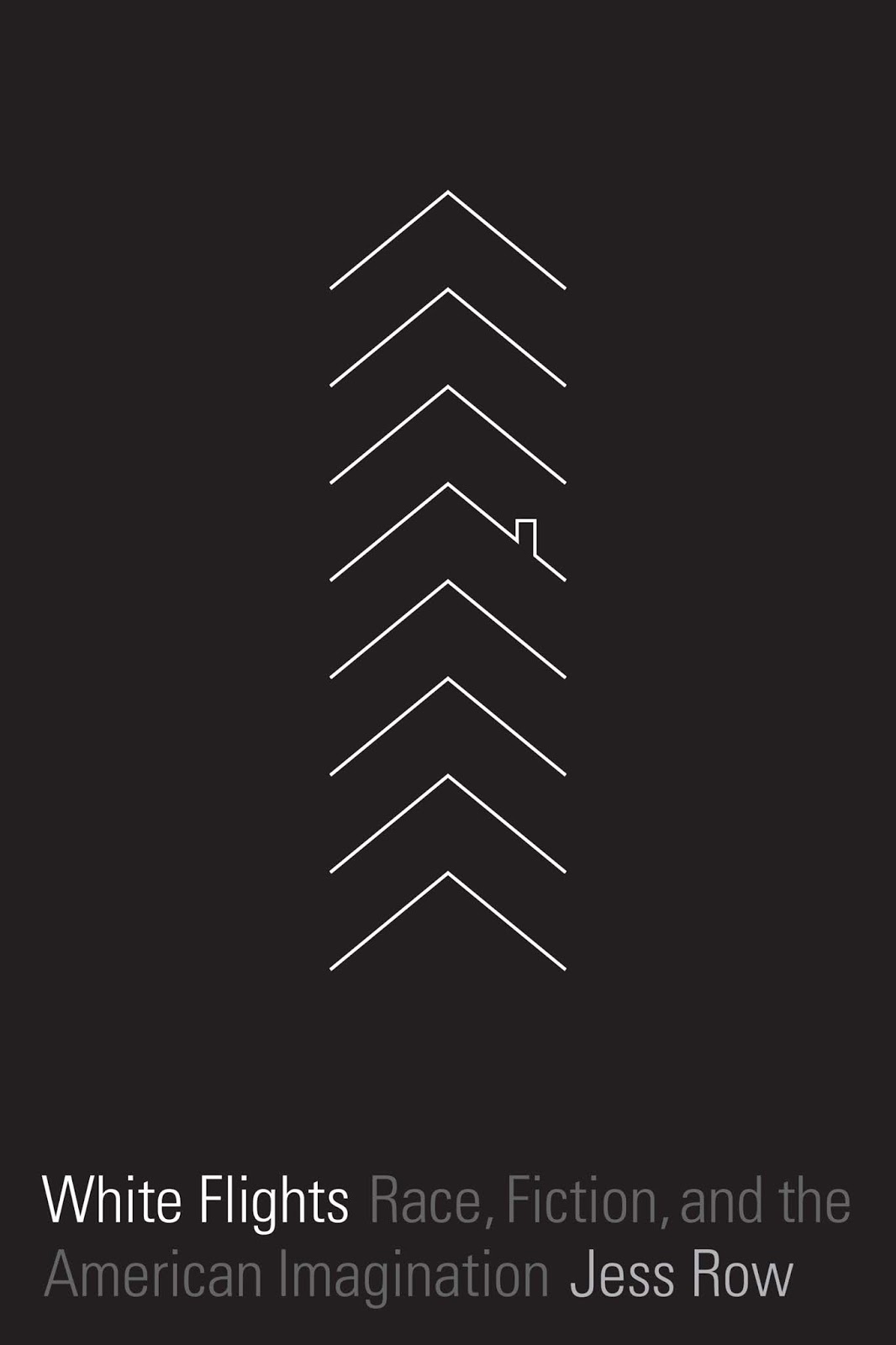
White Flights: Race, Fiction, and the American Imagination
by Jess Row
(Graywolf Press)

Jacket Copy:  White Flights is a meditation on whiteness in American fiction and culture from the end of the civil rights movement to the present. At the heart of the book, Jess Row ties “white flight”—the movement of white Americans into segregated communities, whether in suburbs or newly gentrified downtowns—to white writers setting their stories in isolated or emotionally insulated landscapes, from the mountains of Idaho in Marilynne Robinson’s Housekeeping to the claustrophobic households in Jonathan Franzen’s The Corrections. Row uses brilliant close readings of work from well-known writers such as Don DeLillo, Annie Dillard, Richard Ford, and David Foster Wallace to examine the ways these and other writers have sought imaginative space for themselves at the expense of engaging with race. White Flights aims to move fiction to a more inclusive place, and Row looks beyond criticism to consider writing as a reparative act. What would it mean, he asks, if writers used fiction “to approach each other again”? Row turns to the work of James Baldwin, Dorothy Allison, and James Alan McPherson to discuss interracial love in fiction, while also examining his own family heritage as a way to interrogate his position. A moving and provocative book that includes music, film, and literature in its arguments, White Flights is an essential work of cultural and literary criticism.

Opening Lines:  These essays are about race in the imaginative life of Americans from the end of the civil rights era to the present. They’re about fiction in the proper sense of the word—novels, short stories, film, plays—and also the larger, boundaryless, improper sense, in which our collective life is a series of overlapping fictions, fantasies, dream states. They’re about the ways fiction in the first sense reflects and sustains the fictions of the second.
       Because it couldn’t be otherwise—because I couldn’t write it any other way—this is also a book about the dimensions and complications of my own racial identity, and particularly about my life as a white writer, and how I learned, without consciously learning it, to represent whiteness and identify with whiteness, while at the same time believing I was practicing something called “imaginative freedom.” I’m trying to undertake what Wayne Koestenbaum calls autoethnography—a way of writing that should never take itself entirely seriously. Because whiteness is a category that is both laughable and lethal. Writing about race as a white man means I have to move beyond the understanding of what words like “sincerity,” “earnestness,” and “dignity” mean. The worst thing a book like this could be is polite.

Blurbworthiness:  “These are brilliant, sweeping, intimate delights―and afterward, you may never read the same way again.” (Alexander Chee, author of How to Write an Autobiographical Novel)


What the Women Do
by Adam Braver
(Outpost19)

Jacket Copy:  In What The Women Do, three trailblazing women face private decisions that redirect their lives—and also shape history. In these powerful novellas, Adam Braver imagines life-changing encounters away from the spotlight, hidden inflection points that capture how these remarkable groundbreakers engaged the world around them. When Eleanor Roosevelt rushes to her son’s hospital bedside, she’s stopped short by Miss Ethel duPont, his fiancĂ©e and the embodiment of everything she’s always resisted. In the crush of World War II, Kay Summersby lives and works alongside General Eisenhower, building a loving domestic sanctuary that’s dismantled in victory and that shadows the life she later builds for and by herself. And in a small shop in Reykjavik, Bobbie Gentry, the reclusive 70’s pop star, fights to preserve her anonymity. Or maybe it’s her doppelgänger: her refusal to engage with an ambitious reporter recasts the entire prospect of knowing these women’s lives at all.

Opening Lines:  Outside of the private hospital room in Phillips House, before she’s even seen her son, Eleanor Roosevelt, the First Lady of the United States, listens to Dr. Tobey, an Ear, Nose, & Throat man, try to explain what he believes is happening inside her son’s body. Because she’s hardly had any sleep, having just arrived in Boston on the 12:45 AM Owl out of Grand Central Station, it takes all her will to focus on the details.

Blurbworthiness:  “I’ve loved Adam Braver’s work for many years. What The Women Do is one of his finest books yet. These novellas offer radically different takes on the lives of three women about whom we know much less than we sometimes like to think. Braver’s bravura narration—stealthy and startling—confirms my long-held opinion that he’s one of the best fiction writers in the country. One of the best artists, period.”  (Steve Yarbrough, author of The Unmade World)


We Were Killers Once
by Becky Masterman
(Minotaur)

Jacket Copy:  In 1959, a family of four were brutally murdered in Holcomb, Kansas. Perry Smith and Dick Hickok were convicted and executed for the crime, and the murders and their investigation and solution became the subject of Truman Capote’s masterpiece, In Cold Blood. But what if there was a third killer, who remained unknown? What if there was another family, also murdered, who crossed paths with this band of killers, though their murder remains unsolved? And what if Dick Hickok left a written confession, explaining everything? Retired FBI agent Brigid Quinn and her husband Carlo, a former priest and university professor, are trying to enjoy each other in this new stage in their lives. But a memento from Carlo’s days as a prison chaplain—a handwritten document hidden away undetected in a box of Carlo’s old things—has become a target for a man on the run from his past. Jerry Beaufort has just been released from prison after decades behind bars, and though he’d like to get on with living the rest of his life, he knows that somewhere there is a written record of the time he spent with two killers in 1959. Following the path of this letter will bring Jerry into contact with the last person he’ll see as a threat: Brigid Quinn.

Opening Lines:  Little Brigid Theresa Quinn, with a Band-Aid on my knobby knee from jumping out of a banyan tree on a dare, and a ponytail of red hair that should have been washed four days ago—I’m only six years old when I first hear about the murder of the Walker family on December 19, 1959. Though the decades pass, and I have witnessed even greater horrors than were described that night, I still can’t see a Christmas tree without feeling the crime scene, the tree with its ornaments, the glittery packages, the bodies in the living room.


All the Water in the World
by Karen Raney
(Scribner)

Jacket Copy:  Maddy is sixteen. Smart, funny, and profound, she has loyal friends, a mother with whom she’s unusually close, a father she’s never met, devoted grandparents, and a crush on a boy named Jack. Maddy also has cancer. Living in the shadow of uncertainty, she is forced to grow up fast. All the Water in the World is the story of a family doing its best when faced with the worst. Told in the alternating voices of Maddy and her mother, Eve, the narrative moves between the family’s lake house in Pennsylvania; their home in Washington, DC; and London, where Maddy’s father, Antonio, lives. Hungry for experience, Maddy seeks out her first romantic relationship, finds solace in music and art, and tracks down Antonio. She continually tests the depths and limits of her closeness with her mother, while Eve has to come to terms with the daughter she only partly knows, in a world she can’t control.

Opening Lines:  A lake is a black hole for sound. The wind, the crack of a hammer, the cries of birds and children weave a rim of noise around the water, making its silence more profound. When a turtle or fish breaks the surface, the sound appears to come from within. Maddy, who is a natural philosopher, would want to know whether it really is sound, or just the possibility of sound, that issues from such breaches. I mention Maddy because to have a child is to have a twofold mind. No thought or action belongs to me alone. This holds true more than ever now.

Blurbworthiness:  “An extraordinary achievement for a first novel: tender, heartfelt and heart-breaking.”  (Francis Spufford, author of Golden Hill)


Ducks, Newburyport
by Lucy Ellmann
(Biblioasis)

Jacket Copy:  Peeling apple after apple for the tartes tatin she bakes for local restaurants, an Ohio mother wonders how to exist in a world of distraction and fake facts, besieged by a tweet-happy president and trigger-happy neighbors, and all of them oblivious to what Dupont has dumped into the rivers and what’s happening at the factory farm down the interstate―not to mention what was done to the land’s first inhabitants. A torrent of consciousness, narrated in a single sentence by a woman whose wandering thoughts are as comfortably familiar as they are heart-rending in their honesty, Ducks, Newburyport is a fearless indictment of our contemporary moment.

Opening Lines: When you are all sinew, struggle and solitude, your young – being soft, plump, vulnerable – may remind you of prey. The damp furry closeness in the crowded den sometimes gave her an over-warm sensation akin to nausea, or boredom. Snaking her long limbs as far as space permitted, she longed to be out on her winding path, ranging wide in search of deer. In her dreams she slaughtered whole herds. She sought that first firm clasp on a stag’s neck, the swift parting of its hide, her mouth filling at last with what was hot and wet and necessary.

(To read the start of that book-length sentence, which begins “The fact that the raccoons are now banging an empty yoghurt carton around on the driveway...,” visit this page at Biblioasis)

Blurbworthiness:  “Perhaps the most ambitious novel of 2019, a contemporary Molly Bloom soliloquy, a paginated lioness, a corrective, a challenge, a ‘Moby-dick of the kitchen’ in weird but sorta true ways.” (Josh Cook, Porter Square Books)


The Turn of the Key
by Ruth Ware
(Scout Press)

Jacket Copy:  When she stumbles across the ad, she’s looking for something else completely. But it seems like too good an opportunity to miss—a live-in nannying post, with a staggeringly generous salary. And when Rowan Caine arrives at Heatherbrae House, she is smitten—by the luxurious “smart” home fitted out with all modern conveniences, by the beautiful Scottish Highlands, and by this picture-perfect family. What she doesn’t know is that she’s stepping into a nightmare—one that will end with a child dead and herself in prison awaiting trial for murder. Writing to her lawyer from prison, she struggles to explain the unravelling events that led to her incarceration. It wasn’t just the constant surveillance from the cameras installed around the house, or the malfunctioning technology that woke the household with booming music, or turned the lights off at the worst possible time. It wasn’t just the girls, who turned out to be a far cry from the immaculately behaved model children she met at her interview. It wasn’t even the way she was left alone for weeks at a time, with no adults around apart from the enigmatic handyman, Jack Grant. It was everything. She knows she’s made mistakes. She admits that she lied to obtain the post, and that her behavior toward the children wasn’t always ideal. She’s not innocent, by any means. But, she maintains, she’s not guilty—at least not of murder. Which means someone else is. Full of spellbinding menace and told in Ruth Ware’s signature suspenseful style, The Turn of the Key is an unputdownable thriller from the Agatha Christie of our time.

Opening Lines:
                                                                                      3rd September 2017
Dear Mr. Wrexham,
I know you don’t know me but please please, please you have to help me


Three Flames
by Alan Lightman
(Counterpoint)

Jacket Copy:  The stories of one Cambodian family are intricately braided together in Alan Lightman’s haunting Three Flames, his first work of fiction in six years. Three Flames portrays the struggles of a Cambodian farming family against the extreme patriarchal attitudes of their society and the cruel and dictatorial father, set against a rural community that is slowly being exposed to the modern world and its values. A mother must fight against memories of her father’s death at the hands of the Khmer Rouge, and her powerful desire for revenge. A daughter is married off at sixteen to a wandering husband and his domineering aunt; another daughter is sent to the city to work in the factories to settle her father’s gambling debt. A son dreams of marrying the most beautiful girl of the village and escaping the life of a farmer. And the youngest daughter bravely challenges her father so she can stay in school and strive for a better future. A vivid story of revenge and forgiveness, of a culture smothering the dreams of freedom, and of tradition against courage, Three Flames grows directly from Lightman’s work as the founder of the Harpswell Foundation, a nonprofit organization whose mission is to advance a new generation of female leaders in Cambodia and all of Southeast Asia.

Opening Lines:  Ryna had just finished putting a quarter kilo of pork and a half dozen rambutan into her burlap shopping bag, wondering if her husband would scold her for spending too much, when she saw the man who had murdered her father.

Blurbworthiness:  “Lyrical and poignant, Three Flames weaves the stories of three generations of a poor, Cambodian farming family as they struggle to survive and hold on to their humanity. Each family member, like a flickering flame, lights the hopes and dreams of the others, offering courage in the face of shattering heartbreaks and tragedies. Beautifully written and told with great compassion, Alan Lightman's novel gives readers a family that is rich in stories, history, and heart, proving in the end that love shines even in the midst of great darkness.”  (Loung Ung, author of First They Killed My Father)


Machine
by Susan Steinberg
(Graywolf Press)

Jacket Copy:  Susan Steinberg’s first novel, Machine, is a dazzling and innovative leap forward for a writer whose most recent collection of short stories, Spectacle, gained her a rapturous following. Machine revolves around a group of teenagers―both locals and wealthy out-of-towners―during a single summer at the shore. Steinberg captures the pressures and demands of this world in a voice that effortlessly slides from collective to singular, as one girl recounts a night on which another girl drowned. Hoping to assuage her guilt and evade a similar fate, she pieces together the details of this tragedy, as well as the breakdown of her own family, and learns that no one, not even she, is blameless. A daring stylist, Steinberg contrasts semicolon-studded sentences with short lines that race down the page. This restless approach gains focus and power through a sharply drawn narrative that ferociously interrogates gender, class, privilege, and the disintegration of identity in the shadow of trauma. Machine is the kind of novel―relentless and bold―that only Susan Steinberg could have written.

Opening Lines:  the water is deeper than it looks; and we’re not the worst swimmers, but it’s dark; we tend not to swim at night; no, we tend not to swim at night with guys; we all knew of the girl who drowned; she sank like a stone, they said; she was showing off that night, they said;

Blurbworthiness:  “Otherworldly, and every-other-line sublime, Machine reads like the text messages Laura Palmer might send back from the Black Lodge. It’s a timely reminder of why our culture remains haunted by dead girls, and of the different ways we find to drown them.”  (Bennett Sims, author of A Questionable Shape)


Sunday, March 24, 2019

Sunday Sentence: The Small House at Allington by Anthony Trollope


Simply put, the best sentence(s) I’ve read this past week, presented out of context and without commentary.


A sermon is not to tell you what you are, but what you ought to be; and a good novel should tell you not what you are to get, but what you’d like to get.

The Small House at Allington by Anthony Trollope

Friday, March 22, 2019

Friday Freebie: Three by Julia Alvarez


Congratulations to John Smith, winner of last week’s Friday Freebie: Auntie Poldi and the Sicilian Lions and Auntie Poldi and the Vineyards of Etna.

It’s Julia Alvarez Week at The Quivering Pen! This week’s giveaway is for three new paperback re-issues from Algonquin Books of three novels by the award-winning author: In the Time of the Butterflies, How the Garcia Girls Lost Their Accents, and ¡Yo!. One lucky reader will win all three books. Keep scrolling for more information on the novels and how to enter the contest...


In the Time of the Butterflies:  It is November 25, 1960, and three beautiful sisters have been found near their wrecked Jeep at the bottom of a 150-foot cliff on the north coast of the Dominican Republic. The official state newspaper reports their deaths as accidental. It does not mention that a fourth sister lives. Nor does it explain that the sisters were among the leading opponents of Gen. Rafael Leonidas Trujillo’s dictatorship. It doesn’t have to. Everybody knows of Las Mariposas—“The Butterflies.” In this extraordinary novel, the voices of all four sisters—Minerva, Patria, MarĂ­a Teresa, and the survivor, DedĂ©—speak across the decades to tell their own stories, from hair ribbons and secret crushes to gunrunning and prison torture, and to describe the everyday horrors of life under Trujillo’s rule. Through the art and magic of Julia Alvarez’s imagination, the martyred Butterflies live again in this novel of courage and love, and the human cost of political oppression.


How the Garcia Girls Lost Their Accents:  Acclaimed writer Julia Alvarez’s brilliant and buoyant and beloved first novel gives voice to four sisters recounting their adventures growing up in two cultures. In this debut novel, the GarcĂ­a sisters—Carla, Sandra, Yolanda, and SofĂ­a—and their family must flee their home in the Dominican Republic after their father’s role in an attempt to overthrow a tyrannical dictator is discovered. They arrive in New York City in 1960 to a life far removed from their existence in the Caribbean. In the wild and wondrous and not always welcoming U.S.A., their parents try to hold on to their old ways, but the girls try find new lives: by forgetting their Spanish, by straightening their hair and wearing fringed bell bottoms. For them, it is at once liberating and excruciating to be caught between the old world and the new. How the GarcĂ­a Girls Lost Their Accents sets the sisters free to tell their most intimate stories about how they came to be at home—and not at home—in America.


¡Yo!:  Obsessed by human stories, Latina novelist Yolanda Garcia has managed to put herself at the center of many lives. Thrice married, she’s also managed to remain childless while giving very public birth to her highly autobiographical writing. She’s famous for it. Now her characters want a chance to tell their side of it. And tell it they do! Everybody who’s ever been caught in Yo’s web from her sisters to her third husband can hardly wait to talk. The stories they tell on celebrated writer Yolanda Garcia (known to her intimates as Yo) deliver delicious insight into the very nature of artistic creation and the material from which it is built. Yo! is a novel about what happens when an author really does write what she knows. At once funny and poignant, intellectual and gossipy, lighthearted and layered in meaning, Yo! is, above all, the portrait of an artist. And with its bright colors, passion, and penchant for controversy, it’s a portrait that could come only from the palette of Julia Alvarez.

If you’d like a chance at winning the Julia Alvarez novels, simply e-mail your name and mailing address to


Put FRIDAY FREEBIE in the e-mail subject line. Please include your mailing address in the body of the e-mail. One entry per person, please. Despite its name, the Friday Freebie remains open to entries until midnight on April 4, at which time I’ll draw the winning name. I’ll announce the lucky reader on April 5. If you’d like to join the mailing list for the once-a-week newsletter, simply add the words “Sign me up for the newsletter” in the body of your email. Your e-mail address and other personal information will never be sold or given to a third party (except in those instances where the publisher requires a mailing address for sending Friday Freebie winners copies of the book).

Want to double your odds of winning? Get an extra entry in the contest by posting a link to this webpage on your blog, your Facebook wall or by tweeting it on Twitter. Once you’ve done any of those things, send me an additional e-mail saying “I’ve shared” and I’ll put your name in the hat twice.


Tuesday, March 19, 2019

Trailer Tuesday: Women Talking by Miriam Toews


The Margaret Atwood comparisons are inevitable. Dust the surface and Miriam Toews’ new novel Women Talking bears a thematic resemblance to Atwood’s classic The Handmaid’s Tale, but go below that superficiality and Women Talking takes on a frightening life of its own. Here, for instance, is the plot description:
One evening, eight Mennonite women climb into a hay loft to conduct a secret meeting. For the past two years, each of these women, and more than a hundred other girls in their colony, has been repeatedly violated in the night by demons coming to punish them for their sins. Now that the women have learned they were in fact drugged and attacked by a group of men from their own community, they are determined to protect themselves and their daughters from future harm. While the men of the colony are off in the city, attempting to raise enough money to bail out the rapists and bring them home, these women―all illiterate, without any knowledge of the world outside their community and unable even to speak the language of the country they live in―have very little time to make a choice: Should they stay in the only world they’ve ever known or should they dare to escape? Based on real events and told through the “minutes” of the women’s all-female symposium, Toews’s masterful novel uses wry, politically engaged humor to relate this tale of women claiming their own power to decide.

Can I get a collective “Whoa!”? My heart hurts just reading about what I’ll find in the pages of this novel. But Women Talking sounds too good and important not to hear to what it has to say.

For its part, the trailer is remarkably effective in its Mennonite-simplicity, making powerful use of the cover design’s image of pale women, cloistered and half-hidden by stern bonnets. And when it starts multiplying those bonnets into an infinite line, it makes its point loud and clear: listen and learn. Any questions?

Trailer Tuesday is a showcase of new book trailers and, in a few cases, previews of book-related movies.


Sunday, March 17, 2019

Sunday Sentence: Daisy Jones and the Six by Taylor Jenkins Reid


Simply put, the best sentence(s) I’ve read this past week, presented out of context and without commentary.


Daisy was Carole King, she was Laura Nyro. Hell, she could have been Joni Mitchell. And they wanted her to be Olivia Newton-John.

Daisy Jones and the Six by Taylor Jenkins Reid

Saturday, March 16, 2019

A Dead Man’s Books: Jennifer Spiegel’s Library


Reader:  Jennifer Spiegel
Location:  Phoenix, Arizona
Collection Size:  No real clue.
The one book I'd run back into a burning building to rescue:  None. See below. That doesn’t mean that I don’t love them.
Favorite book from childhood:  I actually saved a ton for my kids, but my favorites are the Oz Books by L. Frank Baum. I’m pretty sure they changed my life. I love them so much.
Guilty pleasure book:  Maybe The Hunger Games trilogy by Suzanne Collins. I’ve also been known to read a zombie novel or two, though I think I’ve met my quota and I’m done. Oh, and I like political memoirs. And U2 coffee table books. I see a coffee table book next to me, and it’s about Tiny Houses.


I love my nonsensical, random collection of books. My shelves cannot purport to be a library. That’s too noble. I do, however, have a house full of books.

I had a sobering moment in 2015. In the late spring of that year, I helped my mom pack up and officially downsize. She’d been a widow since 2002, and she had lived in the same house since the seventies. Both of my parents were avid readers (though I spent a great deal of time making fun of my dad’s James Michener habit and all of those Cold War thrillers that were turned into Cold War movies). She was moving to a guest house, and she’d hold onto a handful of books collected over a lifetime.

She picked out her keepers. I scavenged and pulled out a few, like Leon Uris’s QB VII, William Styron’s Sophie’s Choice, and Herman Wouk’s The Winds of War. And then I took boxes and boxes and boxes to sell at a used bookstore. It wasn’t because we didn’t love them; it was because we had no room for them. I must’ve had that Sybil book in there (Flora Rheta Schreiber), and Alex Haley’s Roots. James Clavell’s Shogun. Ken Follett, Mario Puzo, Norman Mailer, John Le CarrĂ©, too. Maybe one woman: The Thorn Birds by Colleen McCullough. All of these books, these special and beloved books, these demarcations of eras and these veritable points on a map. A lot of my father.

I packed them in boxes.

I loaded them into my car.

I drove to a bookstore.

And they gave me a couple of bucks for them.

That was my sobering moment.

You Can’t Take It With You.

I still keep my books. Most of them, anyway. I still believe in houses full of books. Shelves runneth-ing over. But—and I do not say this lightly—I might value them a little less than I once did. (I might be crying as I write this.)

I will, though, still say this boldly, brazenly: Shame on you if you do not own books.

So, in lieu of a library, I offer you this vision of my shelves.


My beloved travel books, disorganized, with a smattering of others like a Rolling Stone picture book and the scripts to sex, lies, and videotape and Do The Right Thing. That Let’s Go Europe book is from 1990, and readers of my new novel might note its treasured role.


Selected Books-I-Must-Save. Toni Morrison’s Beloved and Salman Rushdie’s Fury and Dostoyevsky’s Crime and Punishment and B.J. Novak’s One More Thing. Please note that Ta-nehisi Coates is next to Rick Springfield. I think that Coates’ book is the definitive book on the Obama years. I can’t explain Rick Springfield (we go back) except to say this:


These are mostly my kids’ books: Harry Potter, Little House on the Prairie, and Oz. Below that are the textbooks from my MA program in International Relations, from my defunct politics days.


And these are books that I will undoubtedly make my kids read. Many classics. A lot of Hemingway. Bleak House. Cry, The Beloved Country. Catch-22. The Good Earth. Wait! And what’s that I see? Mockingjay? (And a little stack of my books.)


My kids. I do not have an Allegiant-thing. Sesame Street, yes. Allegiant, no.


You have the Childcraft books, right? I mean, we all do, yeah?


Miscellaneous! Because sometimes you want poetry and sometimes you want Disney and sometimes you want Leaves of Grass, the Bible, and U2.

I fill shelves. Some of my shelves are from Ikea. Some are from friends who were getting rid of them. Some are nice. We even have a secret door in our house, a passageway.

But when I die, you can take my books. They are yours.


Jennifer Spiegel is mostly a fiction writer with three books and a miscellany of short publications, though she also teaches English and creative writing. She is part of Snotty Literati, a book-reviewing gig, with Lara Smith. She lives with her family in Arizona. More information is available at www.jenniferspiegel.com. And So We Die, Having First Slept, a new novel, is about marriage, youth, middle-age, Gen X, and fidelity. Currently, Spiegel is working on a memoir, Cancer, I'll Give You One Year: A Non-Informative Guide To Breast Cancer, or Cancer, I'll Give You One Year: How To Get Your Ba-Da-Bing Boobies On The House!

My Library is an intimate look at personal book collections.  Readers are encouraged to send high-resolution photos of their home libraries or bookshelves, along with a description of particular shelving challenges, quirks in sorting (alphabetically? by color?), number of books in the collection, and particular titles which are in the To-Be-Read pile.  Email thequiveringpen@gmail.com for more information.


Friday, March 15, 2019

Friday Freebie: Auntie Poldi and the Sicilian Lions and Auntie Poldi and the Vineyards of Etna by Mario Giordano


Congratulations to Phil Milio, winner of last week’s Friday Freebie: Bellflower by Mary Vensel White.

It’s Auntie Poldi Week at The Quivering Pen! This week’s giveaway is for two mystery novels by Mario Giordano featuring the Prosecco-loving detective: Auntie Poldi and the Sicilian Lions and Auntie Poldi and the Vineyards of Etna. I have a hardcover copy of each novel to give away to one lucky reader. Keep scrolling for more information on the books and how to enter the contest...


The Sicilian Lions: On her sixtieth birthday, Auntie Poldi retires to Sicily, intending to while away the rest of her days with good wine, a view of the sea, and few visitors. But Sicily isn’t quite the tranquil island she thought it would be, and something always seems to get in the way of her relaxation. When her handsome young handyman goes missing—and is discovered murdered—she can’t help but ask questions. Soon there’s an investigation, a smoldering police inspector, a romantic entanglement, one false lead after another, a rooftop showdown, and finally, of course, Poldi herself, slightly tousled but still perfectly poised. This “masterly treat” (Times Literary Supplement) will transport you to the rocky shores of Torre Archirafi, to a Sicily full of quirky characters, scorching days, and velvety nights, alongside a protagonist who’s as fiery as the Sicilian sun.


The Vineyards of Etna: When Prosecco‑loving Auntie Poldi retired to Sicily from Germany, she never dreamed her tranquil days would be interrupted by murder. But Sicily had other plans, and Poldi found herself honor‑bound to solve the disappearance of her beloved (and cute) handyman. Now she’s finally ready for some peace and quiet—interrupted by romantic encounters with handsome Chief Inspector Montana, of course—when the water supply to her neighborhood is cut off and a dear friend’s dog is poisoned, telltale signs that a certain familial organization is flexing its muscles. Poldi knows there will be no resolution without her help. She soon finds a body in a vineyard, tangles with the Mafia, and yet again makes herself unpopular in the pursuit of justice. But once wine and murder mix, how could she possibly stay away? This is a sexy and thrilling follow‑up to Mario Giordano’s debut novel, Auntie Poldi and the Sicilian Lions, hailed by Adriana Trigiani as “an explosion of color [and] a celebration of the palette of Italian life and the Sicilian experience in its specificity, warmth and drama.”

If you’d like a chance at winning the Auntie Poldi books, simply e-mail your name and mailing address to


Put FRIDAY FREEBIE in the e-mail subject line. Please include your mailing address in the body of the e-mail. One entry per person, please. Despite its name, the Friday Freebie remains open to entries until midnight on March 21, at which time I’ll draw the winning name. I’ll announce the lucky reader on March 22. If you’d like to join the mailing list for the once-a-week newsletter, simply add the words “Sign me up for the newsletter” in the body of your email. Your e-mail address and other personal information will never be sold or given to a third party (except in those instances where the publisher requires a mailing address for sending Friday Freebie winners copies of the book).

Want to double your odds of winning? Get an extra entry in the contest by posting a link to this webpage on your blog, your Facebook wall or by tweeting it on Twitter. Once you’ve done any of those things, send me an additional e-mail saying “I’ve shared” and I’ll put your name in the hat twice.