Friday, December 20, 2013

Friday Freebie: Best of Books by the Bed by Cheryl & Eric Olsen and We Wanted to Be Writers by Eric Olsen & Glenn Schaeffer


Congratulations to Will Evans, winner of last week's Friday Freebie: American Dream Machine by Matthew Specktor and The Flamethrowers by Rachel Kushner.

This week's book giveaway is for those of you who haven't been able to get enough of year-end list-o-mania.  Best of Books by the Bed #1 edited by Cheryl and Eric Olsen, is subtitled "What Writers Are Reading Before Lights Out" and it is guaranteed to add heaps of books to your wishlists or maybe it will prompt you to go to your own shelves and pull out half-forgotten books (to be read immediately or added to the always-towering TBR pile).  Based on the popular Books by the Bed blog, this handy guide provides a happy overload of reading recommendations from bookworms with exquisite good taste.  I had a chance to review the book earlier this year and offered this blurb to the editors (repeating it here because I think it sums up my feelings about the book):
Remember those nights when you use to read books under the bedcovers by flashlight after "lights out"? And remember that feeling like warm syrup spreading through your chest when you found a book you truly loved and couldn't wait to tell others about it in the morning? Books by the Bed re-kindles that happy glow of biblio-love through its lists of well-read books enthusiastically endorsed by readers and writers. Reading Books by the Bed is like being able to crawl under the covers with fellow book lovers and come away with a whole stack of new reading material. Flashlights not included.
The contributions from readers is warm and generous throughout.  And besides, it's always fun to peek at someone else's bookshelves, isn't it?  Here, for instance, is book reviewer Harvey Freedenberg listing the books which are within easy reach from his bed:
Ever since I began reviewing in 2005, my bedside table has become the resting place for an ever shifting array of titles that remind me of the deadline-driven reading that lies ahead in the next few weeks. Right now that space is occupied by Canada, the new novel from one of my favorite writers, Pulitzer Prize winner Richard Ford, commentator E. J. Dionne’s Our Divided Political Heart, an analysis of our pervasive political gridlock, What Happened to Sophie Wilder, a novel by Christopher Beha, and new essay collections from two very smart people—Marilynne Robinson and Jonathan Franzen. I’m saddened to report that worthy volumes of short stories by Deborah Eisenberg, Max Apple and George Saunders have been relegated to a second stack, along with T.S. Eliot’s Four Quartets and the slim book, Slow Reading, by John Miedema, which seems like a rebuke to the whole notion of a TBR pile.
One more thing: the trim, slim Best of Books by the Bed #1 is perfectly-sized to fit inside a Christmas stocking.  I'm just sayin'....

Along with Best of Books by the Bed #1, you have a chance to win the book which started the website where you'll find BYTB blog posts: We Wanted to Be Writers, by Eric Olsen and Glenn Schaeffer.  Subtitled "Life, Love, and Literature at the Iowa Writers' Workshop" it's the kind of book that's catnip to authors.  Everyone loves to read other writers writing about writing, don't they?  Or is that just me?  Here's more about the book from the publisher:
We Wanted to be Writers is a rollicking and insightful blend of original interviews, commentary, advice, gossip, anecdotes, analyses, history, and asides with nearly thirty graduates and teachers at the now legendary Iowa Writers' Workshop between 1974 and 1978. Among the talents that emerged in those years--writing, criticizing, drinking, and debating in the classrooms and barrooms of Iowa City--were the younger versions of writers who became John Irving, Jane Smiley, T. C. Boyle, Michelle Huneven, Allan Gurganus, Sandra Cisneros, Jayne Anne Phillips, Jennie Fields, Joy Harjo, Joe Haldeman, and many others. It is chock full of insights and a treasure trove of inspiration for all writers, readers, history lovers, and anyone who ever "wanted to be a writer." Jane Smiley on the Iowa writers' workshop: "In that period, the teachers tended to be men of a certain age, with the idea that competition was somehow the key-the Norman Mailer period. The story was that if you disagreed with Norman, or gave him a bad review, he'd punch you in the nose. You were supposed to get in fights in restaurants." T.C. Boyle on his short story "Drowning": "I got $25 for it, which was wonderful . . . You know, getting $25 for the product of your own brain? You could buy a lot of beer in Iowa City back then for that."

If you’d like a chance at winning both Best of Books By the Bed #1 and We Wanted to be Writers, simply email your name and mailing address to

Put FRIDAY FREEBIE in the e-mail subject line.  One entry per person, please.  Despite its name, the Friday Freebie runs all week long and remains open to entries until midnight on Dec. 26, at which time I’ll draw the winning name.  I’ll announce the lucky reader on Dec. 27.  If you’d like to join the mailing list for the once-a-week newsletter, simply add the words “Sign me up for the newsletter” in the body of your email.  Your email address and other personal information will never be sold or given to a third party (except in those instances where the publisher requires a mailing address for sending Friday Freebie winners copies of the book).

Want to double your odds of winning?  Get an extra entry in the contest by posting a link to this webpage on your blog, your Facebook wall or by tweeting it on Twitter.  Once you’ve done any of those things, send me an additional e-mail saying “I’ve shared” and I’ll put your name in the hat twice.


My Year of Books: Best Fiction of 2013


This was the year I went all Lewis & Clark on my shelves. Authors who'd been on my "gotta-read-someday" list for far too long came out with new books, providing me with an opportunity to "discover" them.  Writers like Fiona Maazel, Andrew Sean Greer, Jamie Ford, J. Robert Lennon and Neil Gaiman provided many hours of joy between the covers.  But for every author I checked off my bucket list, there are triple that number still waiting to be read for the first time: Jeffrey Eugenides, Donna Tartt, Marisha Pessl, Pete Fromm, Anthony Doerr, Bill Bryson, William T. Vollmann and Colson Whitehead to name a few--and don't even get me started on the classics!  (Hello, Hardy, Proust and Wodehouse...).

This year also gave me the pleasure of discovering some new writers and those who hadn't previously been on my radar--fictioneers like Ben Dolnick, Jamie Quatro, and Kate Southwood.  I look forward to reading more of their work in the future.

In compiling this year's "Best Books" list, I limited myself to fiction, but I'd like to give special mention to a couple of non-fiction books which would have made the cut if I'd widened the scope of the list: Still Writing by Dani Shapiro is an absolute must-read for anyone who practices the craft of writing (or who thinks that someday they might take up the pen and jot down a few lines of art); and Pilgrim's Wilderness by Tom Kizzia is a riveting account of one stone-cold crazy patriarch who homesteads in Alaska's wilderness then endangers his family and the entire community when he takes a stand against the federal government (Kizzia's writing is so, so very good--right down to the last shattering sentence which casts the previous 335 pages in a new light).  In poetry, I was bowled over by the stanzas coming from Hugh Martin (The Stick Soldiers) and A. Van Jordan (The Cineaste)--poems about war and movies, respectively.

Without further preamble, here are my Top 10 favorite books from 2013 (in no particular order):

At the Bottom of Everything
by Ben Dolnick
Ben Dolnick’s novel about two childhood friends trying, as adults, to reconcile past mistakes held me in its grip so hard that I found myself at 2 a.m. one night turning pages so quickly my fingers were cross-hatched with tiny paper cuts.  At that point in the novel, Adam had traveled to India in search of his old friend Thomas who was lost, both bodily and in the corridors of his mind.  Both men are in their twenties and are trying to deal with a terrible accident for which they were responsible as reckless teenagers.  Guilt has wracked them each in separate ways and they drifted apart over the years—Adam (the novel’s narrator) is now a tutor who’s having sex with the mother of one of his students, and Thomas seems to have disappeared off the face of the earth.  His worried parents reach out to Adam in hopes he can track him down.  Though Adam resists being pulled back into Thomas’ life, he also knows it’s inevitable.  He tells us on the first page: “I’d spent the last couple of years…ignoring the fact that Thomas needed me, as if his life were a flashing Check Engine light in the corner of my dashboard.”  Dolnick subtly asks big questions: What is our responsibility to the lives of others?  Should we take it upon ourselves to rescue lost souls?  How do we forgive ourselves for bad deeds?  Is it ever possible to move on from the errors of our past?  Another question he might have asked himself: “What is my responsibility to readers who end up bleeding from paper cuts?”  At the Bottom of Everything was probably the most compelling book I read all year.  I couldn't shake it from my system—nor did I want to.


I Want to Show You More
by Jamie Quatro
Jamie Quatro’s debut book, I Want to Show You More, is a profound, weird, funny, sad and wholly-original gathering of short fiction.  Nearly a year after reading it, I’m still thinking of highlights: a church that falls apart, sending its parishioners to live in the woods; an ultra-marathon in which runners carry totems—including a glass-blown penis—in backpacks; and several heartbreaking stories about a family coping with the loss of its matriarch as she battles cancer.  Set in the South—primarily on Lookout Mountain which straddles the border between Georgia and Tennessee—Quatro’s stories take on broad themes like adultery, spirituality, grief and parenting, but it’s the intimacy of the characters which drives the book forward.  There’s a quadriplegic mother at a pool party, a rotting lover’s corpse in a bed, a fair amount of phone sex and at least one frail character’s perilous journey up and down a hilly suburban street in her quest to mail a letter about the Iraq War to President Bush.  Quatro’s style has the terse, stabbing power of Raymond Carver in his finest hour, but at the same time there’s the fuller lyricism of something by Alice Munro, languorously stretching and humming below the surface of the words.  Each time I finished one of the stories, I thought, “Wow, that’s the best one in the book,” and then I’d go on to the next story and find it was the best one.  I ended up closing the book and sighing, “Okay, they’re all the best.”  I can’t wait for Jamie Quatro to show me more with her next book.


Sparta
by Roxana Robinson
Conrad Farrell comes home from the war in Iraq, skin unbroken and all limbs still attached…and yet he is a damaged man, a wounded warrior struggling with post-traumatic stress disorder—like so many (too many) of our returning veterans.  PTSD is at the heart of Roxana Robinson's riveting novel which describes the condition in terms I've never before seen on the page.  Precise as a psychological case history, the book charts the painful journey of Conrad from gung-ho boy to disillusioned warrior to broken man.  Conrad comes from a family that's "bookish and liberal, not martial and authoritarian," with a mother and father who can't understand why their son would want to take up arms in defense of his country.   Conrad, a classics major in college, is drawn to the stories of the ancient world—particularly Sparta, the Peloponnesian War, and the Iliad.  "I want to do something big," he tells his family when announcing his decision to join the Marines.  "I want to do something that has consequences."  Little does he know, he'll be the one on the receiving end of those consequences.  No matter where you fall in the spectrum between hawk and dove, Robinson's novel is powerfully affecting and takes its place on the shelf of essential war literature.


All That Is
by James Salter
At the center of All That Is, James Salter’s first novel in 35 years, stands Phillip Bowman who we first see as a young naval officer in World War Two, then a Harvard student, and then on to a Mad Men life as a book editor in mid-century Manhattan.  He lives, he loves, he advances toward death—nothing too remarkable plot-wise, but the book's power is all in the telling.  Salter's language is beautiful and confident.  How many writers do you know who can carry off describing the span and breadth of one person's life in the space of just one paragraph?  Seemingly minor characters are given full, rich treatments in big, bold strokes.  Admittedly, there were times when I didn't want to like All That Is because it seemed tainted by a thin coating of mysogynism—and that's certainly there to a degree—but then I had to ask myself whether it was truly Salter's feelings toward women or if it was an accurate portrayal of 1960s America and I was just looking back at it through the bias of a more enlightened age.  Maybe it's a little of both (which still makes me uncomfortable), but in the end I was won over by the sheer quality of the writing.  James Salter is hardly a household name—even, sadly, in bookish households—but he's been quietly producing great works of literature since the late 1950s.  In his generous and spot-on review for the New York Times, Malcolm Jones wrote: “Salter is 87, with a reputation so secure he has nothing left to prove.  If there were a Mount Rushmore for writers, he’d be there already.  He could have published nothing, and no one would have thought less of him.”  And yet, here he is in the twilight of a career with what could arguably be his best book so far.  It is full of language distilled down to pure, true sentences.


Falling to Earth
by Kate Southwood
Pivoting off the real-life Tri-State Tornado of 1925, Kate Southwood’s debut novel is a riveting account of wealth, gossip, and ostracism.  The wind's devastation is described in vivid images like “a woman is frozen, screaming under a tree at a child’s body caught high in its branches” and “trees have been snatched out of the ground like hanks of hair.”  Paul Graves, owner of a successful lumberyard, miraculously survives the tornado as the rest of his small Illinois town is flattened.  While the tornado scene (which comes upon us quickly in the first chapter) is breathtaking in its fury, the most fascinating part of the story is how Paul is shunned by the rest of his town for his good fortune (none of his family members are hurt and his house and store are left standing in a landscape reduced to splinters and rubble).  It's a clever reversal of the Biblical story of Job.  Instead of being stripped of everything by God, Paul is divinely spared––and that's the worst thing which could have happened to him.  Kate Southwood's first novel is the start of a very promising career.


Edward Adrift
by Craig Lancaster
Like The Empire Strikes Back and The Godfather II, Edward Adrift is that rarest of things: a sequel that is actually better than its predecessor.  In the case of Montana writer Craig Lancaster's new book, that's saying a lot because I loved 600 Hours of Edward with all the passionate joy of a botanist discovering a new butterfly.  That first novel possessed a distinct voice told by a unique character who immediately endeared himself to the reader: Edward Stanton, a middle-aged man with Asperger syndrome and obsessive-compulsive disorder who lives alone in Billings, Montana and adheres to a rigid schedule, all of it noted in his logbook, including the day's temperature and his most common waking time (7:38 a.m.).  Edward refuses to start his therapy sessions even a minute before the appointed hour (10:00 a.m.), and he watches one episode of the 1960s cop show Dragnet every night (10:00 p.m. sharp).  In Edward Adrift, Lancaster deepens our understanding of 42-year-old Edward who is plowing through the world in spite of (or perhaps because of) his Asperger's.  As the novel opens, Edward is going through a period of upheaval: he's lost his job, his best friend, 12-year-old Kyle, has moved away, and his Dragnet schedule has been thrown all out of whack.  Edward is, as he would say, flummoxed.  When Kyle's mother calls from Boise to say the boy isn't adjusting very well to his new life, Edward makes the bold decision to leave his comfort zone and embark on a road trip that is both hilarious and touching, all of it delivered in Edward's distinct man-child voice:
I'm trying to see what's coming, but that is a silly pursuit. We never know. I don't, anyway. It's all a surprise, and I'm having to learn to live with surprises even though I prefer certainty. Certainty allows you to plan your life, and there are few things I like better than planning. Surprises make you adjust along the way, and I'm not very good at that.
My biggest surprise in reading this book is how much I loved it.  Don't get me wrong--I looked forward to spending some more time with one of my favorite literary characters, but I was, frankly, braced for a Jaws 2 experience.  Edward Adrift turned out to be richer, funnier, and even more moving than my first encounter with the man obsessed with time and temperature.


Woke Up Lonely
by Fiona Maazel
In his praise of Woke Up Lonely, novelist Wesley Stace warns, "Ignore Fiona Maazel at your peril."  It's true--Maazel is a force to be reckoned with....and a force to be read.  I'd ignored her first novel Last Last Chance when it was released (no, "ignored" is the wrong word--"allowed it to be buried in the avalanche of new books hitting me at the time" is more like it), and now I'm regretting that decision.  Woke Up Lonely is a clanging wake-up alarm for literature: "Rise and shine, all you lazy Words--today, we're going out there, and we're gonna be funny!  And smart!  And we'll take the brain by storm!  Let's go!"  How to describe the plot and characters of Maazel's new novel in this short space?  Woke Up Lonely is for those readers who wished George Saunders would write a novel.  It's for fans of filmmaker Wes Anderson who'd like to see his off-kilter brand of humor pinned down to the page.  Woke Up Lonely is for everyone who wished the siege of the Branch Davidian compound in Waco, Texas had been funnier.  Still not good enough for you?  Hmmm....well, try this: there's a cult leader who promises to cure loneliness, there's his ex-wife who's spying on him even though she really wants to protect him from those who've hired her, there's a hostage situation, there's Cincinnati, there's North Korea, there's Kim Jong Il (and his double, and his double's double), there's speed dating, there's a secret passageway, there's an explosion or two, and....there's more, much more.  Maazel throws a lot of spaghetti at the wall and, impressively, only one or two noodles fall off.  While the story and its people were interesting and engaging, I loved this book primarily at the sentence level.  Woke Up Lonely is one of the few books which made me laugh out loud this year.  It also made me cluck my tongue in amazement at what Maazel does with the English language.  A couple of examples:  "She settled under a lamp whose glow helped define the cut of her face.  Very narrow.  Unnaturally so.   A face between cymbals after the clap."  And this: "He had slept but three hours the night before--the couch was a muddle of lump and trough--and the sugar was romping about his blood like it owned the place."  Those two sentences happen by coincidence to be on the same page, but trust me when I say there are more like them throughout the book.  Fiona Maazel romps across all her pages like she owns the place.


The Ocean at the End of the Lane
by Neil Gaiman
Childhood is a scary place, full of under-the-bed shadows, half-ajar closet doors, and--most frightening of all--the inscrutable motives of adults. Think of all those dark fairy tales which pressed their thumbprints into your young, malleable imagination.  Now multiply that darkness by two-hundred-thousand and you'll get the heart of Neil Gaiman's fable for adults.  The Ocean at the End of the Lane is populated with monsters--both the fantastical, many-tentacled creature kind and the human variety.  Most of the outright scary stuff comes in the second half of this slim novel, though there's a sense of unease from the very start as the unnamed narrator revisits his childhood home in rural Sussex, England.  Now in his fifties, he's there to deliver the eulogy at a funeral, but it's also an occasion for him to remember the time when he was seven years old and a series of traumatic events left a lasting mark.  By the same token, the novel will leave a lasting mark on anyone who is fortunate enough to pick it up and enter the world of Gaiman's magical, mystical, fertile imagination.  I began by saying this book is heavy with shadows, but it's really like that piece of dark chocolate you bite between your teeth.  There is, at first, the very adult, black-coffee taste; but let it sit on your tongue long enough and you'll start to taste the sweet notes.  As Gaiman writes in the opening pages, "Childhood memories are sometimes covered and obscured beneath the things that come later, like childhood toys forgotten at the bottom of a crammed adult closet, but they are never lost for good."  Now, think of the last time you dug around in your old toy chest (if, that is, your parents were kind enough to save it for you up in the attic).  Do you remember the rush of nostalgia and the nose-sting of unexpected tears?  That's exactly the kind of experience that waits for you in The Ocean at the End of the Lane.


Return to Oakpine
by Ron Carlson
Is there any pen Ron Carlson touches that doesn't turn to gold?  I've fallen headlong in love with every book he's written (with the exception of the best-forgotten Betrayed by F. Scott Fitzgerald, an early clunker from 1977).  His short story collection At the Jim Bridger is damn near perfect; The Signal is a harrowing story of wilderness survival; and you won't find a better novel about blue-collar work than in the pages of Five Skies.  In his newest novel, Carlson turns a sentimental eye (perhaps too sentimental for some readers) on life in a small town.  Thirty years after they graduated high school, four friends reunite in their hometown, the fictional Oakpine, Wyoming.  Frank, a hardware store owner, and Craig, a bartender, never left.  Mason, a freshly divorced lawyer, comes back to Oakpine from Denver looking for "a change, an end, some new chapter in this old life."  And then there's Jimmy, who left Oakpine for New York City after the tragic death of his brother.  A successful novelist, he's come back to live with his estranged parents because he's dying.  Carlson deftly captures the pull-and-resistance feeling of going back to your roots.  You can go home again, but it's never quite the same, it is?  (I speak as one who recently returned to his own hometown in Wyoming after a 15-year absence.)  As Carlson writes of Larry, Craig's ambitious track-star son who runs the length and breadth of Oakpine on a daily basis, "Anybody with any dignity got out of Oakpine....Larry had no idea where he was going, but he was going, that was for sure."  Somehow, I get the feeling that if you pay a visit to Craig's hardware store ten years down the line, you'll find Larry there behind the counter.  Return to Oakpine is full of sentences that I kept stopping to re-read, savoring Carlson's wordcraft.  For instance, I could practically taste the afternoon of a small town in these fine sentences:
The two men sat in the quiet bar. Suddenly the light dimmed again under a cloud, and it was a moment that went out on them, through the big plate-glass window across the gray street and up above the town in a moment, reaching past the last house and the few bad roads newly bladed into the prairie and the antelope in clusters on greengray hillsides beyond that and then hovering beyond and beyond, the world, their lives, the full gravid sense of afternoon. There was nothing to do or say except ride this part of the day together there, both men feeling the weight register; the men they'd become. It was a beery afternoon in their hometown.


We Are All Completely Beside Ourselves
by Karen Joy Fowler
Starting with the wordy title itself, Karen Joy Fowler's We Are All Completely Beside Ourselves is like that hypertensive friend you meet for coffee and you realize, after a caffeinated hour, that you've never gotten a word in edgewise, but that doesn't really matter because you've been held in thrall by the conversation which has bounded along on a series of breathless loop-de-loops. As this funny, quirky novel begins, narrator Rosemary Cooke, a twenty-two-year-old "meandering" through college, admits she’s always been a “great talker.” As a child she chatters like a chimp in a zoo and really gets under the skin of her parents—a father who’s “a chain-smoking, hard-drinking, fly-fishing atheist from Indianapolis” and a mother who has retreated into near catatonic madness. As she's grown older, Rosemary has retreated into silence after her family experienced a traumatic upheaval. Two of her siblings go missing (at separate times) and the majority of We Are All Completely Beside Ourselves is about Rosemary’s quest to learn what happened to them. I won’t say much more because surprises abound in these pages and I don’t want to have angry readers come throw rocks at my house because I’ve spoiled things.  Let’s just say, things aren’t always what they appear to be.  We Are All Completely Beside Ourselves is thought-provoking, funny, and about as unforgettable as that friend who never stops to take a breath.

~

My Year of Books is the annual backward glance of my literary life.  All this week, I'll be posting lists of the best things I read in 2013.  Be sure to visit the rest of the series (links posted as they're published):

Monday:  By the Numbers
Tuesday:  Best First Lines
Wednesday:  Best Cover Designs
Thursday:  Best of the Backlist
Friday:  Best Fiction of 2013
Saturday:  Publisher of the Year


Thursday, December 19, 2013

My Year of Books: Best of the Backlist


Everything old is new again. That's certainly the case with my reading habits.  As I lamented earlier this week at the blog, I own more books than I'll ever be able to read in seven lifetimes.  Every time I get a new novel, it's added to the ever-growing To-Be-Read pile (aka Mt. NeverRest), pushing older books even farther down the queue and putting me years behind in my reading of "current releases."  It's a constant, agonizing stress for me.  First World problems.

In 2013, I'm sad to report that I didn't make much headway chipping chunks from Mt. NeverRest.  The bulk of my reading intake consisted of books published this year (and a few which will make their first appearance in 2014).  I looked longingly over my shoulder at older books by Stephen King, Victor LaValle, Stewart O'Nan, Jeffrey Eugenides, Barry Hannah and even going back as far as Carson McCullers and Thomas Hardy (I told you I was years behind in reading new releases, didn't I?).  I'll repeat what I always say around this time of year: I vow to do better next year.  Will 2014 be the year I finally crack open Donna Tartt?  Magic 8 Ball sez: "Reply hazy, try again."

Nonetheless, I valiantly soldiered on this year and did manage to sneak a few non-2013 books into the schedule.  These are my favorites of the "backlist books" I finally got around to reading in the past twelve months:

The Coldest Night
by Robert Olmstead
The 1950s conflict in Korea may be “The Forgotten War,” but once you pass through the pages of Robert Olmstead’s devastatingly real novel, it will be hard to disremember the Korean War.  Olmstead often turns his attention to historical military conflicts (see also: Coal Black Horse, his 2007 novel about the Civil War), but with 2012's The Coldest Night, he has reached a new level of gritty, unsparing literature that also floats like a lyrical dream, sentence by sentence.  The book is the saga of Henry Childs and is essentially divided into three parts: the years before Henry ships off to war which tells the beautiful love story between Henry and a girl named Mercy; the harrowing battle accounts in Korea; and Henry’s return from war and his troubled attempts to re-enter civilian life.  Olmstead’s descriptions of battle are deceptively simple in detail, but it’s been hard for me to shake them from my head ever since putting the book down earlier this year.  Like this sentence: “Then the flanks exploded with gunfire and grenades until there was no sound at all but the long unceasing sound of the world’s endless thunder concentrated in one place.”  Olmstead fills all of his pages with linguistic thunder.


National Treasures
by Charles Macleod
In this short story collection quietly released in 2012 by micro-press Outpost 19, McLeod writes of residents on the lunatic fringe: young male escorts, an Amish boy on rumspringa, a man who puts his life up for sale on eBay, and other off-kilter folks.  These characters are steeped in the tar and nicotine of Raymond Carver, and bathed in the crackerjack wisdom of Flannery O’Connor.  The "life on eBay" story ("National Treasures") is especially well-done--one of the finest in an already-fine collection.  I spent the entire book hypnotized by McLeod’s wordcraft.  Like a lion tamer snapping a whip at his cats, McLeod demonstrates tight control over the sentences in National Treasures.  And what beautiful sentences they are.  Consider this from "Individualized Altimetry of Stripes": "The first snowfall will feel like soft electricity."  Or this description of Ludd, one of the book’s scarier creatures in "The State Bird of Minnesota": "He was bearded and awkward, an oaf of a man, but in the water he was something to look at."  And a few pages later, talking about that same character: "His teeth were a mess, not aware of each other; they sprung from his gums at all angles."  I could go on and on, but I'll stop now.  You've got other things to do.  Like going out and buying yourself a copy of National Treasures.


Mayakovsky's Revolver
by Matthew Dickman
As I've mentioned before, I try to begin each day by reading a poem.  For a few, unsettling weeks in 2013, those daily poems came from Matthew Dickman's 2012 collection Mayakovsky's Revolver.  Reading these stanzas had the same effect on me as if you'd clanged an alarm bell next to my ear and threw scalding water on my head.  Brothers and sisters, these poems are alive.  Which is ironic considering the fact that they're mostly elegies to the dead—specifically, Dickman's older brother whose suicide forms the emotional nucleus of the collection.  Dickman's imagery is precise and suitably haunting.  In the title poem, he writes:
I keep thinking about the way
blackberries will make the mouth
of an eight-year-old look like he's a ghost
that's been shot in the face.
In "My Brother's Grave," he mourns his sibling, imagining him "in his ten-million particles/of ash."  And a few lines later, he concludes the poem with:
Outside of the graveyard
there is still some part of him
buried in the mysticism of his DNA, smeared across a doorknob
or brushed along the jagged edge of his car keys. Two kids
from the high school nearby
will fuck each other on top of him
and I won’t know how to stop them. Someone, sometime,
will throw an empty bottle of vodka over their shoulder
and he will have to catch it.
If you're like me, you will read those lines slack-jawed with admiration for an artist who can turn something so sad into something so beautiful.


Flannery
by Brad Gooch
Regular readers of The Quivering Pen already know of my passionate adoration of Flannery O'Connor, so reading Brad Gooch's 2009 biography of F O'C was a given.  Flannery was the second volume in the ill-fated Biography Project, and though it appears she may have killed that reading plan, the truth is that I got overwhelmed by 2013 "must-reads" and never found the traction to start reading author biographies again.  Maybe in 2015.  At any rate, Gooch's examination of the great Southern writer's life may just be the definitive one.  The object of my literary affection was born Mary Flannery O’Connor at St. Joseph’s Hospital in Savannah on March 25, 1925.  The one-word weather forecast in the local newspaper that blustery spring day, Gooch tells us, was: “unsettled.”  The author herself couldn’t have picked a more apt word to herald the arrival of someone who, I contend, was the most unsettling novelist of the 20th century.  At one time, O’Connor described herself as “a pidgeon-toed, only-child with a receding chin and a you-leave-me-alone-or-I’ll-bite-you complex.”  Even at an early age, photographers were capturing that boil-and-scald nature inside Mary Flannery.  Gooch writes: “A solo portrait of O’Connor, age two or three, sitting on an ottoman, brow furrowed, satin bow in hair, frowning with full concentration into the curled page of a book on her lap, reveals a remarkably self-possessed expression of adult intensity.”  That I'll-bite-you characteristic of O'Connor continued well into her all-too-short life (dead at age 39 thanks to lupus) and Gooch appropriately delivers her biography with the snap and no-nonsense she well deserves.


The Sensualist
by Daniel Torday
Daniel Torday’s 2012 novella (published by Nouvella Books) is small enough to carry around in your back pocket or Louis Vuitton handbag.  And you will want to have The Sensualist close to you, within easy reach, because once you start reading this story of 17-year-old Samuel Gershon’s rocky relationship with classmate Dmitri Zilber you are flat-out hooked, totally gone, my friends.  Torday’s story of adolescent life in 90’s-era Baltimore is so engrossing and precise with its details that there is no hope once you reach page 25.  At that point, you’ll tumble headlong into this book and become a resident of its world.  The book’s title refers to that school of thought in which sensations and perception are the most important form of true cognition.  Dmitri, a recent Jewish immigrant from Russia, is obsessed with the works of Dostoevsky whose novels like The Brothers Karamazov are steeped in sensualism.  Samuel, on the other hand, becomes obsessed with Yelizaveta, Dmitri’s sister—a cool, enigmatic beauty with “pumice-black hair and pale white skin.”   It’s only a matter of pages before we’re falling in love with Yelizaveta, too.  “When she laughed,” Torday writes, “the chirping sound rang like a clever song.”  While The Sensualist has Dostoevsky’s depth and heft, it also reminded me of another Baltimore writer and his love-triangle novel: F. Scott Fitzgerald’s The Great Gatsby.  The Sensualist may be a short novel (at 177 pages, it pushes the definition of “novella”) but it leaves a long-lasting impression.


London Snow
by Paul Theroux
To my surprise and consternation, it turns out this is the first book by Paul Theroux I've ever read.  I "found" it when I was sorting through the more than 8,000 volumes on my shelves during a recent culling of the collection.  Since I was in the mindset to find a good book to read for Christmas, I pulled it out and added Theroux's 1980 novella to the Christmas reading list.  "Good book"?  Hardly.  I couldn't have picked a better book.  London Snow's plot is simple: at Christmastime, a candy shop owner and her two adopted orphans are threatened with eviction by a irascible landlord (he first shows up at the shop with "the wet wool of his shaggy coat dripping" and a face that was "all red lumps and bristles").  The ill-tempered bear of a man storms out, the candy-store kin ponder their future, and all looks bleak.  But then things appear to take a turn for the brighter when the landlord disappears during a heavy blizzard which strikes London the next day.  The mother, one Mrs. Mutterance with a heart as sweet as the candy on her shelves, decides they must go out in search of Mr. Snyder, much to the dismay of her adopted children Wallace and Amy.
      "But we don't like him," protested Wallace.
      "We have to like him," said Mrs. Mutterance.
      "Why, Ma?"
      "Because it's Christmas.  If we don't find him, we'll lose Christmas."
How you read that sentiment will depend on whether you're a Tiny Tim or an unreformed Scrooge.  Either way, there's no denying this short book is long on heart.  Though the ending is rather predictable (what Christmas story isn't complete without spiritual reformation?), I savored every line Theroux set down.  Like this description of London just after the storm:
      It was snow.
      It clung thickly to the rooftops where it was nearly blue.  It was mounded like white eyebrows above the windows of the houses, and it had blown against the brick walls and stuck, making beards hang from the sills.  It was piled against the doors and made caps on the tops of lamp-posts.  Each spike on the churchyard fence was encased in a fluffy sheath, and so far the only marks in the white street--what a beautiful street it seemed!--were the milkman's footprints.
Sentences like those are gifts to all of us.  I couldn't have asked for anything better under my tree this year.  And it was a beautiful way to end my year of books.

~

My Year of Books is the annual backward glance of my literary life.  All this week, I'll be posting lists of the best things I read in 2013.  Be sure to visit the rest of the series (links posted as they're published):

Monday:  By the Numbers
Tuesday:  Best First Lines
Wednesday:  Best Cover Designs
Thursday:  Best of the Backlist
Friday:  Best Fiction of 2013
Saturday:  Publisher of the Year


Wednesday, December 18, 2013

My Year of Books: Best Cover Designs of 2013


As a matter of fact, yes, I do judge a book by its cover—at least, initially.  A good cover has the ability to make or break a book's marketplace success—even in the ever-increasing digital world where cover designs are most frequently seen as small as thumbnails at on-line retailers.  This past year saw some outstanding covers which caught my eye and made me stop to take a closer look.  Here, in no particular order, are my favorite book covers of 2013 (I've listed the designer's name whenever possible).

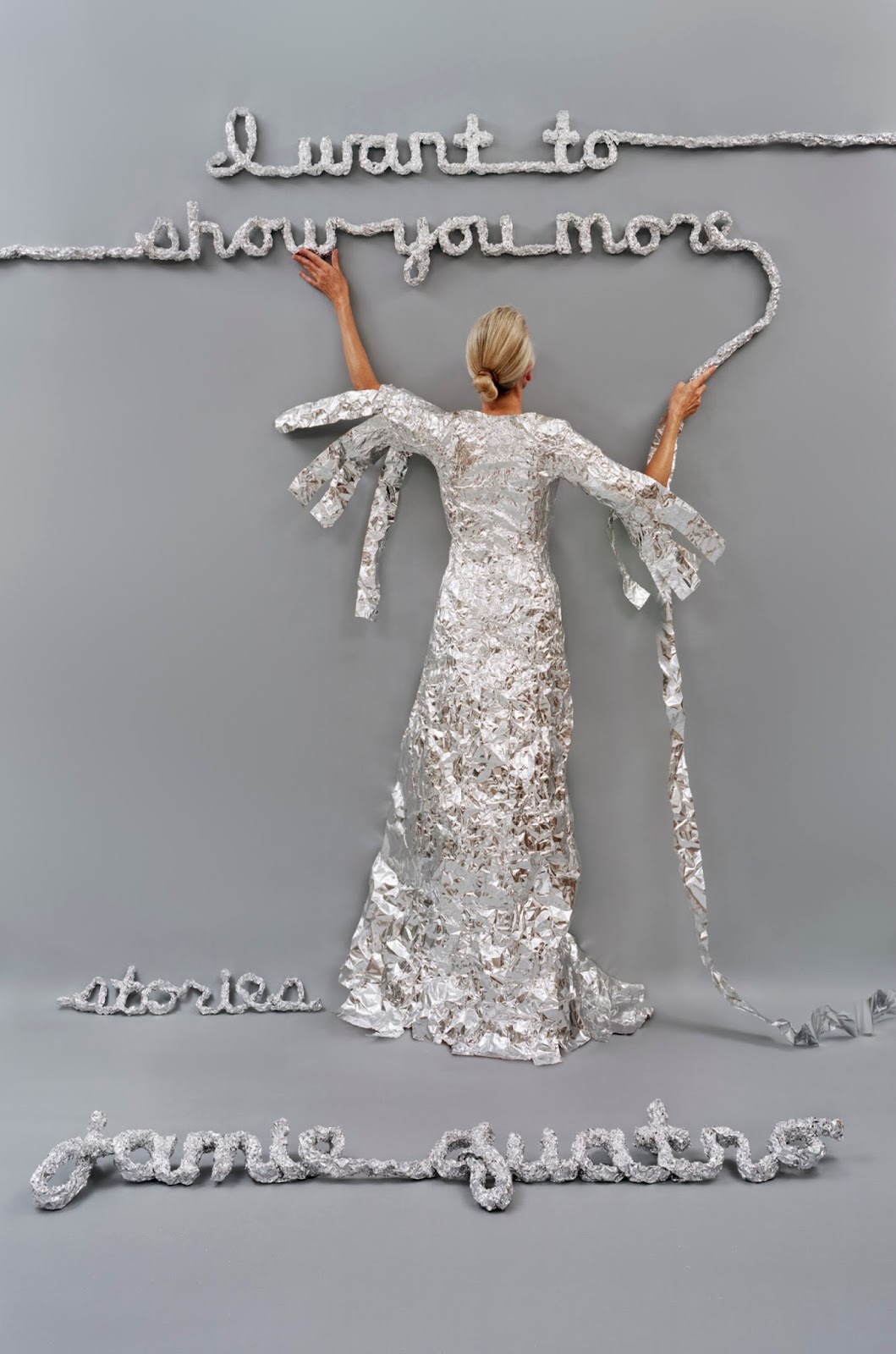
I Want to Show You More by Jamie Quatro
Design by Rachel Perry Welty
Aluminum foil was invented in 1910, but it wasn't until this year that it found its true calling: a spot-on perfect design element on the cover of Jamie Quatro's debut short story collection.  There's nothing boring about Quatro's fiction—so don't judge the contents by the cover's mono-chrome of grey and silver.  The fabulous art is by Rachel Perry Welty; you can see more of her work here.  With everything encased in foil—including all but the head and arms of the blonde-haired, droop-winged angel—it's like the book is ready to be broiled in the oven.  I also think it was a smart design decision to use a cursive "font" for the words, making it seem like the ribbon of Reynolds Wrap is endless (in some of Welty's other work, she does indeed use one sheet of foil).


The Good House by Ann Leary
Everything on this cover works for me: the mustard-yellow house buried up to its roofline in snow, the bold black serif font, that solitary red cardinal perched on the eaves.  The novel is about an alcoholic Realtor, just out of rehab, who finds herself embroiled in small-town gossip and eventually up to her neck in scandal.  The cover nicely hints at that domesticity and danger.


You Are One of Them by Elliott Holt
Design by Janet Hansen
The cover of Elliott Holt's debut novel cleverly obscures half the face of a person standing at a train window with a black cloud of what could be spray paint, an ink blot, a smear of violent graffiti. Designer Janet Hansen takes advantage of that dark blot of negative space by filling it with the title and author's name. The partial black mask is a nice play on the title's implied theme of identity, assimilation, and homogeneity.


The Curiosity by Stephen P. Kiernan
Design by Mary Schuck
Nothing says "Buy Me!" better than the sight of empty clothes on a book cover.  And when they're found in the shape of a man sprawled across a snowbank?  I say, "Bingo!"  Kiernan's curious novel is about what happens when a man frozen in ice for nearly a century is reanimated by a team of scientists.  In addition to suffering loss of identity, apparently he gets a new wardrobe.


Tampa by Alissa Nutting
Design by John Gray
Yes, yes, the original hardcover version of Alissa Nutting's novel was irresistible to touch—a black-velvet material which could also double as a lint brush if you got bored with the book (which is hard to imagine)—but I want to talk about the cover for the paperback which will be released by Faber and Faber in March 2014.  We live in an era of provocative book covers (see the latest version of Erica Jong's Fear of Flyinghere's the whole, um, spread—or any recent version of Lolita, for instance), but Tampa's might be one of the provocativiest.  Here's all you need to know about the book: junior high school teacher Celeste Price has an insatiable hunger for sex....and not just any kind of sex, but wild, horny humping with one of her students.  Now take a second look at that closeup of a buttonhole on a pink shirt.  Are you blushing yet?


Mozart by Paul Johnson
Design by Jason Ramirez
Paul Johnson's biography is as diminutive as the composer himself (164 pages and "not much over five foot," respectively), but the book's cover design packs all the wallop of a crescendoing aria, cleverly using Barbara Krafft's portrait of Amadeus to make the book leap off the shelf.  I love how the famous painting is layered with a scarlet-red curtain and five-lined music staffs.  The effect is simultaneously subtle and in-your-face beautiful. I would probably read Johnson's biography anyway, but the fire-engine, Canadian-Mountie-jacket, supermodel-lipstick red of the jacket design insists I do so sooner rather than later.  Fortissimo!


edited by Sarah Weinman
Design by Lynn Buckley
This crime fiction anthology is a salute to "the real femmes fatales of the domestic suspense genre," pioneering writers like Patricia Highsmith, Shirley Jackson and Dorothy B. Hughes.  The cover design, by the same token, is a tribute to the popular pulp magazine covers of that bygone era. A Barbara Stanwyckian femme is caught in the beam of a flashlight, startled eyes popping out of her head, hand up, fingers curled, claws out. This is a cover that will reach out and grab bookstore browsers and lead them to this most worthy collection of short fiction.


The Resurrectionist by E. B. Hudspeth
One glance at the book's plot synopsis and you know this creepy skeleton is the perfect gateway to the novel: "Philadelphia, the late 1870s.  A city of gas lamps, cobblestone streets, and horse-drawn carriages—and home to the controversial surgeon Dr. Spencer Black.  The son of a grave robber, young Dr. Black studies at Philadelphia’s esteemed Academy of Medicine, where he develops an unconventional hypothesis: What if the world’s most celebrated mythological beasts—mermaids, minotaurs, and satyrs—were in fact the evolutionary ancestors of humankind?"


The Deep Whatsis by Peter Mattei
Design by John Gall
You'd be forgiven if you thought the title of this novel was "A Novel."  Mattei's satire about corporate hypocrisy gets an appropriately slutty design which boldly subverts our expectations, starting with the size-reduction of the already quirky title.  When you reduce this cover to a thumbnail on the Internets, the white bleed at the edges makes its borders disappear and that huge "A Novel" just floats there in midscreen suspension, forcing you to exclaim, "Hey, whatsis?"


Wild Ones by Jon Mooallem
The subtitle of Mooallem's book about wildlife conservation is "A Sometimes Dismaying, Weirdly Reassuring Story About Looking at People Looking at Animals in America" (this gets my vote for Subtitle of the Year, by the way).  Nothing says "conservation" quite like a spotlit polar bear trapped in a glass case.  The cover is simultaneously simple, complex, beautiful, and horrible in its meaning.


The Accursed by Joyce Carol Oates
Design by Allison Saltzman
Using a detail from Giovanni Boldini's Profile of a Young Woman, designer Allison Saltzman focuses our attention on the exposed, alabaster-white neck—appropriate, given the fact that Oates' big novel about turn-of-the-century Princeton includes vampires in its cast of characters (along with Woodrow Wilson, Jack London and Mark Twain).  One of the other things I love about this cover is how Saltzman echoes the bunch of lavender in the title's font color, with the blood-red of the author's name coming between them.  For such a beautiful art design, there's a lot of underlying tension at work here.


Manson by Jeff Guinn
You were expecting the beard and the crazy-eyes, weren't you?  No, for this biography, we get a curious, atypical photo of the titular monster.  The unsettling school photo, along with the yellow crime scene tape, works well to dash our image of Manson.


Shouting Won't Help by Katherine Bouton
Design by Jenny Carrow
This book about hearing loss gets a nicely metaphorical treatment for its cover.  Bouton, an editor at the New York Times, describes how she slowly went deaf—she was, as she puts it, “the kind of person who might have used an ear trumpet in the nineteenth century.” As the title and cover design imply, to the hearing impaired, our efforts to understand and help are no better than if we were screaming underwater. One other thing—and maybe I'm reaching here—but it looks like the upper half of the submerged woman's head is an island—further indicative of Bouton's isolation.


Johnny Cash by Robert Hilburn
Design by Julianna Lee
The cigaretted face dominates the cover, as well it should since the Man was almost too large for his own life.


Design by Adam Johnson
I'm a sucker for artistic photos of people suspended in mid-water (see also: Tethered by Amy MacKinnon) and this one used for Neil Gaiman's beautiful adult fairy tale completely captivated me from the start.  There is such sublime perfection in this cover design, I hardly know where to begin:  The icy chill of the blue?  The way the title is set off by the blurred oval?  The stark white of the font?  That cloudy net of bubbles coming from the girl's mouth?  As good as Gaiman's prose may have been (and it was very good), I couldn't stop closing the book and gazing with lovesick sighs at this cover.


Tinderbox by Lisa Gornick
Design by Rodrigo Corral
Okay, admit it—you want to know what a toy triceratops is doing playing with matches, don't you?  So do I.  It's enough to get us inside this novel about what Daniel Menaker calls "the story of a family undergoing seismic changes brought on by a stranger who unwittingly forces her hosts to face themselves."  That calm pink border belies the incendiary tension within these pages.


Fosse by Sam Wasson
Design by Martha Kennedy
Can't you just hear Bob Fosse exclaiming, "It's showtime, folks!"?  The legendary choreographer, director and actor deservedly gets the spotlight in Wasson's biography.  The cover also seems to catch Fosse in the spotlight, beckoning to an unlit stage.  The only thing that would have made this cover any better is if the F-O-S-S-E were made of blinking lights.

~

My Year of Books is the annual backward glance of my literary life.  All this week, I'll be posting lists of the best things I read in 2013.  Be sure to visit the rest of the series (links posted as they're published):

Monday:  By the Numbers
Tuesday:  Best First Lines
Wednesday:  Best Cover Designs
Thursday:  Best of the Backlist
Friday:  Best Fiction of 2013
Saturday:  Publisher of the Year


Tuesday, December 17, 2013

Trailer Tuesday: Fobbit


Welcome to Trailer Tuesday, a showcase of new book trailers and, in a few cases, previews of book-related movies.


For nearly two years, I've told you about promotional trailers for other authors' books....and now it's time for me to cue the spotlight, step to the center of the stage, clear my throat for the microphone, and announce: "Ladies and gentlemen.... Fobbit, the trailer!"  Yes, that's right, I finally got my act together and made a book trailer for my novel which debuted over a year ago.  More accurately, I hired the services of the wonderful team of Liz and Rob at The Montana Movie Factory, a great production company right here in Butte, Montana.  I gave Rob just a few sketchy ideas and let him take it from there.  I'm very pleased with the end result (Rob even managed to sneak in a Monty Python homage at the very end).  I hope you'll like what we came up with.  Consider it a Christmas gift to all the Fobbit fans out there.


My Year of Books: Best First Lines of 2013


If, as Ursula K. LeGuin has said, "First sentences are doors to worlds," then I turned a lot of great doorknobs this year.  My favorite lines are those which pack a lot of information and pack a hefty linguistic punch, but don't send me packing.  The best first sentences keep me in the book, demand I read the next sentence and the next one after that, and so on until--five hours later, I look up from the page and realize the house is burning down around my ears.

Here, in no particular order, are my favorite opening lines from books published in 2013 (or ones which I first encountered this past year):


The hookers were slap-fighting a Hare Krishna up at the intersection when the bullet came through the windshield.


The camp at Auschwitz took one year of my life, and of my own free will I gave it another four.
The Thief of Auschwitz by Jon Clinch


The ward was never the same after that February afternoon when Zelda Fitzgerald stumbled into the psychiatric clinic with a stack of papers clutched to her chest, eyes darting this way and that, at once pushing from and pulling toward her husband like a spinning magnet.
Call Me Zelda by Erika Robuck


I was on my second bag of Doritos and my lips were stained emergency orange when my best friend, Phillip, said he knew a bar in Hallelujah Junction that didn’t card, and maybe we should go there.


When I was twelve years old I was best friends with a baby.
Saguaro by Carson Mell


Tonight I went from my wife's bed to the open window and pissed down blood on Royal Street.
The Blood of Heaven by Kent Wascom


There is very little peace for a man with a body buried in his backyard.
Three Graves Full by Jamie Mason


The night before my father would beg me to kill him, I sat alone in a hotel room across the street from his hospital, rereading old newspaper articles about my mother's suicide.
The Cost of Living by Rob Roberge


The intern from the edit house is so drunk she is trying to take her skin off.
The Deep Whatsis by Peter Mattei


Four days before the bomb that is supposed to obliterate Bombay and kill us all, I stand in the ruins of Crawford Market, haggling with the lone remaining fruit seller over the price of the pomegranate in my hand.
The City of Devi by Manil Suri


When Hitler came to power I was in the bath.
All That I Am by Anna Funder


Nurse Thornton dropped into the long-term-care ward a little before eight with a hot bag of blood for Charlie Manx.
NOS4A2 by Joe Hill


On the morning after the Feds burned down her house and took her father, Havaa woke from dreams of sea anemones.


I am a woman with no fingerprints.


A little over thirty years ago, on a June day just before sunset--alone on a mountain in Marin County, California--a man came toward me with a length of piano wire stretched between his hands, and the intention of ending my days.
After Her by Joyce Maynard


I fell in love with William Ashe at gunpoint, in a Circle K.
Someone Else's Love Story by Joshilyn Jackson


On an April day in 1970, when most of his fellow architecture students were taking their spring break, Frank Joyner drew a Gillette razor blade across his left wrist with one express purpose in mind: he wanted to see if, when the blood appeared, he was willing to let it flow, or if, in fact, he wanted to live.
Fractures by Lamar Herrin

~

My Year of Books is the annual backward glance of my literary life.  All this week, I'll be posting lists of the best things I read in 2013.  Be sure to visit the rest of the series (links posted as they're published):

Monday:  By the Numbers
Tuesday:  Best First Lines
Wednesday:  Best Cover Designs
Thursday:  Best of the Backlist
Friday:  Best Fiction of 2013
Saturday:  Publisher of the Year